U.S. EV Charging Infrastructure: 3-Month Federal Outlook 2026
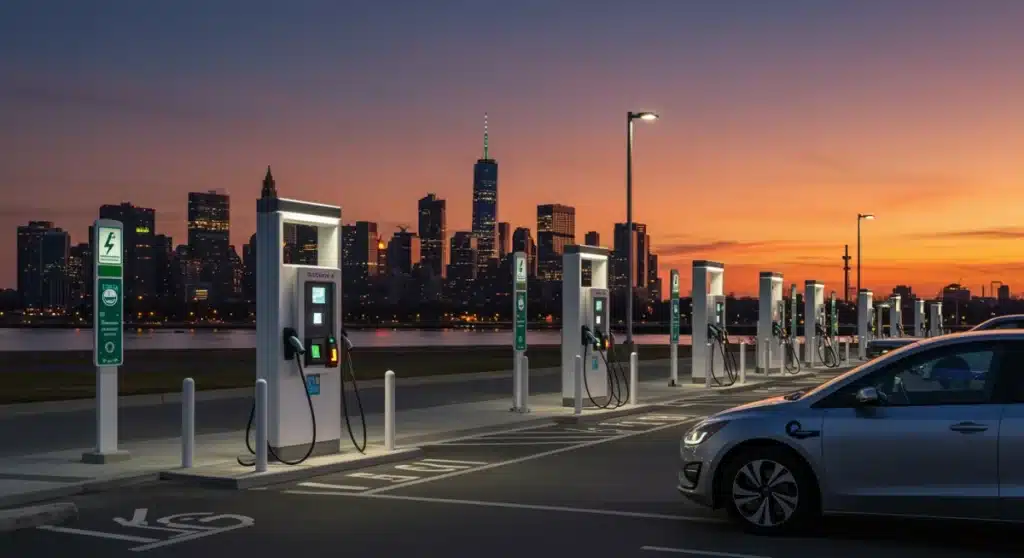
The U.S. electric vehicle charging infrastructure is poised for significant expansion in 2026, driven by new federal investments aiming to accelerate EV adoption and ensure a robust, accessible charging network nationwide.
The landscape of transportation in the United States is undergoing a profound transformation, with electric vehicles (EVs) at the forefront of this revolution. Understanding the trajectory of Electric Vehicle Charging Infrastructure in the U.S.: A 3-Month Outlook on New Federal Investments and Opportunities for 2026 is not merely an academic exercise; it’s crucial for consumers, businesses, and policymakers alike. This period is marked by an unprecedented influx of federal funding and strategic initiatives designed to accelerate the deployment of charging solutions nationwide, paving the way for a more sustainable and electrified future.
Federal Initiatives Driving EV Charging Growth
The federal government has unequivocally signaled its commitment to accelerating electric vehicle adoption, and a cornerstone of this strategy is the robust expansion of charging infrastructure. New legislative acts and executive orders are channeling billions of dollars into projects designed to build a comprehensive, reliable, and equitable charging network across the U.S. This includes specific programs aimed at both public and private sector involvement, fostering a collaborative approach to overcome existing challenges.
Over the next three months, we anticipate a continued push from federal agencies to finalize grant allocations and project approvals. These initiatives are not just about adding more chargers; they are about strategically placing them to address range anxiety, support long-distance travel, and ensure accessibility for all communities, including underserved rural and urban areas. The goal is to create a seamless charging experience that rivals the convenience of gasoline refueling.
Key Legislative Frameworks and Funding Streams
Several pivotal legislative frameworks underpin the current federal investment strategy. The Bipartisan Infrastructure Law (BIL), for instance, has earmarked substantial funds for EV charging, primarily through the National Electric Vehicle Infrastructure (NEVI) Formula Program. This program alone represents a multi-billion dollar commitment to building out a national EV charging network along designated alternative fuel corridors, ensuring interoperability and reliability.
- NEVI Formula Program: Allocates funding to states to strategically deploy EV charging infrastructure along major highways.
- Clean School Bus Program: Provides funding for electric school buses, often including associated charging infrastructure.
- Grant Programs for Charging & Fueling Infrastructure: Supports community-based charging projects and innovative solutions.
Beyond direct funding, federal incentives such as tax credits for charging equipment installation play a significant role in encouraging private investment. These credits reduce the financial burden for businesses and individuals looking to install chargers, thereby broadening the reach of the charging network. The synergy between direct government spending and tax-based incentives creates a powerful catalyst for growth.
In conclusion, the next three months will likely see the tangible effects of these federal initiatives become more apparent. States will continue to roll out their NEVI plans, new grant opportunities will emerge, and the private sector will respond with increased investment and innovation. This concerted effort is foundational to establishing the robust EV charging ecosystem needed for widespread electric vehicle adoption.
Emerging Technologies and Infrastructure Innovations
The rapid evolution of electric vehicle technology demands equally advanced charging solutions. The U.S. charging infrastructure is not merely expanding in quantity but also in technological sophistication. Innovators are constantly pushing the boundaries, introducing faster, more efficient, and more user-friendly charging methods. This includes advancements in charging speeds, energy management, and integration with renewable energy sources.
Over the next three months, we expect to see accelerated deployment of ultra-fast DC chargers, capable of adding hundreds of miles of range in minutes. This shift is critical for reducing charging times and making long-distance EV travel more practical. Furthermore, smart charging technologies are becoming increasingly prevalent, optimizing energy use and integrating seamlessly with grid management systems.
Advancements in Charging Speeds and Types
The distinction between Level 2 AC charging and DC fast charging is becoming more pronounced, with a clear trend towards the latter for public and highway applications. DC fast chargers, particularly those exceeding 150 kW, are vital for consumer acceptance, as they significantly reduce the time spent charging. Research and development continue to explore even higher power levels, such as 350 kW and beyond.
- Ultra-Fast DC Charging: Capable of 150 kW to 350 kW, drastically reducing charging times.
- Wireless Charging: Emerging technology for convenient, hands-free charging, particularly for fleet vehicles and urban settings.
- Vehicle-to-Grid (V2G) Technology: Allows EVs to return power to the grid, enhancing grid stability and offering revenue opportunities for vehicle owners.
Beyond speed, the types of chargers are diversifying. Inductive (wireless) charging, while still in its nascent stages for public use, holds immense promise for seamless integration into parking spaces and even roadways. This technology could eliminate the need for cables, enhancing convenience and aesthetics. Similarly, advancements in battery technology are influencing charger design, ensuring compatibility with next-generation EV models.
The integration of charging infrastructure with renewable energy sources, such as solar canopies and battery storage, is another significant trend. This not only reduces the carbon footprint of EV charging but also enhances grid resilience. The next quarter will likely feature pilot programs and increased investment in these integrated solutions, showcasing a holistic approach to sustainable transportation.
In essence, the evolving technological landscape of EV charging is characterized by a drive towards greater speed, efficiency, and intelligence. These innovations are fundamental to supporting the growing fleet of electric vehicles and making the transition to electric mobility as smooth and attractive as possible for consumers.
Opportunities for Businesses and Local Governments
The expansion of EV charging infrastructure presents a fertile ground for new business ventures and significant opportunities for local governments to enhance their communities. The influx of federal funding, coupled with growing consumer demand, creates a dynamic environment for investment and development. Businesses ranging from energy providers to construction companies stand to benefit, as do municipalities seeking to attract residents and foster sustainable growth.
Over the coming three months, we can expect to see an uptick in public-private partnerships. Local governments, armed with federal grants and a mandate for sustainability, will actively seek out private sector expertise and capital to deploy charging solutions. This collaborative approach is essential for scaling infrastructure rapidly and effectively, ensuring that planning aligns with local needs and economic development goals.
Investment Avenues for Private Sector
For businesses, the opportunities are multifaceted. Charging network operators are expanding their footprints, requiring significant investment in hardware, software, and operational support. Furthermore, there’s a growing demand for installation and maintenance services, creating jobs and fostering specialized expertise. Real estate developers also find new value in integrating EV charging into their properties, attracting environmentally conscious tenants and customers.
- Charging Network Deployment: Investment in building and operating public and private charging stations.
- Software and Data Analytics: Development of platforms for charger management, payment processing, and usage optimization.
- Consulting and Project Management: Providing expertise for planning, permitting, and executing charging infrastructure projects.
Local governments play a crucial role in facilitating this growth by streamlining permitting processes, offering local incentives, and identifying strategic locations for charging stations. They can also leverage federal funding to establish charging hubs, support fleet electrification, and implement smart city initiatives that integrate EV charging into broader urban development plans. The benefits extend beyond environmental goals to include economic development and improved quality of life for residents.
The next quarter will be a period of significant activity as cities and counties finalize their infrastructure plans and engage with potential partners. Early movers in both the public and private sectors will be best positioned to capitalize on these emerging opportunities, shaping the future of transportation in their respective domains.
Challenges and Solutions in Deployment
While the outlook for EV charging infrastructure in the U.S. is largely positive, significant challenges remain in its deployment. These hurdles range from grid capacity issues and permitting complexities to ensuring equitable access and maintaining charger reliability. Addressing these challenges effectively is paramount to realizing the full potential of federal investments and achieving widespread EV adoption.
In the upcoming three months, stakeholders will be intensely focused on developing and implementing solutions to these persistent problems. This includes collaborative efforts between utilities, government agencies, and technology providers to innovate around grid constraints and streamline regulatory processes. The emphasis will be on proactive planning and adaptive strategies to overcome deployment bottlenecks.
Overcoming Grid Constraints and Permitting Hurdles
One of the primary challenges is ensuring that the electrical grid can support a massive increase in demand from EV charging. Upgrading grid infrastructure, particularly in areas with high EV adoption rates, is a complex and costly undertaking. Utilities are exploring smart grid technologies, energy storage solutions, and demand-response programs to manage the load effectively.
- Grid Modernization: Investing in smart grid technologies and infrastructure upgrades to handle increased electrical demand.
- Streamlined Permitting: Implementing standardized and expedited permitting processes at local and state levels to accelerate installation.
- Interoperability Standards: Promoting common communication protocols and connector types to ensure universal charger compatibility.
Permitting and regulatory complexities also pose significant obstacles. Varying local regulations, lengthy approval processes, and a lack of standardized guidelines can delay projects considerably. Federal and state governments are working to harmonize these processes, providing clearer guidance and encouraging best practices to accelerate infrastructure rollout. This involves engaging with local authorities to educate them on the importance and benefits of expedited EV charging deployments.
Another critical area is charger reliability and maintenance. A non-functional charger undermines consumer confidence and discourages EV adoption. Solutions include robust monitoring systems, preventative maintenance schedules, and rapid response teams for repairs. Ensuring a high uptime for charging stations is crucial for a positive user experience. The federal government’s NEVI program, for example, includes specific reliability requirements that recipients must meet.
Addressing these challenges requires a multi-faceted approach, combining technological innovation, regulatory reform, and collaborative partnerships. The next few months will be instrumental in demonstrating how effectively these solutions can be implemented to pave the way for a resilient and widespread EV charging network.
Regional Disparities and Equitable Access
As the U.S. progresses in building out its EV charging infrastructure, it is critical to address existing regional disparities and ensure equitable access for all communities. The benefits of electric mobility, including reduced emissions and lower fuel costs, should be available to everyone, regardless of their geographic location or socioeconomic status. Federal programs are increasingly prioritizing initiatives to bridge these gaps and foster inclusivity.
Over the next three months, we anticipate a stronger focus on targeted investments in underserved areas. This includes rural communities, low-income neighborhoods, and multi-unit dwellings, where charging solutions have historically lagged. The goal is not just to install chargers but to ensure they are accessible, affordable, and meet the specific needs of diverse populations.
Strategies for Bridging the Access Gap
Addressing regional disparities requires a strategic approach that goes beyond simply allocating funds. It involves understanding the unique challenges faced by different communities, such as limited electrical infrastructure in rural areas or the lack of dedicated parking in urban apartment complexes. Tailored solutions are necessary to overcome these specific barriers.
- Targeted Rural Investments: Funding programs specifically designed to support charging infrastructure in rural and remote areas.
- Community-Based Planning: Engaging local communities in the planning process to identify optimal locations and types of chargers.
- Multi-Unit Dwelling (MUD) Solutions: Developing innovative charging solutions for apartment buildings and condominiums.
Federal programs are now actively encouraging states and local entities to develop equity-focused plans for their EV charging deployments. This includes requirements for outreach to disadvantaged communities and benchmarks for ensuring a fair distribution of charging resources. The aim is to prevent a two-tiered system where some areas are well-served while others are left behind.
Furthermore, affordability is a key component of equitable access. While federal and state incentives can help reduce the upfront cost of charging equipment, ensuring competitive and transparent pricing for electricity is also crucial. Programs that offer rebates or subsidies for charging costs can help make EV ownership more accessible to lower-income households.
The next quarter will be a period of significant activity in this regard, with new grant applications and project proposals emphasizing equitable deployment. By proactively addressing regional disparities, the U.S. can build an EV charging network that truly serves all its citizens, accelerating the transition to a cleaner transportation future.
The Role of Private Sector Innovation
While federal investments provide a crucial foundation, the dynamism and speed of private sector innovation are indispensable for the rapid and effective expansion of the U.S. EV charging infrastructure. Private companies bring agility, specialized expertise, and market-driven solutions that complement government efforts. Their role extends beyond merely deploying chargers to developing advanced software, optimizing user experience, and creating sustainable business models.
Over the next three months, we anticipate a surge in private sector activity, driven by both federal incentives and increasing consumer demand. This will manifest in new product launches, strategic partnerships, and intensified competition among charging providers, all contributing to a more robust and innovative charging ecosystem.
Driving Forces in Private Sector Contributions
Private companies are not just building charging stations; they are innovating across the entire value chain. This includes developing sophisticated charging management software, integrating payment systems, and offering value-added services such as loyalty programs and energy management tools. Their ability to respond quickly to market trends and consumer needs is a significant asset.
- Software Development: Creation of user-friendly apps for finding, using, and paying for charging services.
- Hardware Innovation: Designing more durable, efficient, and aesthetically pleasing charging stations.
- Business Model Evolution: Exploring subscription services, dynamic pricing, and integration with other mobility services.
Furthermore, private sector companies are leading the charge in developing specialized charging solutions for specific market segments, such as fleet operators, ride-sharing services, and commercial properties. These tailored approaches ensure that the unique requirements of various users are met, accelerating the electrification of diverse vehicle types beyond personal cars.
The competition among private charging providers is also a powerful driver of innovation and efficiency. As companies vie for market share, they are compelled to offer better services, more reliable chargers, and more competitive pricing, ultimately benefiting the end-user. This competitive landscape fosters continuous improvement and pushes the boundaries of what’s possible in EV charging.
In conclusion, the symbiotic relationship between federal support and private sector innovation is critical for the success of EV charging infrastructure development. The next quarter will undoubtedly showcase numerous examples of how private companies are leveraging opportunities to deliver cutting-edge solutions and accelerate the nation’s transition to electric mobility.
Outlook for 2026 and Beyond
The initiatives and investments made in the current three-month period are not isolated efforts but foundational steps towards a much larger vision for 2026 and beyond. The overarching goal is to establish a comprehensive, reliable, and accessible electric vehicle charging network that can support the projected exponential growth of EV adoption in the U.S. The groundwork laid now will determine the pace and equity of this transition.
Looking ahead to 2026, we anticipate a significantly more mature and extensive EV charging infrastructure. The focus will shift from initial deployment to optimization, maintenance, and further integration of smart technologies. The lessons learned and the best practices established in the coming months will be crucial in shaping future policies and investment strategies.
Long-Term Vision and Milestones
By 2026, several key milestones are expected to be reached. The NEVI program, for example, aims to have a substantial portion of its designated corridors equipped with charging stations. This will create a viable national network for long-distance travel, significantly reducing range anxiety for EV owners. Furthermore, urban and suburban areas will likely see a much higher density of public and workplace chargers.
- National Network Completion: Significant progress towards a fully interconnected national charging network along major routes.
- Increased Charger Density: Higher availability of public and private chargers in urban, suburban, and rural areas.
- Enhanced User Experience: More reliable, faster, and seamlessly integrated charging solutions.
The long-term vision also includes greater integration of renewable energy sources with charging infrastructure, making the entire ecosystem more sustainable. Vehicle-to-grid (V2G) technologies are expected to become more prevalent, allowing EVs to play a role in grid stability and energy management. This holistic approach will transform EVs from mere transportation devices into active components of a smart, green energy system.
The equitable distribution of charging resources will also remain a top priority. Continued efforts will be made to ensure that all communities benefit from the EV transition, with programs specifically designed to address the needs of disadvantaged and underserved populations. This commitment to equity is fundamental to building a truly inclusive electric future.
In summary, the next three months represent a critical period of acceleration and consolidation for the U.S. EV charging infrastructure. The outcomes of these efforts will directly influence the pace of EV adoption and the environmental benefits realized in 2026 and for decades to come, solidifying the nation’s path towards a sustainable transportation system.
| Key Aspect | Brief Description |
|---|---|
| Federal Investments | Billions allocated via programs like NEVI for national charging network expansion. |
| Technological Trends | Focus on ultra-fast DC charging, smart grid integration, and V2G solutions. |
| Business Opportunities | Growth for network operators, installers, software developers, and real estate. |
| Equitable Access | Targeted efforts to ensure charging availability in rural and underserved communities. |
Frequently Asked Questions About EV Charging Infrastructure
The National Electric Vehicle Infrastructure (NEVI) Formula Program, established under the Bipartisan Infrastructure Law, is a leading initiative. It allocates billions to states for building a national network of EV charging stations along designated corridors, focusing on reliability and interoperability.
Federal investments are specifically designed to address regional disparities, including rural areas. Programs like NEVI require states to submit plans for equitable distribution, ensuring that rural communities receive necessary infrastructure to support EV adoption and reduce range anxiety.
The next three months will likely see continued deployment of ultra-fast DC chargers, capable of higher power outputs. We also anticipate advancements in smart charging technologies for grid integration and potentially more pilot programs for wireless charging and vehicle-to-grid (V2G) applications.
Businesses can find opportunities in operating charging networks, providing installation and maintenance services, developing charging software, and integrating charging solutions into commercial properties. Federal incentives and growing demand create a fertile market for innovation and investment across various sectors.
Federal programs, such as NEVI, include strict reliability requirements for funded charging stations. This encourages network operators to implement robust monitoring systems, preventative maintenance, and rapid repair protocols to ensure a high uptime, thereby building consumer confidence in the charging infrastructure.
Conclusion
The next three months represent a pivotal phase in the development of the Electric Vehicle Charging Infrastructure in the U.S.: A 3-Month Outlook on New Federal Investments and Opportunities for 2026. With substantial federal investments fueling strategic deployments and fostering private sector innovation, the nation is steadily advancing towards a robust and accessible charging network. Addressing challenges such as grid capacity and equitable access through collaborative solutions will be key to realizing the ambitious goals set for 2026 and beyond. This concerted effort promises to accelerate EV adoption, driving the U.S. closer to a sustainable and electrified transportation future.