US Climate Investment: $369 Billion Opportunity & Insider Insights
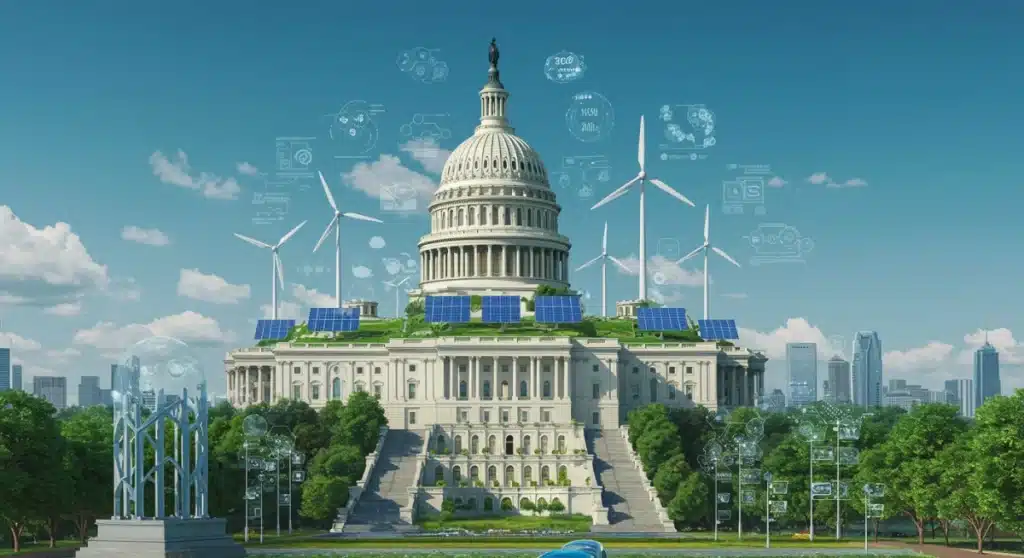
The U.S. government’s $369 billion climate investment, primarily through the Inflation Reduction Act, is a transformative economic driver creating substantial opportunities across diverse sectors for businesses, innovators, and communities dedicated to sustainable solutions.
The US Climate Investment Opportunity, stemming from the U.S. government’s monumental $369 billion commitment to climate and clean energy initiatives, represents a pivotal moment for economic growth and environmental stewardship. This unprecedented financial injection is not merely an environmental policy; it is a profound economic catalyst reshaping industries and creating new avenues for innovation and prosperity across the nation.
Understanding the Scope of the $369 Billion Investment
The U.S. government’s commitment of $369 billion towards climate and clean energy initiatives, predominantly through the Inflation Reduction Act (IRA), marks the largest investment of its kind in American history. This legislative cornerstone aims to significantly reduce carbon emissions, accelerate the transition to a clean energy economy, and foster domestic manufacturing of clean technologies. Understanding the sheer scale and multifaceted nature of this investment is crucial for anyone looking to engage with the evolving green landscape.
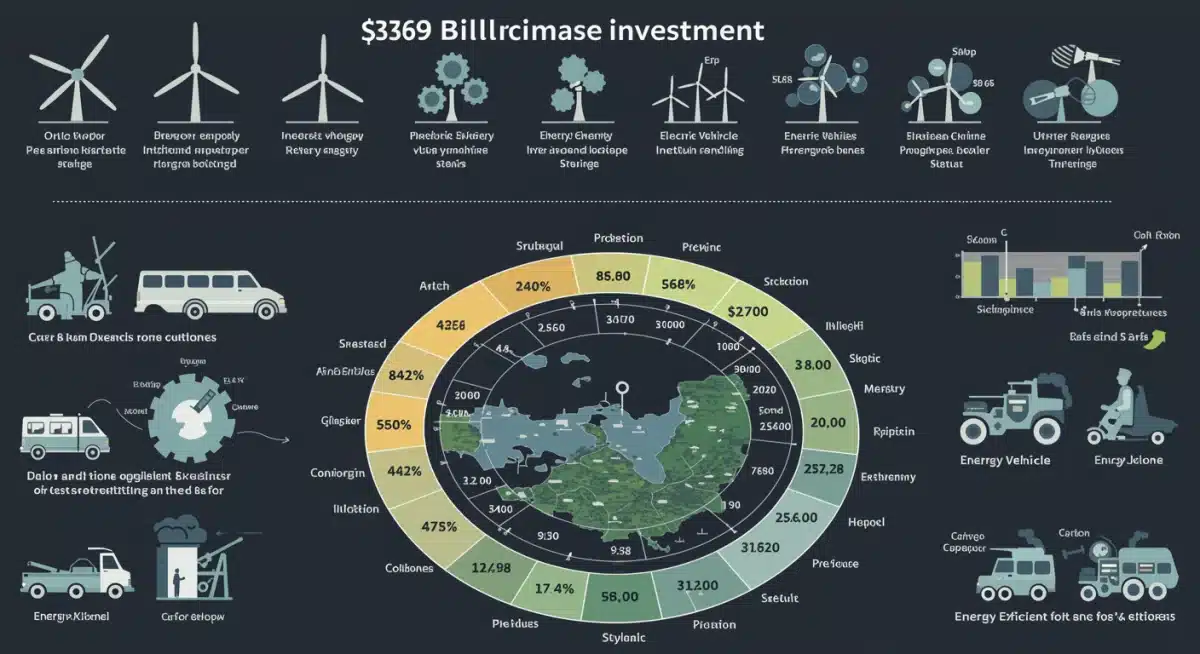
This substantial funding is designed to address climate change from multiple angles, encompassing everything from renewable energy deployment and electric vehicle adoption to energy efficiency upgrades and carbon capture technologies. It’s a comprehensive strategy that touches almost every sector of the economy, providing a broad spectrum of incentives, grants, and tax credits. The goal is to stimulate both supply and demand for sustainable products and services, creating a self-reinforcing cycle of innovation and economic activity.
Key Pillars of the Investment
The IRA’s climate provisions are structured around several core pillars, each designed to tackle specific aspects of the climate challenge while simultaneously boosting economic growth and job creation. Delving into these pillars reveals the strategic intent behind the investment.
- Renewable Energy Production: Significant tax credits for solar, wind, geothermal, and other clean energy technologies.
- Electric Vehicles (EVs) and Charging Infrastructure: Incentives for consumers to purchase EVs and for businesses to build out a national charging network.
- Energy Efficiency and Electrification: Rebates and tax credits for homeowners and businesses to improve energy efficiency and switch to electric appliances.
- Carbon Capture, Utilization, and Storage (CCUS): Tax credits to incentivize the development and deployment of CCUS technologies.
These pillars are interconnected, working in synergy to create a robust framework for a cleaner, more sustainable future. For instance, increased renewable energy production directly supports the electrification of transport and buildings, reducing reliance on fossil fuels across the board. The investment is not just about funding; it’s about strategically directing capital to areas that will yield the greatest environmental and economic benefits.
In essence, the $369 billion investment represents a long-term commitment to transforming the American economy. It signals a clear direction from the federal government, encouraging private sector innovation and investment in sustainable solutions. This makes it imperative for businesses, entrepreneurs, and even individuals to understand the nuances of this funding and how they can best position themselves to contribute to and benefit from this historic shift.
Emerging Sectors and High-Growth Areas
The massive influx of capital from the U.S. government’s climate investment is catalyzing rapid growth and innovation across several key sectors, while also giving rise to entirely new ones. Identifying these emerging sectors and high-growth areas is crucial for businesses and investors seeking to strategically align with the nation’s clean energy transition. The opportunities extend beyond direct energy production to encompass a wide array of supporting industries and technological advancements.
One of the most prominent areas of expansion is in advanced manufacturing for clean energy components. The IRA explicitly incentivizes domestic production of solar panels, wind turbine components, battery cells, and critical minerals processing. This focus on onshore manufacturing aims to secure supply chains, create high-paying jobs, and reduce reliance on foreign sources for essential clean energy technologies. Businesses involved in materials science, industrial engineering, and automated production are particularly well-positioned to thrive in this environment.
The Rise of Green Technology Solutions
Beyond traditional renewable energy, the investment is fostering innovation in a variety of green technology solutions. These include smart grid technologies, energy storage systems, sustainable agriculture practices, and water management solutions. The push for greater energy efficiency in buildings and industrial processes also opens doors for companies specializing in advanced insulation, smart thermostats, and industrial process optimization.
- Energy Storage Systems: Battery manufacturing, grid-scale storage, and residential solutions are seeing unprecedented demand.
- Sustainable Agriculture: Development of climate-resilient crops, precision agriculture technologies, and carbon sequestration in soil.
- Waste-to-Energy and Recycling Innovations: Technologies that convert waste into usable energy or enhance material recycling processes.
- Green Building Materials: Development and production of sustainable, low-carbon materials for construction.
These areas represent not just technological advancements but also significant market opportunities. Companies that can offer innovative, cost-effective solutions in these domains will find a receptive market supported by government incentives and increasing consumer demand. The emphasis is on scalable and impactful technologies that contribute directly to emissions reduction and resource efficiency.
Furthermore, the demand for skilled labor to support these burgeoning sectors is creating a parallel growth area in workforce development and training. Educational institutions, vocational schools, and private training providers have a critical role to play in preparing the next generation of clean energy workers. This holistic approach ensures that the economic benefits of the climate investment are distributed widely, fostering community resilience and economic diversification.
Navigating the Incentive Landscape: Grants, Tax Credits, and Loans
The U.S. government’s $369 billion climate investment is not a single, monolithic fund, but rather a complex ecosystem of financial incentives designed to encourage specific behaviors and investments. Navigating this landscape requires a sophisticated understanding of the various mechanisms available, including direct grants, advantageous tax credits, and favorable loan programs. Each mechanism serves a distinct purpose and has specific eligibility criteria, making careful research and strategic planning essential for maximizing benefits.
Tax credits, particularly those offered under the Inflation Reduction Act, are a cornerstone of the investment strategy. These credits reduce a company’s or individual’s tax liability dollar-for-dollar, making clean energy projects and purchases significantly more attractive. For businesses, this often translates to a lower cost of capital for new projects, enhancing profitability and accelerating deployment of clean technologies. Understanding the nuances of transferability and direct pay options for these credits is crucial for many entities, including non-profits and governmental bodies.
Unlocking Federal Funding Opportunities
Beyond tax credits, a multitude of grant programs are available, targeting specific areas such as research and development, community-level clean energy projects, and infrastructure upgrades. These grants often require competitive applications but can provide substantial upfront capital without the need for repayment. Identifying the most relevant grant opportunities requires diligent monitoring of federal announcements and understanding the specific objectives of each program.
- Department of Energy (DOE) Grant Programs: Often focus on cutting-edge research, pilot projects, and large-scale demonstrations.
- Environmental Protection Agency (EPA) Funding: Supports initiatives related to pollution reduction, environmental justice, and sustainable infrastructure.
- Department of Agriculture (USDA) Programs: Offers grants and loans for rural clean energy projects and sustainable farming practices.
- State and Local Incentives: Many federal programs are complemented by state and local incentives, creating layered funding opportunities.
Loan programs, often backed by federal guarantees, provide another vital avenue for financing large-scale clean energy projects. These loans typically offer more favorable terms, lower interest rates, and longer repayment periods than conventional commercial loans, making otherwise capital-intensive projects more feasible. The Department of Energy Loan Programs Office, for instance, plays a significant role in de-risking innovative clean energy technologies through its various loan guarantee programs.
Successfully navigating this diverse incentive landscape requires a proactive approach, often involving collaboration with legal and financial experts specializing in clean energy finance. Businesses that invest in understanding these mechanisms and tailoring their proposals to align with federal priorities will be best positioned to unlock the full potential of the U.S. climate investment, driving both environmental progress and economic success.
Strategic Positioning for Businesses and Investors
For businesses and investors, the U.S. government’s $369 billion climate investment presents a unique imperative: strategic positioning. This isn’t merely about identifying opportunities, but about fundamentally re-evaluating business models, investment portfolios, and long-term growth strategies to align with the overarching goals of a clean energy transition. Those who adapt quickly and intelligently will not only capture significant market share but also contribute meaningfully to a sustainable future.
A crucial first step involves a thorough assessment of how existing operations or investment theses intersect with the climate agenda. This could mean transitioning to renewable energy sources for manufacturing, developing new product lines focused on energy efficiency, or investing in companies at the forefront of green technology innovation. The key is to look beyond immediate gains and consider the long-term trajectory of the green economy, which is now firmly backed by federal policy.
Building Resilient Supply Chains
The emphasis on domestic manufacturing and resilient supply chains within the IRA cannot be overstated. Businesses that can localize their production, source materials sustainably, and minimize their environmental footprint will gain a competitive edge. This involves not only direct manufacturing but also the entire ecosystem of suppliers, logistics, and raw material providers.
- Domestic Sourcing Prioritization: Aligning with incentives for using domestically produced components and materials.
- Circular Economy Principles: Implementing strategies for recycling, reuse, and waste reduction within supply chains.
- Supplier Network Diversification: Reducing reliance on single points of failure and exploring new, local partnerships.
- Sustainability Auditing: Regularly assessing supply chain environmental and social impacts.
Furthermore, collaboration and partnerships are becoming increasingly vital. Small businesses might partner with larger corporations to access federal funding or leverage shared resources for R&D. Investors might look to form syndicates to tackle larger, more capital-intensive projects. The complex nature of climate solutions often requires interdisciplinary approaches and collective action, making strategic alliances a powerful tool for success.
Ultimately, strategic positioning in this new climate economy demands foresight, adaptability, and a commitment to innovation. Companies and investors that proactively integrate sustainability into their core strategies, rather than viewing it as a peripheral concern, will be best equipped to capitalize on the vast opportunities presented by the U.S. climate investment, securing their place in the economy of tomorrow.
Addressing Challenges and Mitigating Risks
While the U.S. government’s $369 billion climate investment unlocks immense opportunities, it also presents a unique set of challenges and risks that businesses and investors must carefully navigate. A clear-eyed understanding of these potential hurdles is essential for developing robust strategies that ensure long-term success and mitigate unforeseen complications. The transition to a clean energy economy is not without its complexities, and proactive risk management is paramount.
One primary challenge lies in the rapid pace of technological change. The clean energy sector is characterized by continuous innovation, meaning that technologies considered cutting-edge today might be superseded quickly. Businesses investing heavily in specific technologies must consider the potential for obsolescence and build in flexibility to adapt. This necessitates ongoing R&D, market intelligence, and a willingness to embrace new paradigms as they emerge.
Regulatory and Policy Volatility
Another significant risk factor is regulatory and policy uncertainty. While the IRA provides a strong foundation, future political shifts could lead to adjustments in incentive structures or regulatory frameworks. Businesses need to monitor legislative developments closely and build scenarios that account for potential policy changes. Diversification of investments and a focus on technologies with strong underlying economic fundamentals, independent of subsidies, can help buffer against such volatility.
- Permitting Delays: Large-scale clean energy projects often face lengthy and complex permitting processes.
- Workforce Shortages: A rapidly expanding clean energy sector requires a skilled workforce, which may not be immediately available.
- Supply Chain Disruptions: Geopolitical events or natural disasters can impact the availability of critical materials and components.
- Market Competition: As opportunities become clearer, competition will intensify, requiring strong competitive advantages.
Furthermore, financial risks, including fluctuating energy prices, interest rate changes, and access to capital, can impact the viability of projects. While federal programs aim to de-risk investments, businesses must still perform rigorous financial modeling and secure diverse funding sources. For smaller businesses, accessing the capital required for large-scale projects can be particularly challenging, necessitating creative financing solutions or strategic partnerships.
Effectively addressing these challenges requires a multifaceted approach that combines technological agility, regulatory awareness, robust financial planning, and a commitment to continuous learning. By acknowledging and strategically planning for potential pitfalls, businesses and investors can enhance their resilience and increase their likelihood of successfully capitalizing on the transformative opportunities presented by the U.S. climate investment.
The Long-Term Impact and Future Outlook
The U.S. government’s $369 billion climate investment is not merely a short-term stimulus; it represents a foundational shift with profound long-term implications for the American economy, environment, and global climate leadership. Understanding this future outlook is essential for any entity seeking to embed itself within the nascent green economy and contribute to a sustainable future. The trajectory set by this investment is expected to redefine industries for decades to come.
One of the most significant long-term impacts will be the accelerated decarbonization of the U.S. economy. By incentivizing renewable energy, electric vehicles, and energy efficiency at an unprecedented scale, the investment is designed to dramatically reduce greenhouse gas emissions across all sectors. This will not only help the U.S. meet its climate targets but also foster a cleaner, healthier environment for its citizens, leading to long-term public health benefits and reduced healthcare costs.
Shaping a New Economic Paradigm
Economically, the investment is poised to create millions of new jobs, particularly in manufacturing, engineering, and skilled trades. These are often high-wage jobs that contribute to local economies and build a robust domestic industrial base. The focus on domestic production also reduces economic vulnerability to global supply chain disruptions, enhancing national economic security.
- Job Creation: Expected growth in clean energy, manufacturing, and related service sectors.
- Energy Independence: Reduced reliance on volatile fossil fuel markets through increased domestic clean energy production.
- Technological Leadership: Fostering innovation that can position the U.S. as a global leader in green technologies.
- Community Revitalization: Investment in disadvantaged communities through environmental justice initiatives and clean energy projects.
Beyond national borders, the U.S. climate investment is expected to bolster America’s standing as a leader in global climate action. By demonstrating a serious commitment to addressing climate change and investing in scalable solutions, the U.S. can encourage other nations to follow suit, fostering international cooperation and accelerating the global transition to a clean energy economy. This leadership role has significant diplomatic and economic advantages.
In conclusion, the long-term impact of the U.S. climate investment extends far beyond financial figures. It is about fundamentally reshaping the nation’s energy landscape, driving economic prosperity through innovation, creating a healthier environment, and reasserting global leadership in sustainability. For those prepared to engage with this transformative agenda, the future outlook is one of immense opportunity and meaningful contribution.

Actionable Steps for Engagement and Opportunity
For individuals, businesses, and communities looking to capitalize on the U.S. government’s $369 billion climate investment, taking clear, actionable steps is paramount. This transformative funding isn’t just for large corporations; it’s designed to stimulate innovation and growth across all scales, from small startups to established enterprises and local community projects. Understanding how to effectively engage with these programs can turn potential into tangible success.
A crucial first step involves diligent research and education. The complexity of the Inflation Reduction Act and related programs necessitates a deep dive into the specific incentives, grants, and tax credits that are most relevant to your particular industry or interest. Government websites (like those of the DOE, EPA, and Treasury), industry associations, and specialized consultants can provide invaluable guidance. Staying informed about program updates and new funding announcements is also vital.
Developing a Green Strategy
Once armed with knowledge, the next step is to develop a tailored green strategy. For businesses, this might involve identifying new product lines, retooling manufacturing processes, or investing in energy-efficient upgrades. For individuals, it could mean exploring career opportunities in the clean energy sector or taking advantage of residential rebates for home improvements. The strategy should align with both your core capabilities and the specific opportunities presented by the federal investment.
- Conduct a Feasibility Study: Assess how your existing assets and skills can be leveraged for clean energy projects.
- Network with Industry Peers: Engage with other businesses, researchers, and policymakers in the clean energy space.
- Seek Expert Guidance: Consult with financial advisors, grant writers, and legal experts specializing in clean energy incentives.
- Prepare Robust Proposals: For grants and loans, a well-researched and compelling proposal is critical for success.
Furthermore, building strong partnerships and collaborations can significantly enhance your chances of success. Many federal programs encourage or even require partnerships between different entities, such as businesses and academic institutions, or between private companies and local governments. These collaborations can pool resources, share expertise, and strengthen the overall impact of a project, making it more attractive to funding agencies.
Finally, a commitment to sustainability and long-term vision is key. The U.S. climate investment is not a fleeting trend but a sustained effort to transform the economy. By genuinely embracing sustainable practices and viewing this as an opportunity for enduring growth, individuals and organizations can not only benefit financially but also contribute to a more resilient and environmentally responsible future for the nation.
| Key Aspect | Brief Description |
|---|---|
| Investment Scale | $369 Billion for climate and clean energy, primarily via the Inflation Reduction Act. |
| Key Sectors | Renewable energy, EVs, energy efficiency, carbon capture, and advanced manufacturing. |
| Incentives | Includes tax credits, direct grants, and favorable loan programs for eligible projects. |
| Strategic Steps | Research, green strategy development, partnerships, and risk mitigation are crucial. |
Frequently Asked Questions About Climate Investment
The primary goal is to significantly reduce carbon emissions, accelerate the transition to a clean energy economy, and foster domestic manufacturing of clean technologies. This investment aims to combat climate change while driving economic growth and job creation across various sectors within the United States.
Key sectors include renewable energy production (solar, wind), electric vehicles and charging infrastructure, energy efficiency improvements, carbon capture technologies, and advanced manufacturing of clean energy components. These areas receive substantial tax credits, grants, and loans to stimulate growth and innovation.
Small businesses can access funding through various avenues, including federal grants, tax credits for clean energy projects or equipment, and loan programs. It is crucial to research specific programs from agencies like the DOE and EPA, and consider partnerships to leverage resources and expertise for successful applications.
Challenges include the rapid pace of technological change leading to potential obsolescence, regulatory and policy volatility, permitting delays for large projects, and potential workforce shortages. Businesses must mitigate these risks through adaptability, careful planning, and continuous monitoring of market and policy shifts.
Long-term impacts are expected to include accelerated decarbonization of the U.S. economy, millions of new green jobs, enhanced energy independence, technological leadership in clean energy, and revitalized communities. The investment aims to secure a more sustainable and economically resilient future for the nation.
Conclusion: Seizing the Green Future
The U.S. government’s $369 billion climate investment represents a generational opportunity to not only combat global warming but also to reshape the American economic landscape. This comprehensive commitment, primarily through the Inflation Reduction Act, has laid a robust foundation for a cleaner, more sustainable, and economically resilient future. For businesses, investors, and innovators, the message is clear: the time to engage with the green economy is now. By understanding the intricate incentive landscape, identifying high-growth sectors, strategically positioning operations, and proactively mitigating risks, stakeholders can unlock unparalleled opportunities. This investment is more than just funding; it’s a blueprint for national transformation, inviting every segment of society to contribute to and benefit from the monumental shift towards a sustainable future.