Carbon Capture Policies US: What to Expect by 2026
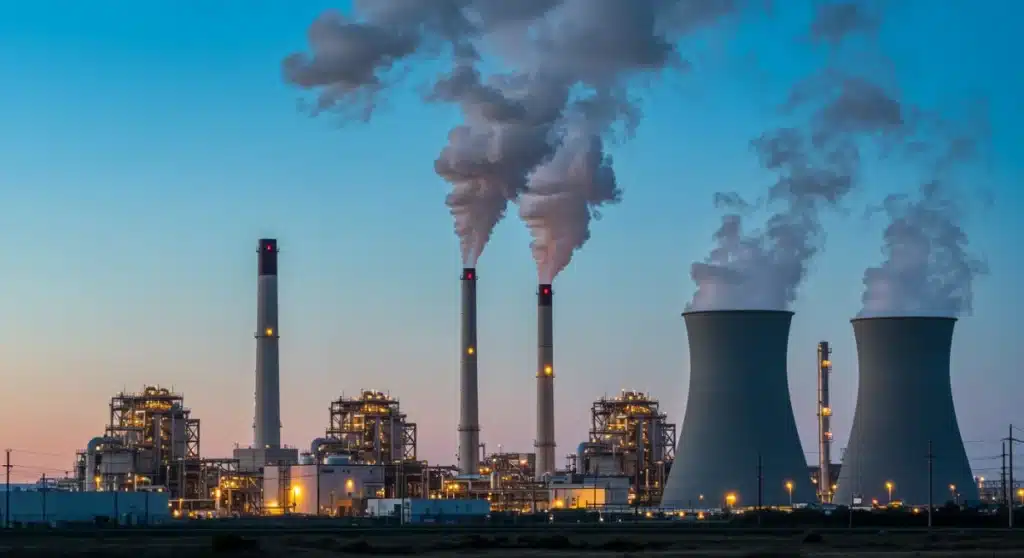
Latest developments on US Carbon Capture Policy: What to Expect by January 2026, with key facts, verified sources, and what readers need to monitor next in the United States, presented clearly in English (United States).
US Carbon Capture Policy is shaping today’s agenda with new details released by officials and industry sources. This update prioritizes what changed, why it matters, and what to watch next, in a straightforward news format.
Understanding the Evolving Landscape of US Carbon Capture Policy
The United States stands at a pivotal juncture in its climate change mitigation efforts, with carbon capture, utilization, and storage (CCUS) technologies emerging as a cornerstone of future environmental strategies. As January 2026 approaches, a clearer picture of the regulatory framework, financial incentives, and technological advancements surrounding US Carbon Capture Policy is beginning to materialize.
This evolving policy landscape is not merely theoretical; it directly impacts industries ranging from power generation to heavy manufacturing, dictating the feasibility and scale of CCUS projects nationwide. Stakeholders across various sectors are closely monitoring these developments, understanding that present decisions will significantly shape the nation’s decarbonization pathway.
The commitment to reducing greenhouse gas emissions has intensified, driven by both domestic imperatives and international climate agreements. Consequently, the trajectory of US Carbon Capture Policy reflects a concerted effort to balance economic growth with environmental stewardship, creating both opportunities and challenges for innovation and deployment.
Legislative Momentum and Future Regulatory Frameworks
Recent legislative actions have injected significant momentum into the carbon capture sector, setting the stage for a more robust policy environment. Key pieces of legislation, such as the Inflation Reduction Act (IRA), have dramatically altered the financial incentives available for CCUS projects, making them more economically viable.
These legislative changes are expected to translate into refined regulatory frameworks by January 2026, aiming to streamline permitting processes and clarify environmental safeguards. The Environmental Protection Agency (EPA) and other federal bodies are actively working on guidelines that will govern the siting, construction, and operation of carbon capture facilities and associated infrastructure.
The goal is to provide regulatory certainty for investors and developers, fostering an environment conducive to rapid deployment while ensuring public safety and environmental protection. The future of US Carbon Capture Policy hinges on these forthcoming regulations providing a clear, predictable path forward for project implementation.
The Role of the Inflation Reduction Act
The IRA significantly enhanced the 45Q tax credit, making it a primary driver for CCUS project development. This credit provides substantial financial incentives for capturing and storing or utilizing carbon dioxide, effectively reducing the cost burden on industries.
The extended and expanded 45Q credit has spurred a wave of new project announcements, demonstrating its immediate impact on investment decisions. Its provisions are designed to accelerate the adoption of carbon capture technologies across a diverse array of industrial applications, from cement production to direct air capture.
- Increased tax credits for captured CO2, both for storage and utilization.
- Expanded eligibility criteria to include a broader range of facilities and project sizes.
- Direct pay option for certain entities, enhancing financial accessibility.
Technological Advancements and Project Deployment Trends
The efficacy of US Carbon Capture Policy is intrinsically linked to the continuous evolution and deployment of carbon capture technologies. Significant strides are being made in developing more efficient, cost-effective, and scalable solutions for CO2 capture from various emission sources.
By January 2026, the industry anticipates a greater maturity in several nascent technologies, alongside optimized performance from existing capture methods. This technological progression is crucial for meeting the ambitious decarbonization targets set by federal and state governments, expanding the potential applications of CCUS.
Current trends indicate a diversification of deployed projects, moving beyond traditional power generation to encompass industrial emitters and even direct air capture. This broad deployment is vital for achieving comprehensive emissions reductions across the economy, underscoring the adaptability of US Carbon Capture Policy.
Innovations in Capture Technologies
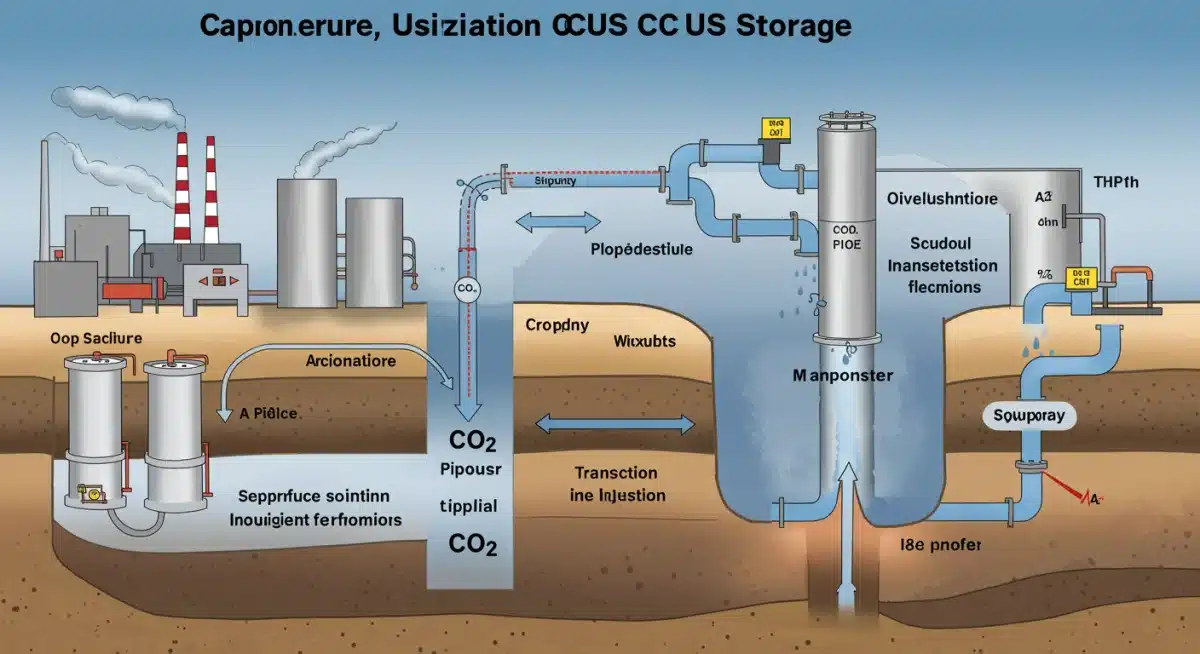
Researchers and private companies are actively pursuing breakthroughs in solvent-based, solid sorbent, and membrane technologies for CO2 capture. These innovations aim to reduce the energy penalty associated with carbon capture, a critical factor in overall project economics.
Direct Air Capture (DAC) technologies, while currently more expensive, are also receiving substantial investment and policy support. DAC is seen as a crucial tool for addressing legacy emissions and hard-to-abate sectors, complementing source-specific capture efforts.
- Development of novel materials for enhanced CO2 adsorption and separation.
- Integration of artificial intelligence and machine learning for process optimization.
- Pilot projects demonstrating scalability and efficiency of new capture methods.
Funding Mechanisms and Investment Outlook for Carbon Capture
The financial landscape for carbon capture projects in the U.S. is becoming increasingly robust, driven by a combination of federal incentives, private investment, and public-private partnerships. Understanding these funding mechanisms is crucial for assessing the future trajectory of US Carbon Capture Policy.
Beyond the 45Q tax credit, federal agencies are allocating substantial grants and loan guarantees to accelerate the development and deployment of CCUS infrastructure. These financial instruments aim to de-risk projects and encourage private sector participation, essential for scaling up the technology.
Private capital markets are also showing increased interest in carbon capture, viewing it as a critical component of sustainable investment portfolios. This confluence of public and private funding is creating a fertile ground for significant growth in the sector by January 2026, reinforcing the strength of US Carbon Capture Policy.
Federal Grants and Loan Programs
The Department of Energy (DOE) has been instrumental in providing funding for CCUS research, development, and demonstration projects. Its programs support a wide range of activities, from early-stage innovation to large-scale commercial deployment.
Loan programs, such as those offered by the DOE’s Loan Programs Office, offer attractive financing options for eligible carbon capture projects. These programs are designed to bridge the gap between pilot-scale demonstration and full commercial operation, overcoming initial financial barriers.
- DOE funding for regional carbon capture hubs.
- Grants for industrial decarbonization projects incorporating CCUS.
- Financial incentives for CO2 transport and storage infrastructure development.
Challenges and Opportunities in US Carbon Capture Policy Implementation
Despite the positive momentum, the implementation of US Carbon Capture Policy faces several significant challenges that must be addressed for successful widespread deployment. These include infrastructure development, public perception, and the complexities of geological storage.
The need for extensive CO2 pipeline networks and storage sites requires careful planning, stakeholder engagement, and robust regulatory oversight. Overcoming these hurdles presents opportunities for innovation in infrastructure planning and community benefit agreements, ensuring equitable outcomes.
Addressing public concerns about safety, environmental impact, and land use is paramount for gaining social license for CCUS projects. Transparent communication and community engagement are critical components of a successful US Carbon Capture Policy strategy, fostering trust and acceptance.
Infrastructure Development and Siting Issues
The construction of new CO2 pipelines and the identification of suitable geological storage sites are complex undertakings. These projects often encounter permitting delays and local opposition, highlighting the need for improved coordination among federal, state, and local authorities.
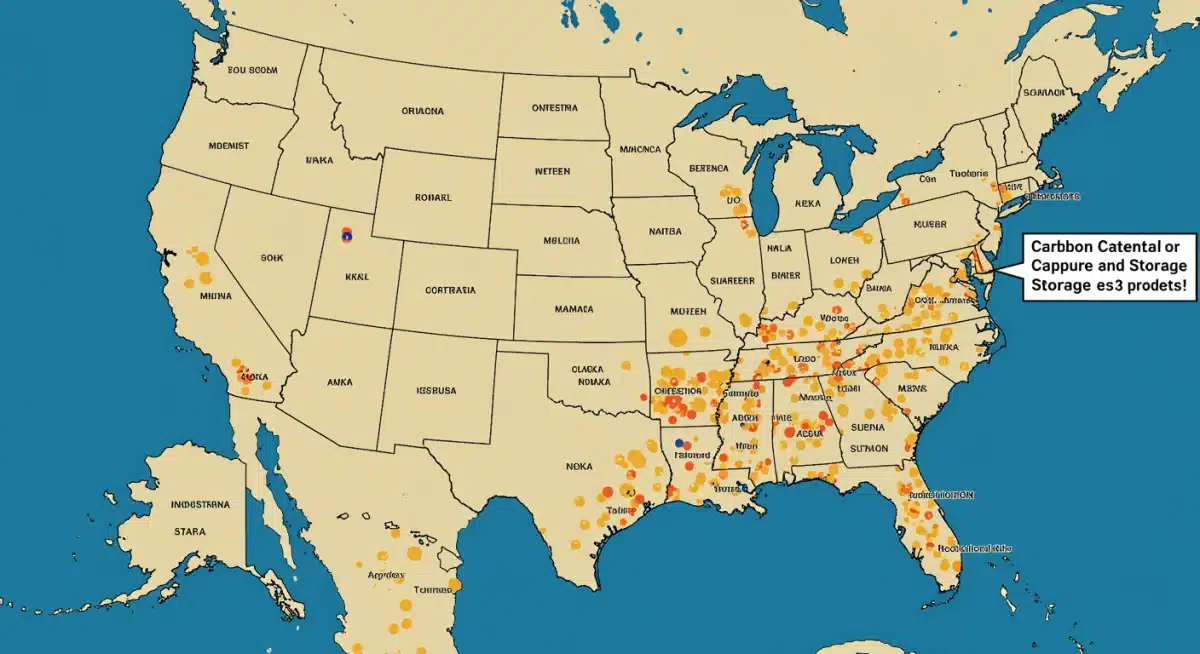
Developing a national CO2 transport and storage network is essential for connecting emission sources to sequestration sites. This requires significant investment and a clear regulatory framework to facilitate inter-state movement of CO2 and ensure long-term storage integrity.
- Streamlining federal and state permitting processes for CCUS infrastructure.
- Investing in geological data acquisition and characterization for storage sites.
- Developing best practices for community engagement and benefit sharing.
Environmental Justice and Community Engagement in CCUS Projects
A critical aspect of the evolving US Carbon Capture Policy is the increasing focus on environmental justice and meaningful community engagement. Historically, industrial projects have disproportionately impacted marginalized communities, and CCUS projects must avoid perpetuating these disparities.
Federal agencies are now emphasizing the importance of incorporating environmental justice considerations into project planning and permitting. This includes ensuring that the benefits of CCUS are broadly shared and that potential risks are not concentrated in vulnerable populations.
Effective community engagement strategies are vital for building trust and ensuring that local voices are heard throughout the project lifecycle. This proactive approach is essential for the long-term viability and social acceptance of US Carbon Capture Policy initiatives.
Ensuring Equitable Outcomes
Project developers are increasingly required to demonstrate how their CCUS projects will benefit local communities, particularly those that have historically borne the brunt of industrial pollution. This can include job creation, local economic development, and improved air quality.
Transparency in sharing information about potential environmental impacts and safety measures is crucial. Communities need access to clear, understandable data to make informed decisions about proposed projects in their vicinity, directly influencing the success of US Carbon Capture Policy.
- Mandatory environmental justice assessments for federally funded CCUS projects.
- Development of community benefit agreement templates and guidelines.
- Funding for independent technical assistance for affected communities.
International Context and Global Collaboration on Carbon Capture
The development of US Carbon Capture Policy does not occur in isolation; it is deeply intertwined with international efforts and global collaboration on climate change. The United States actively participates in international forums and partnerships aimed at advancing CCUS technologies and deployment.
Sharing best practices, research findings, and policy insights with other nations accelerates global progress in decarbonization. This international cooperation can also open up new markets for American CCUS technologies and expertise, bolstering domestic industry.
By January 2026, expect to see continued emphasis on global partnerships, particularly with countries that have significant industrial emissions or a strong interest in developing their own carbon capture capabilities. This collaborative approach strengthens the overall impact of US Carbon Capture Policy.
Key International Partnerships
The U.S. engages with organizations like the Clean Energy Ministerial’s Carbon Capture, Utilization, and Storage Initiative and the Mission Innovation CCUS Mission. These platforms facilitate knowledge exchange and collaborative research among leading nations.
Bilateral agreements with countries like Canada, the UK, and Norway are also crucial for advancing CCUS across borders. These partnerships often focus on shared infrastructure, regulatory harmonization, and joint research projects, reinforcing the global reach of US Carbon Capture Policy.
- Participation in international CCUS technology development and demonstration projects.
- Harmonization of measurement, reporting, and verification (MRV) standards for CO2 storage.
- Promotion of CCUS as a key climate solution in global climate negotiations.
Looking Ahead: The Role of Carbon Capture in US Climate Goals
As January 2026 approaches, the role of carbon capture in achieving the U.S.’s ambitious climate goals will become even more defined. US Carbon Capture Policy is not a standalone solution but rather a vital component of a broader strategy that includes renewable energy deployment, energy efficiency, and electrification.
The expectation is that by this time, a significant number of large-scale CCUS projects will be either operational or under advanced development, demonstrating the technology’s commercial viability and environmental benefits. This will provide critical data and experience to inform future policy adjustments.
The success of US Carbon Capture Policy will be measured not only by the amount of CO2 captured but also by its ability to foster economic growth, create jobs, and ensure a just transition for communities. The coming years will be crucial in solidifying carbon capture’s place in the nation’s energy future.
Metrics for Success and Future Policy Adjustments
Key metrics for evaluating the effectiveness of US Carbon Capture Policy include the volume of CO2 captured and stored, the cost-effectiveness of projects, and the degree of emissions reductions achieved in hard-to-abate sectors. These metrics will inform ongoing policy refinements.
Policy adjustments are likely to focus on further optimizing incentives, addressing remaining infrastructure bottlenecks, and strengthening long-term stewardship of CO2 storage sites. Adaptive policy-making will be essential to respond to technological advancements and changing market dynamics.
- Tracking the cumulative CO2 capture capacity deployed nationwide.
- Assessing the impact of CCUS on industrial competitiveness and job creation.
- Regular reviews of regulatory frameworks to ensure they remain fit for purpose.
| Key Point | Brief Description |
|---|---|
| Policy Evolution | Significant legislative changes, particularly the IRA, are driving CCUS expansion. |
| Technological Progress | Advancements in capture efficiency and DAC are accelerating deployment. |
| Funding and Investment | Federal incentives and private capital are fueling project development. |
| Challenges & Outlook | Infrastructure, public perception, and environmental justice remain key considerations. |
Frequently Asked Questions About US Carbon Capture Policy
The primary driver is the enhanced 45Q tax credit, significantly boosted by the Inflation Reduction Act. This incentive makes carbon capture projects more financially attractive by offering substantial tax benefits for captured and stored or utilized CO2, accelerating investment and deployment across various industries.
US Carbon Capture Policy is expected to significantly reduce industrial emissions, especially from hard-to-abate sectors like cement, steel, and chemical production. By providing incentives and regulatory frameworks, it encourages industries to adopt CCUS technologies, contributing to overall decarbonization efforts and cleaner industrial processes nationwide.
DAC is a growing component of US Carbon Capture Policy, targeting legacy emissions and those difficult to capture at the source. While currently more expensive, federal funding and research are accelerating its development. By January 2026, DAC is anticipated to become a more viable and scalable solution for achieving net-zero goals, complementing traditional CCUS.
Yes, environmental justice is a critical consideration. US Carbon Capture Policy increasingly emphasizes equitable project development, ensuring benefits are broadly shared and potential risks are not concentrated in vulnerable communities. Federal guidelines now require careful assessment and meaningful engagement to address historical disparities and ensure fair outcomes for all stakeholders.
Key challenges for US Carbon Capture Policy include developing extensive CO2 transport infrastructure, identifying suitable and publicly accepted geological storage sites, and managing public perception. Overcoming these requires streamlined permitting, significant investment, and robust community engagement to ensure project viability and social license for widespread deployment.
Looking Ahead: Implications for US Climate Action
The trajectory of US Carbon Capture Policy by January 2026 will profoundly influence the nation’s ability to meet its climate commitments. The ongoing legislative and technological advancements are setting a clear path for increased deployment, but successful implementation hinges on navigating infrastructure, regulatory, and social challenges. Stakeholders must remain vigilant, monitoring policy refinements, project progress, and community impacts to ensure that carbon capture contributes effectively and equitably to a decarbonized future. The next few years will be instrumental in solidifying carbon capture’s role in the broader energy transition strategy for the United States.