Green Bonds 2026: US Investor Guide for Sustainable Returns

As US investors increasingly seek both environmental impact and competitive financial returns, green bonds are becoming a key staple for strategic portfolio allocation.
With new updates from financial and environmental institutions driving market growth as 2026 approaches, understanding this dynamic asset class is essential.
This guide covers what changed, why it matters, and how investors can target sustainable 4–6% returns.
Understanding the Green Bond Market in 2026
The green bond market in 2026 stands as a cornerstone of sustainable finance, offering a unique avenue for investors to support environmentally beneficial projects while aiming for stable returns.
These debt instruments are specifically designed to fund initiatives that have a positive environmental or climate-related impact.
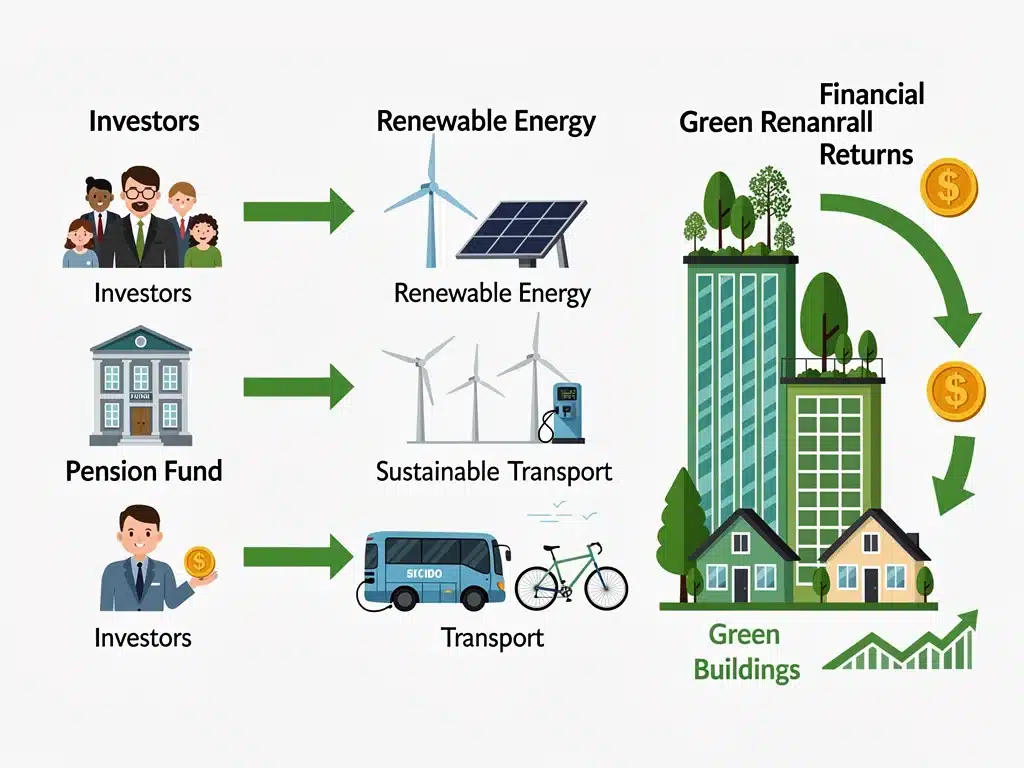
Issuers, ranging from sovereign entities to multinational corporations, leverage green bonds to finance projects such as renewable energy development, energy efficiency improvements, sustainable waste management, and conservation efforts.
This mechanism allows capital to be channeled directly into tangible environmental solutions.
For US investors, the appeal extends beyond altruism, encompassing the potential for consistent financial performance and portfolio diversification.
The market’s maturity and increasing standardization provide a clearer framework for evaluation and investment.
Defining Green Bonds and Their Purpose
Green bonds are essentially conventional bonds but with a crucial distinction: the proceeds are exclusively used to finance or refinance eligible green projects.
This earmarking of funds is verified by independent third-party assessments, ensuring transparency and accountability.
The core purpose is to mobilize capital for environmental solutions, bridging the gap between financial markets and climate action.
This direct link to tangible projects distinguishes green bonds from general corporate or government bonds.
Investors in green bonds are not just purchasing a debt instrument; they are actively participating in the transition to a low-carbon economy.
This dual benefit of financial return and environmental impact is a key driver of their popularity.
Market Growth and Projections for 2026
The green bond market has experienced exponential growth over the past decade, with issuance volumes consistently breaking new records year after year.
Projections for 2026 suggest this expansion will continue, fueled by global climate commitments and evolving investor preferences.
Analysts anticipate that total green bond issuance will exceed significant milestones, driven by increased participation from both established and emerging markets. This growth trajectory provides a wider array of investment opportunities for US investors.
The increasing liquidity and diversification within the market further enhance its attractiveness. New issuers and innovative bond structures are continuously emerging, broadening the scope of potential investments.
Key Benefits for US Investors
Investing in Green Bonds: A 2026 Guide for US Investors Seeking Sustainable Financial Returns of 4-6% offers a compelling blend of financial and non-financial advantages.
These benefits resonate with a growing segment of the investment community that prioritizes both profit and purpose.
Beyond the direct environmental impact, green bonds can enhance portfolio resilience and align with evolving regulatory landscapes. This dual appeal makes them a strategic component for forward-thinking investors.
The alignment with ESG (Environmental, Social, and Governance) principles is another significant draw, as investors increasingly seek to integrate sustainability into their core investment strategies.
Achieving Sustainable Financial Returns
One of the primary attractions for US investors is the potential for competitive and sustainable financial returns, typically ranging from 4-6% for well-selected bonds.
Green bonds generally carry similar credit risk profiles to conventional bonds from the same issuer, meaning their yields are often comparable.
The stability of fixed-income instruments, combined with the favorable market dynamics surrounding green finance, contributes to their appeal for income-seeking investors.
This makes them a viable alternative to traditional bond investments.
Moreover, the growing demand for sustainable assets can sometimes lead to a ‘greenium’ – a slight premium paid for green bonds due to their environmental attributes, which can translate into tighter spreads for issuers but also signify strong market confidence.
Diversification and Risk Management
Green bonds can play a crucial role in diversifying a US investor’s fixed-income portfolio. By investing in a range of green projects and issuers, investors can spread risk across different sectors and geographies.
The inherent connection to long-term sustainability themes can also offer a degree of resilience against certain market fluctuations.
Projects funded by green bonds, such as renewable energy infrastructure, often demonstrate stable cash flows.
Furthermore, the robust due diligence and third-party verification processes associated with green bonds can provide an added layer of transparency and risk mitigation. This contributes to investor confidence in the underlying assets.
Navigating the Investment Landscape for 2026
Successfully navigating the green bond market in 2026 requires a keen understanding of market trends, regulatory developments, and issuer credibility.
Investors must adopt a discerning approach to identify genuinely impactful and financially sound opportunities.
The increasing complexity of the market necessitates thorough research and, often, expert guidance. Staying informed about the latest standards and best practices is critical for making informed investment decisions.
This proactive approach ensures that investments align with both financial objectives and sustainability goals. It is about strategic engagement with a rapidly evolving sector.
Identifying High-Quality Green Bonds
Identifying high-quality green bonds involves scrutinizing several factors, including the issuer’s creditworthiness, the specific projects being funded, and the robustness of the bond’s green framework.
Reputable issuers with strong financial health are paramount.
The impact report of the bond, detailing how the proceeds are used and the environmental benefits achieved, is a critical document. Investors should look for clear, measurable, and verifiable environmental outcomes.
Independent third-party certifications and ratings from organizations like the Climate Bonds Initiative or Sustainalalytics provide valuable insights into the bond’s green credentials.
These assessments help differentiate truly green bonds from those with weaker environmental claims.
Regulatory Framework and Standards
The regulatory landscape surrounding green bonds is continually evolving, with increasing efforts to standardize definitions and reporting requirements.
In the US, various initiatives are underway to enhance transparency and integrity in sustainable finance.
Familiarity with frameworks like the Green Bond Principles (GBP) published by the International Capital Market Association (ICMA) is essential.
These voluntary guidelines promote integrity by recommending transparency and disclosure.
Upcoming regulations and proposed legislation in 2026 could further shape the market, potentially leading to more stringent reporting and verification standards.
Investors must remain abreast of these developments to ensure compliance and informed decision-making.

Staying informed about these regulatory shifts is crucial for any US investor committed to Investing in Green Bonds.
Potential Risks and Mitigation Strategies
While Investing in Green Bonds offers numerous advantages, it is not without its risks. Like any fixed-income instrument, green bonds are subject to market, credit, and interest rate risks.
However, specific considerations for green bonds include ‘greenwashing’ concerns and the potential for project-specific challenges. Understanding these risks is crucial for developing effective mitigation strategies.
A proactive approach to risk assessment and due diligence can significantly enhance the safety and effectiveness of green bond investments. This involves a comprehensive evaluation beyond just the green label.
Addressing Greenwashing Concerns
Greenwashing, the practice of making unsubstantiated or misleading claims about the environmental benefits of a product or project, is a significant concern in the sustainable finance space. Investors must be vigilant in discerning genuine green initiatives.
Mitigation strategies include focusing on bonds with robust third-party verification and clear, measurable impact reporting. Scrutinizing the issuer’s overall sustainability strategy and track record can also provide valuable context.
The increasing maturity of the market and the development of stricter standards are helping to curb greenwashing, but due diligence remains paramount. For Investing in Green Bonds, transparency is key.
Market and Credit Risks
Green bonds are subject to the same market risks as conventional bonds, including interest rate fluctuations that can impact bond prices. Rising interest rates generally lead to a decrease in bond values, and vice-versa.
Credit risk, the possibility of the issuer defaulting on its payments, is also a consideration. Investors should assess the creditworthiness of the issuer, often reflected in their credit ratings, before making an investment.
Diversification across different issuers, sectors, and geographies can help mitigate both interest rate and credit risks. A well-constructed portfolio of green bonds will balance these factors to optimize risk-adjusted returns.
Impact Reporting and Transparency
Impact reporting is a defining characteristic of green bonds, offering investors tangible evidence of their environmental contributions.
This transparency is vital for aligning investment decisions with sustainability goals and for verifying the integrity of the bond.
The quality and comprehensiveness of impact reports vary among issuers, underscoring the need for careful evaluation. Investors should seek reports that provide clear metrics and methodologies for environmental impact assessment.
For Investing in Green Bonds, robust reporting is not just good practice; it’s a fundamental expectation.
Measuring Environmental Impact
Measuring the environmental impact of green bond-funded projects involves quantifying metrics such as greenhouse gas emissions reduced, renewable energy generated, water saved, or waste diverted from landfills.
These metrics provide concrete evidence of positive change.
Issuers are increasingly adopting standardized methodologies for impact measurement, enhancing comparability across different bonds and projects.
This trend benefits investors by providing clearer insights into their investments’ environmental performance.
The ability to track and report on these impacts is a major differentiator for green bonds, offering a level of accountability often absent in traditional investment vehicles. It reinforces the value proposition for sustainable finance.
The Role of Third-Party Verification
Third-party verification plays a critical role in ensuring the credibility and integrity of green bonds. Independent organizations assess the issuer’s green bond framework and the eligibility of the projects being funded.
These verifications help prevent greenwashing and provide investors with an objective assessment of the bond’s environmental credentials. They add a layer of trust and confidence to the green bond market.
For US investors, relying on bonds that have undergone rigorous third-party review is a prudent strategy. This step is essential for any serious engagement with Investing in Green Bonds.
Integrating Green Bonds into a US Portfolio
Integrating green bonds into a US investment portfolio requires a thoughtful approach, balancing financial objectives with sustainability mandates.
This involves assessing how green bonds fit within an existing asset allocation strategy and considering their role in achieving long-term goals.
Whether as a core component of a fixed-income allocation or as a strategic addition for ESG enhancement, green bonds offer flexibility. Their utility spans various investor profiles, from institutional funds to individual retail investors.
The key is to develop a coherent strategy that leverages the unique characteristics of green bonds for both financial gain and environmental stewardship.
Strategic Allocation and Portfolio Construction
Strategic allocation of green bonds within a US portfolio depends on an investor’s risk tolerance, time horizon, and sustainability objectives. For conservative investors, green bonds can replace conventional investment-grade bonds.
More aggressive investors might consider green bonds from emerging markets or those funding innovative, higher-growth green technologies. The diversity of the market allows for tailored approaches.
Portfolio construction should also consider the duration and yield characteristics of green bonds relative to other fixed-income assets. This ensures optimal balance and risk-adjusted returns for Investing in Green Bonds.
Accessing the Green Bond Market
US investors can access the green bond market through various channels, including direct purchases of individual bonds, green bond mutual funds, or exchange-traded funds (ETFs) that specialize in sustainable fixed income.
Each option offers different levels of diversification and liquidity.
Mutual funds and ETFs provide an accessible entry point for retail investors, offering instant diversification and professional management. These vehicles typically hold a basket of green bonds, reducing single-issuer risk.
For institutional investors or those with larger capital, direct bond purchases offer greater control over specific investments and impact. Consulting with a financial advisor specializing in sustainable investing can also be beneficial.
The Future of Sustainable Finance: 2026 and Beyond
The trajectory of sustainable finance, with green bonds at its forefront, is set for continued expansion and innovation in 2026 and beyond.
This evolution will be driven by a confluence of factors, including technological advancements, evolving policy landscapes, and increasing investor demand.
As the urgency of climate action intensifies, the role of financial markets in facilitating the transition to a sustainable economy will only grow.
Green bonds are poised to remain a critical tool in this global effort.
For US investors, staying ahead of these trends will be key to unlocking future opportunities and contributing to a more resilient planet. The future of Investing in Green Bonds looks bright.
Technological Advancements and Green Finance
Technological advancements, particularly in areas like data analytics, artificial intelligence, and blockchain, are set to revolutionize green finance.
These technologies can enhance the transparency, traceability, and efficiency of green bond issuance and impact reporting.
AI can help in identifying eligible green projects and assessing their environmental impact more accurately. Blockchain technology could provide immutable records of bond issuance and fund utilization, further bolstering trust.
These innovations will make the process of Investing in Green Bonds more streamlined and secure, attracting an even broader base of investors.
Evolving Policy and Global Climate Goals
Global climate goals, such as those outlined in the Paris Agreement, continue to drive policy decisions that favor sustainable finance. Governments worldwide are implementing incentives and regulations to accelerate green investments.
In the US, federal and state-level policies are increasingly supporting renewable energy, sustainable infrastructure, and other green initiatives. These policies create a favorable environment for green bond issuance and investment.
The alignment of financial markets with these overarching climate objectives ensures a sustained demand for green financial products. This symbiotic relationship will define the future of Investing in Green Bonds.
This ongoing evolution necessitates continuous adaptation and informed decision-making from investors.
| Key Point | Brief Description |
|---|---|
| Market Growth | Green bond issuance projected to expand significantly by 2026, driven by global climate goals. |
| Financial Returns | US investors can expect 4-6% sustainable financial returns, comparable to conventional bonds. |
| Risk Mitigation | Due diligence, third-party verification, and diversification are crucial for managing risks like greenwashing. |
| Impact Transparency | Robust impact reporting and third-party verification ensure accountability and credibility of green projects. |
Frequently Asked Questions About Green Bonds
A green bond is a fixed-income instrument designed to raise capital for projects with environmental benefits. Its proceeds are exclusively earmarked for initiatives like renewable energy, sustainable transportation, or green buildings, verified by third parties.
Green bond returns are generally comparable to those of conventional bonds from the same issuer, aiming for 4-6% for US investors. Their yields reflect the issuer’s creditworthiness, with some potential for a ‘greenium’ due to strong demand.
Key risks include market fluctuations, interest rate changes, and issuer credit risk, similar to other bonds. Additionally, ‘greenwashing’ is a concern, mitigated by robust third-party verification and transparent impact reporting.
US investors should prioritize green bonds with strong third-party certifications and clear, measurable impact reports. Researching the issuer’s overall sustainability commitment and adherence to recognized principles like the GBP is crucial.
Green bonds offer diversification benefits as part of a fixed-income allocation, aligning portfolios with ESG criteria. They can enhance resilience and provide stable income while contributing to environmental solutions, appealing to purpose-driven investors.
Perspectives
The insights provided by Investing in Green Bonds: A 2026 Guide for US Investors Seeking Sustainable Financial Returns of 4-6% highlight a critical junction for US investors.
The continued growth and maturation of the green bond market solidify its role as a viable and impactful investment avenue.
What happens now involves staying informed on policy shifts, technological integrations, and evolving market standards.
To gain a deeper understanding of how these financial instruments directly drive environmental change, explore The Climate Reality Project’s Overview on Green Bonds and the Climate Crisis.
This forward-looking approach will be essential for capitalizing on sustainable financial opportunities and contributing to a greener global economy.