Green Hydrogen: Electrolysis to Lead US Market by 2026
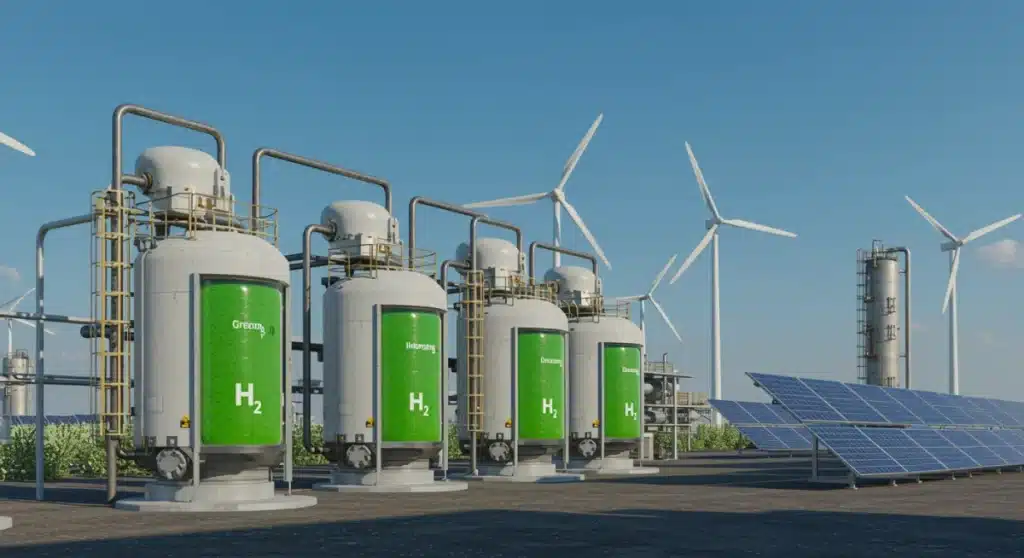
Electrolysis is poised to become the primary method for green hydrogen production in the U.S., projected to capture 60% of the market by 2026, driven by its sustainable nature and improving cost-effectiveness.
The energy landscape is rapidly evolving, with a strong push towards decarbonization and sustainable solutions. At the forefront of this transformation is green hydrogen, a versatile energy carrier with the potential to revolutionize various sectors. When we talk about green hydrogen electrolysis, we are referring to a method of producing hydrogen using renewable electricity to split water, resulting in zero greenhouse gas emissions. This approach is not just a theoretical concept; it’s rapidly becoming a commercial reality, with projections indicating it will dominate 60% of the U.S. green hydrogen market by 2026.
Understanding green hydrogen production methods
Green hydrogen is a critical component of the future energy mix, offering a clean alternative to fossil fuels across transportation, industry, and power generation. Its production, however, involves several methods, each with distinct characteristics and environmental impacts. Understanding these processes is key to appreciating why certain technologies are gaining prominence.
Traditionally, most hydrogen has been produced through steam methane reforming (SMR), a process that uses natural gas and releases significant carbon emissions, earning it the label ‘grey hydrogen’. More recently, carbon capture and storage (CCS) technologies have been integrated into SMR to create ‘blue hydrogen’, which has a lower carbon footprint but is not entirely emission-free. Green hydrogen, conversely, stands out as the truly sustainable option, relying solely on renewable energy sources.
Electrolysis: the clean champion
Electrolysis is the process of splitting water (H2O) into hydrogen (H2) and oxygen (O2) using electricity. When this electricity comes from renewable sources like solar or wind, the resulting hydrogen is classified as green. This method offers unparalleled environmental benefits, with no direct greenhouse gas emissions during production.
- Proton Exchange Membrane (PEM) Electrolyzers: These are highly efficient and compact, making them suitable for dynamic renewable energy sources. They can respond quickly to changes in power input.
- Alkaline Electrolyzers: A more mature technology, alkaline electrolyzers are robust and generally less expensive to build, though they might have a slower response time than PEM.
- Solid Oxide Electrolyzers (SOEC): Operating at high temperatures, SOEC systems can be more efficient, particularly when integrated with industrial waste heat, but they are still largely in the developmental and demonstration phases.
The choice of electrolyzer technology depends on various factors, including the scale of production, the availability of renewable energy, and economic considerations. Each type presents unique advantages and challenges, influencing their adoption in different market segments.
In conclusion, while various methods exist for hydrogen production, electrolysis powered by renewables is the only pathway to truly green hydrogen. Its inherent cleanliness and growing efficiency are positioning it as the method of choice for a sustainable energy future.
The rise of electrolysis in the U.S. market
The U.S. energy landscape is undergoing a profound transformation, with green hydrogen emerging as a key player in the decarbonization efforts. Projections indicate a significant shift towards electrolysis as the dominant production method, poised to capture 60% of the market by 2026. This rapid ascent is not accidental; it’s a culmination of technological advancements, supportive policies, and increasing economic viability.
Several factors are converging to accelerate the adoption of electrolytic green hydrogen. One of the most significant drivers is the plummeting cost of renewable electricity. As solar and wind power become increasingly competitive, the primary input cost for electrolysis decreases, making green hydrogen more economically attractive. Furthermore, the development of more efficient and scalable electrolyzer technologies is also playing a crucial role in enhancing cost-effectiveness and production capacity.
Key drivers for market dominance
The U.S. government, through initiatives like the Inflation Reduction Act (IRA), has introduced substantial incentives for clean hydrogen production. These tax credits and grants are significantly reducing the capital and operational costs for green hydrogen projects, making them more competitive against traditional fossil fuel-based hydrogen.
- Policy support: Federal and state incentives are creating a favorable investment climate for green hydrogen projects.
- Technological maturity: Electrolyzer technologies are becoming more efficient, durable, and scalable, reducing overall production costs.
- Decreasing renewable energy costs: The continuously declining cost of solar and wind power makes green hydrogen increasingly affordable.
- Corporate sustainability goals: Many corporations are setting ambitious net-zero targets, driving demand for truly green energy solutions like electrolytic hydrogen.
The strategic deployment of green hydrogen production facilities near renewable energy sources and demand centers further enhances its economic viability. This localized production minimizes transportation costs and energy losses, contributing to a more efficient and sustainable supply chain.
Ultimately, the confluence of robust policy support, advancing technology, and falling renewable energy prices is creating an unstoppable momentum for electrolysis within the U.S. green hydrogen market, cementing its projected dominance.
Economic viability and cost reduction pathways
The journey towards widespread adoption of green hydrogen is heavily dependent on its economic viability. While initial costs for electrolytic hydrogen have historically been higher than fossil fuel-derived hydrogen, significant progress in cost reduction pathways is rapidly closing this gap. The projected 60% market share for electrolysis by 2026 in the U.S. underscores this evolving economic landscape.
The primary cost components of green hydrogen production through electrolysis are electricity, electrolyzer capital costs, and operational expenses. Each of these areas is experiencing downward pressure due to innovation, economies of scale, and market dynamics. The increasing availability of low-cost renewable electricity is perhaps the most impactful factor, as electricity accounts for a substantial portion of the total production cost.
Reducing electrolyzer capital costs
Manufacturing advancements and increased production volumes are driving down the capital expenditure (CAPEX) for electrolyzers. As more gigafactories for electrolyzer production come online, the cost per megawatt of installed capacity is expected to decrease substantially. This scale-up is crucial for making large-scale green hydrogen projects financially attractive.
- Manufacturing scale-up: Increased production volumes lead to economies of scale and reduced unit costs for electrolyzers.
- Material innovation: Research into cheaper, more abundant materials for electrodes and membranes can lower manufacturing costs.
- Standardization and modularization: Developing standardized, modular electrolyzer designs can streamline manufacturing and installation, further reducing costs.
Beyond capital costs, operational expenses are also being addressed. Improved electrolyzer efficiency means less electricity is needed per kilogram of hydrogen produced, directly impacting operating costs. Furthermore, longer operational lifetimes and reduced maintenance requirements are contributing to a lower levelized cost of hydrogen (LCOH).
The combined effect of these cost reduction pathways is making green hydrogen increasingly competitive. This economic shift is a fundamental reason behind the projected dominance of electrolysis in the U.S. market, enabling it to compete with, and eventually surpass, less sustainable production methods.
Challenges and opportunities for widespread adoption
While the trajectory for green hydrogen electrolysis in the U.S. market appears promising, with projections of 60% dominance by 2026, the path to widespread adoption is not without its challenges. Addressing these hurdles effectively will be crucial for realizing the full potential of this clean energy carrier. However, these challenges also present significant opportunities for innovation and strategic development.
One of the primary challenges lies in the sheer scale of renewable energy infrastructure required to power large-scale electrolysis. Building sufficient solar and wind farms, along with grid upgrades, demands substantial investment and careful planning. intermittency of renewables also necessitates advanced energy management systems or dedicated energy storage solutions to ensure a consistent hydrogen supply.
Overcoming infrastructure bottlenecks
The existing pipeline infrastructure in the U.S. is largely designed for natural gas, posing a challenge for hydrogen transportation. While some blending of hydrogen into natural gas pipelines is possible, dedicated hydrogen pipelines or alternative transportation methods (e.g., ammonia or liquid hydrogen) will be essential for large-scale distribution. This requires significant capital investment and regulatory frameworks.
- Grid integration: Ensuring stable and reliable integration of large-scale renewable electricity for electrolyzers without straining existing grids.
- Hydrogen storage: Developing cost-effective and safe methods for storing large quantities of hydrogen, especially for seasonal or long-duration needs.
- Distribution networks: Building new dedicated hydrogen pipelines or adapting existing infrastructure for efficient and safe delivery to end-users.
Despite these challenges, the opportunities are immense. The development of a robust green hydrogen economy can create new industries, generate high-skilled jobs, and position the U.S. as a leader in clean energy technology. Furthermore, green hydrogen offers a pathway to decarbonize hard-to-abate sectors like heavy industry, long-haul transportation, and aviation, where electrification is less feasible.
By proactively addressing infrastructure needs, fostering technological innovation, and implementing supportive policies, the U.S. can overcome these challenges and fully capitalize on the opportunities presented by green hydrogen electrolysis, solidifying its market leadership.
Environmental impact and sustainability benefits
The environmental impact of energy production is a paramount concern in today’s world. Green hydrogen, particularly through electrolysis powered by renewable energy, offers profound sustainability benefits that position it as a cornerstone of a decarbonized future. The projected dominance of electrolysis in the U.S. market by 2026 is a testament to its unparalleled environmental credentials.
The most significant advantage of green hydrogen is its near-zero greenhouse gas emissions throughout its lifecycle, from production to end-use. Unlike fossil fuels, which release carbon dioxide and other pollutants when burned, hydrogen combustion primarily produces water vapor. This makes it an ideal clean fuel for applications ranging from fuel cell vehicles to industrial heating.
Mitigating climate change
By replacing fossil fuels in various sectors, green hydrogen can play a critical role in mitigating climate change. Its ability to store and transport renewable energy also addresses the intermittency challenges of solar and wind power, enabling a more stable and resilient clean energy system. This is particularly important for grid balancing and providing power during periods of low renewable output.
- Zero emissions: Electrolytic green hydrogen produces no carbon dioxide or other harmful greenhouse gases during production, provided renewable electricity is used.
- Air quality improvement: Replacing combustion engines and industrial processes that use fossil fuels leads to significant reductions in local air pollution.
- Resource efficiency: Water is the primary input for electrolysis, and advancements in water management and recycling are making the process increasingly resource-efficient.
Beyond direct emissions, the sustainability benefits extend to reducing reliance on finite fossil fuel resources and promoting energy independence. A robust green hydrogen economy can insulate nations from volatile global energy markets and enhance national security by diversifying energy sources.
In essence, the shift towards green hydrogen electrolysis represents a critical step towards achieving global climate goals and fostering a truly sustainable energy system. Its environmental benefits are not just theoretical; they are tangible and offer a clear pathway to a cleaner, healthier planet.
Future outlook and market expansion
The future outlook for green hydrogen electrolysis in the U.S. is exceptionally bright, with the projected 60% market dominance by 2026 serving as a strong indicator of its accelerating growth. This expansion is driven by a confluence of technological innovation, supportive policy frameworks, and increasing industrial demand. The next few years are expected to see significant advancements and diversification in green hydrogen applications.
As electrolyzer technology continues to mature and costs decrease, green hydrogen will become competitive in an even wider range of applications. We can anticipate its increased use in heavy-duty transportation, such as trucking, shipping, and aviation, where electrification remains challenging. Furthermore, its role in industrial decarbonization, particularly in sectors like steel, chemicals, and cement, is set to expand dramatically.
Emerging applications and partnerships
The development of green hydrogen hubs across the U.S. is a key strategy for fostering regional ecosystems that integrate production, distribution, and end-use. These hubs will leverage local renewable energy resources and industrial demand to create efficient and scalable supply chains, further accelerating market expansion.
- Industrial feedstock: Green hydrogen will increasingly replace grey hydrogen as a feedstock in chemical production and refining.
- Power generation and storage: Hydrogen can be used in gas turbines for power generation or stored for long-duration energy needs, enhancing grid stability.
- International collaboration: The U.S. is likely to forge partnerships with other nations to develop global green hydrogen supply chains and accelerate technology transfer.
The ongoing research and development in areas such as advanced materials for electrolyzers, more efficient hydrogen storage solutions, and innovative conversion technologies will further solidify the market position of green hydrogen. Coupled with sustained policy support and private sector investment, these factors create a compelling vision for a future where green hydrogen plays a central role in the global energy transition.
Ultimately, the continued growth and diversification of green hydrogen applications, powered predominantly by electrolysis, will be instrumental in achieving ambitious climate goals and building a sustainable, resilient energy system for the U.S. and beyond.
| Key Point | Brief Description |
|---|---|
| Electrolysis Dominance | Projected to cover 60% of the U.S. green hydrogen market by 2026. |
| Key Drivers | Falling renewable energy costs, policy support (e.g., IRA), and technological advancements. |
| Sustainability | Zero greenhouse gas emissions, contributing significantly to climate change mitigation. |
| Challenges | Infrastructure development, storage, and grid integration. |
Frequently asked questions about green hydrogen electrolysis
Green hydrogen is produced by splitting water into hydrogen and oxygen using electricity generated from renewable sources like solar or wind power. This process, known as electrolysis, results in zero greenhouse gas emissions, making it a truly clean energy carrier.
Electrolysis is projected to dominate due to falling costs of renewable electricity, significant government incentives from acts like the Inflation Reduction Act, and continuous advancements in electrolyzer technology that improve efficiency and scalability, making it economically competitive.
The main types are Proton Exchange Membrane (PEM), Alkaline, and Solid Oxide Electrolyzers (SOEC). PEMs are efficient and dynamic, Alkaline electrolyzers are mature and robust, and SOECs offer high efficiency at elevated temperatures, often with waste heat integration.
Key challenges include the massive scale of renewable energy infrastructure required, the need for significant upgrades to hydrogen distribution networks, and developing cost-effective, long-duration hydrogen storage solutions to manage renewable energy intermittency.
Green hydrogen significantly contributes to sustainability by enabling decarbonization across various sectors, reducing greenhouse gas emissions to near zero, improving air quality, and decreasing reliance on fossil fuels, thereby helping to mitigate climate change effects.
Conclusion
The trajectory for green hydrogen electrolysis in the U.S. market is not just a projection; it’s a clear indication of a profound shift in our energy paradigm. With its inherent cleanliness, decreasing production costs, and robust policy support, electrolysis is set to become the cornerstone of green hydrogen production, dominating 60% of the market by 2026. While challenges related to infrastructure and scale remain, the opportunities for economic growth, job creation, and significant environmental benefits are immense. As we move forward, continued innovation, strategic investments, and collaborative efforts will be crucial in fully realizing the potential of green hydrogen as a key enabler of a sustainable, decarbonized future.