Smart Grids US: Reduce Commercial Energy Waste 15% by 2026
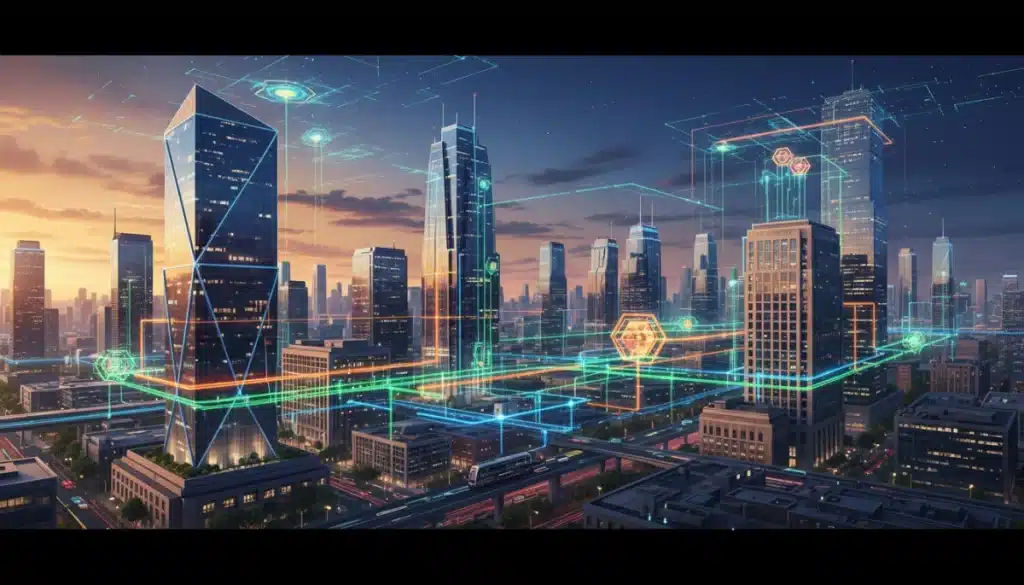
Smart Grids in the US: A Practical Guide to Reducing Energy Waste by 15% for Commercial Buildings in 2026 delivers an objective breakdown of the nation’s shifting energy infrastructure.
This guide provides key facts, verified sources, and the practical steps commercial enterprises must take to hit this ambitious 15% efficiency target.
Read on for actionable insights into advanced grid integration, environmental benefits, and strategic cost reductions.
Understanding the Smart Grid Imperative for Commercial Buildings
The imperative for commercial buildings to engage with smart grid technologies stems from both economic pressures and environmental mandates.
Reducing energy waste is not just about compliance; it’s about competitive advantage and long-term sustainability in a rapidly evolving energy market.
The target of a 15% reduction by 2026 is ambitious but achievable with strategic planning.
This widespread adoption of smart grid principles will redefine how commercial entities manage their energy consumption, moving towards more dynamic and responsive systems.
It involves a fundamental rethinking of energy procurement, distribution, and utilization within large-scale commercial operations. The benefits extend beyond mere cost savings, impacting brand reputation and operational resilience.
Federal and state initiatives are increasingly supporting the deployment of smart grid technologies, offering incentives and regulatory frameworks that encourage investment.
These policies recognize the critical role commercial buildings play in the overall energy ecosystem. Embracing these changes proactively positions businesses at the forefront of energy innovation.
What Defines a Smart Grid for Commercial Use?
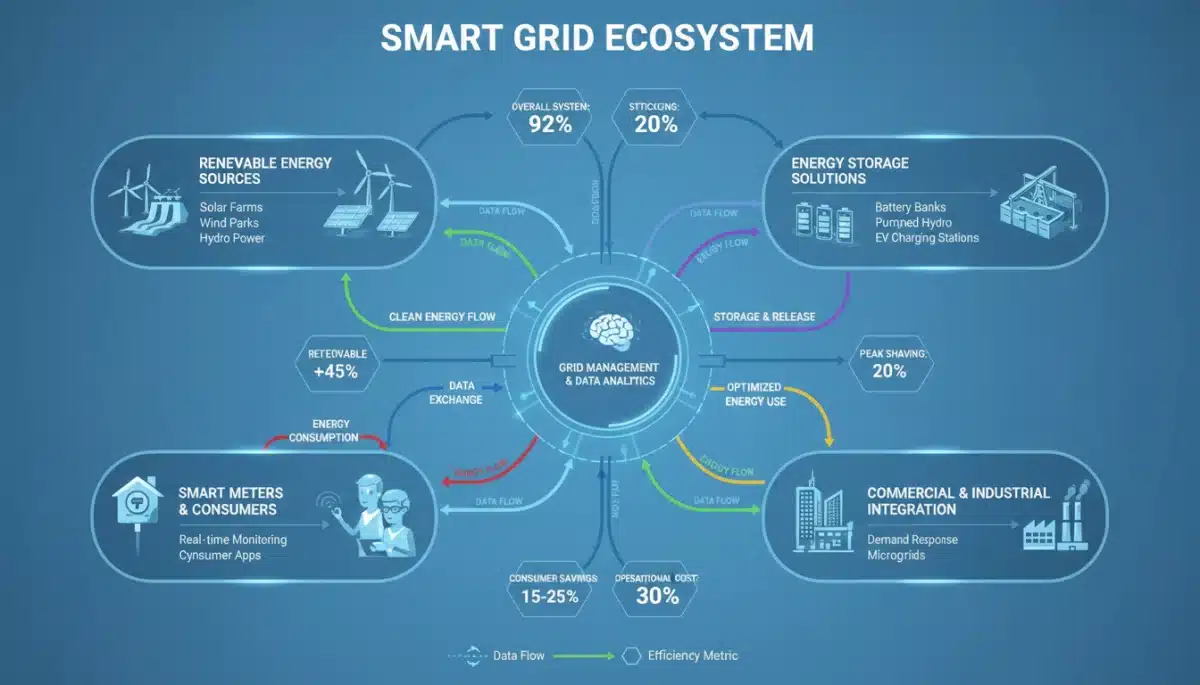
A smart grid for commercial use integrates digital technology with the electrical grid to enable two-way communication between utilities and consumers.
This allows for real-time monitoring, control, and optimization of energy flow, leading to improved efficiency and reliability. Key components include advanced metering infrastructure, automated distribution systems, and intelligent building management systems.
The core principle is to create a more resilient and efficient energy network that can adapt to fluctuating demands and integrate diverse energy sources, including renewables.
For commercial buildings, this translates into more precise control over energy consumption, demand response capabilities, and enhanced diagnostics for identifying waste. It’s a holistic approach to energy management.
- Advanced Metering Infrastructure (AMI): Provides granular data on energy use.
- Demand Response Programs: Incentivize reducing consumption during peak times.
- Building Management Systems (BMS): Automate and optimize building operations.
- Distributed Energy Resources (DERs): Integration of on-site renewables and storage.
The Economic Case for 15% Waste Reduction
The economic case for achieving a 15% reduction in energy waste for commercial buildings by 2026 is compelling.
Reduced energy consumption translates directly into lower operational costs, significantly impacting a business’s bottom line. These savings can then be reinvested into other areas of the business, fostering growth and innovation.
Beyond direct cost savings, enhanced energy efficiency can increase property value and attract environmentally conscious tenants or customers.
Buildings with lower energy footprints are increasingly viewed as premium assets, offering a competitive edge in various markets. The long-term financial benefits far outweigh the initial investment in smart grid technologies.
Furthermore, participation in demand response programs and the ability to sell excess renewable energy back to the grid can create new revenue streams.
These opportunities, facilitated by smart grid integration, open up diverse financial avenues for commercial building owners and operators. The financial incentives are multifaceted and substantial.
Key Technologies Driving Smart Grids in Commercial Settings
The advancement of smart grids in commercial settings is propelled by a suite of innovative technologies that collectively enable unprecedented levels of energy management.
These technologies are not only about efficiency but also about creating resilient and adaptable energy systems. Understanding these tools is fundamental to leveraging the full potential of Smart Grids.
From sophisticated sensors to AI-driven analytics, the technological landscape is rich with solutions designed to optimize every facet of a commercial building’s energy profile.
The synergistic operation of these systems allows for real-time adjustments and predictive maintenance, minimizing waste and maximizing performance. This integrated approach is key to meeting the 2026 target.
The ongoing research and development in green technology continue to introduce newer, more efficient solutions, making smart grid adoption increasingly accessible and cost-effective.
Commercial building owners must stay abreast of these innovations to select the most suitable technologies for their specific needs. The pace of technological change demands continuous evaluation.
Advanced Metering Infrastructure (AMI) and Data Analytics
Advanced Metering Infrastructure (AMI) forms the backbone of smart grid deployments in commercial buildings, providing granular, real-time data on energy consumption.
Unlike traditional meters, AMI systems offer two-way communication, enabling utilities to gather detailed usage patterns and commercial buildings to monitor their consumption with precision. This data is critical for identifying inefficiencies.
The raw data collected by AMI systems becomes truly valuable when processed through sophisticated data analytics platforms.
These platforms employ artificial intelligence and machine learning algorithms to detect anomalies, predict future energy needs, and suggest optimization strategies.
This predictive capability allows building managers to make informed decisions that actively reduce waste.
For example, by analyzing historical data and current weather patterns, an analytics system can automatically adjust HVAC settings to maintain comfort while minimizing energy use.
This proactive management is a cornerstone of achieving the 15% energy waste reduction goal. The insights derived from AMI and data analytics are indispensable for effective energy stewardship.
Integrated Building Management Systems (BMS)
Integrated Building Management Systems (BMS) are central to the operational efficiency of smart commercial buildings.
These systems consolidate control over various building functions, including HVAC, lighting, security, and power management, into a single, intelligent platform. This integration eliminates isolated controls and fosters a holistic approach to energy utilization.
A modern BMS can dynamically adjust environmental controls based on occupancy, time of day, external weather conditions, and even electricity pricing signals from the grid.
This level of automation ensures that energy is only consumed when and where it is truly needed, preventing unnecessary waste. The coordination across systems is vital for optimal performance.
Furthermore, advanced BMS platforms can integrate with other smart grid components, such as distributed energy resources and demand response programs.
This allows commercial buildings to become active participants in the grid, optimizing their energy profile not just internally but also in relation to the broader energy network. This interconnectedness is key for Smart Grids.
Implementing Smart Grid Solutions: A Practical Roadmap
Implementing smart grid solutions in commercial buildings requires a structured and practical roadmap to ensure successful integration and achieve the target of 15% energy waste reduction by 2026.
This process involves several key phases, from initial assessment to ongoing optimization, demanding careful planning and execution. A phased approach minimizes disruption and maximizes returns.
The journey towards a smarter, more efficient commercial building begins with a thorough understanding of current energy consumption patterns and potential areas for improvement.
Engaging with energy experts and technology providers early in the process can streamline decision-making and ensure the selection of appropriate solutions. This collaborative effort is crucial for long-term success.
Moreover, securing adequate funding and understanding available incentives are vital steps in the implementation process.
Many government programs and utility rebates exist to support smart grid deployments, significantly reducing the financial burden. Commercial building owners should explore all available resources to facilitate their transition.
Phase 1: Energy Audit and Baseline Establishment
The foundational step in any smart grid implementation is a comprehensive energy audit of the commercial building.
This audit establishes a detailed baseline of current energy consumption, identifying major energy users, peak demand times, and existing inefficiencies. Without an accurate baseline, measuring the impact of smart grid solutions becomes challenging.
This phase often involves deploying temporary monitoring equipment to gather granular data over a representative period, typically several weeks or months.
The insights gained from this audit are crucial for developing a tailored strategy that targets the most impactful areas for waste reduction. It’s about understanding where the energy is going and why.
Establishing a clear baseline also provides a benchmark against which future energy savings can be accurately measured, allowing commercial building owners to track progress towards the 15% reduction goal.
This data-driven approach ensures accountability and validates the effectiveness of implemented smart grid technologies. It’s the starting point for effective energy management.
Phase 2: Technology Selection and Integration
Following the energy audit, the next critical phase involves selecting the most appropriate smart grid technologies and planning their seamless integration into the commercial building’s existing infrastructure.
This selection process should consider factors such as scalability, compatibility with current systems, and the specific energy challenges identified during the audit. It’s about finding the right tools for the job.
Integration is often the most complex part of the process, requiring careful coordination between IT, facilities management, and external technology vendors.
The goal is to create a unified system where all smart grid components communicate effectively, sharing data and responding to commands in real-time. This interconnectedness is essential for optimizing energy flow.
- Smart Meter Deployment: Installing advanced meters for detailed energy monitoring.
- BMS Upgrade/Installation: Implementing intelligent controls for various building systems.
- Sensor Networks: Deploying occupancy, light, and temperature sensors for dynamic adjustments.
- Renewable Integration: Connecting on-site solar, wind, or storage solutions to the grid.
Overcoming Challenges in Smart Grid Adoption
Despite the clear benefits, commercial buildings face several challenges in adopting smart grid solutions to meet the 2026 energy waste reduction target.
These obstacles range from initial investment costs to the complexity of integrating diverse technologies and ensuring data security. Addressing these challenges proactively is essential for successful implementation of Smart Grids.
One significant hurdle is often the upfront capital expenditure required for smart grid infrastructure.
While the long-term returns are substantial, securing initial funding can be a barrier for some businesses. This necessitates a thorough cost-benefit analysis and exploration of financing options and incentive programs.
Another critical concern is cybersecurity. As commercial buildings become more interconnected with the energy grid, the risk of cyber threats increases.
Robust security protocols and continuous monitoring are paramount to protect sensitive data and maintain operational integrity. Proactive cybersecurity measures are non-negotiable in this digital transformation.
Addressing Initial Investment Costs
The initial investment required for smart grid technologies can be a significant deterrent for commercial building owners. However, a range of financial incentives, including federal grants, state tax credits, and utility rebates, are available to offset these costs.
Exploring these programs can substantially reduce the financial burden and make adoption more feasible.
Furthermore, innovative financing models, such as Energy as a Service (EaaS) or green bonds, allow businesses to implement smart grid solutions without large upfront capital outlays.
These models often involve third-party providers who finance, install, and maintain the systems, with costs recovered through energy savings over time. This shifts the financial risk and responsibility.
It is also crucial to consider the long-term return on investment (ROI).
The energy savings, reduced maintenance costs, and potential revenue from demand response programs often lead to attractive payback periods, making the initial investment a worthwhile strategic decision.
A comprehensive financial analysis is key to demonstrating this value.
Ensuring Data Security and Privacy
The increasing connectivity of smart grids in commercial buildings brings with it legitimate concerns regarding data security and privacy.
The vast amount of data collected on energy consumption patterns, building occupancy, and operational details could be vulnerable to cyberattacks if not properly secured. Protecting this information is paramount.
Implementing robust cybersecurity measures, such as encryption, multi-factor authentication, and intrusion detection systems, is essential.
Regular security audits and employee training on best practices are also critical components of a comprehensive security strategy. Collaborating with cybersecurity experts is advisable to safeguard against evolving threats.
Beyond security, privacy concerns related to granular energy data must also be addressed.
Clear policies on data collection, storage, and usage, along with transparent communication with building occupants, can build trust and ensure compliance with relevant privacy regulations.
Balancing data utility with privacy protection is a delicate but necessary act for Smart Grids.
The Role of Policy and Incentives in Achieving 2026 Goals
Policy frameworks and government incentives play a pivotal role in accelerating the adoption of smart grid technologies and achieving the ambitious 2026 energy waste reduction goals for commercial buildings.
These measures provide the necessary push and financial support for businesses to invest in advanced energy solutions. Understanding the landscape of these policies is crucial for stakeholders.
Federal and state governments are increasingly recognizing the strategic importance of smart grids for national energy security, economic competitiveness, and environmental sustainability.
This recognition translates into a variety of programs designed to lower barriers to entry and encourage innovation in the energy sector. These policies are foundational to the widespread success of smart grids.
Furthermore, regulatory bodies are working to modernize grid infrastructure and establish standards that facilitate the seamless integration of distributed energy resources and demand-side management.
These regulatory shifts create a more favorable environment for smart grid deployment, ensuring that commercial buildings can effectively participate in the evolving energy market.
Federal and State Support Programs
Numerous federal and state support programs are available to commercial building owners looking to implement smart grid solutions.
These programs often come in the form of tax credits, grants, and low-interest loans, significantly reducing the financial burden associated with technology upgrades.
Examples include the Investment Tax Credit (ITC) for solar energy and various state-specific energy efficiency programs.
The Department of Energy (DOE) and the Environmental Protection Agency (EPA) also offer resources and funding opportunities aimed at promoting energy efficiency and smart grid integration in commercial and industrial sectors.
These initiatives not only provide financial aid but also offer technical assistance and best practice guidelines. Tapping into these resources is a smart strategy.
Staying informed about the latest federal and state programs is essential, as eligibility criteria and available funds can change.
Regularly checking government websites and consulting with energy consultants can ensure that commercial building owners are aware of all available opportunities to support their smart grid endeavors.
These programs are a cornerstone of the Smart Grids initiative.
Regulatory Frameworks and Grid Modernization
Regulatory frameworks are continuously evolving to support the modernization of the US electrical grid, a process that directly benefits commercial buildings adopting smart grid technologies.
These frameworks address issues such as interconnection standards for distributed energy resources, market mechanisms for demand response, and data exchange protocols. A stable regulatory environment is key for investment.
Public utility commissions (PUCs) at the state level play a critical role in shaping these regulations, often working to balance the interests of utilities, consumers, and environmental advocates.
Their decisions impact how commercial buildings can interact with the grid, participate in energy markets, and monetize their energy efficiency efforts. Engagement with these regulatory bodies is sometimes necessary.
The ongoing push for grid modernization aims to create a more resilient, reliable, and efficient energy system capable of handling the increasing complexity of renewable energy integration and dynamic demand.
This overarching goal directly aligns with the objectives of commercial buildings striving for 15% energy waste reduction. The regulatory landscape is becoming increasingly conducive to smart grid advancements.
Future Outlook: Beyond 2026 for Commercial Energy Efficiency
Looking beyond the 2026 target for 15% energy waste reduction, the future outlook for commercial energy efficiency through smart grids is one of continuous innovation and deeper integration.
The journey does not end with the initial goal; rather, it marks a significant milestone in a longer trajectory towards fully sustainable and intelligent commercial buildings. This ongoing evolution promises even greater efficiencies.
Future advancements will likely include more sophisticated AI and machine learning applications, predictive maintenance capabilities that anticipate equipment failures, and enhanced interoperability between diverse smart building systems.
The focus will shift towards not only reducing waste but also optimizing energy generation and storage within commercial properties. The possibilities are vast and exciting.
The role of commercial buildings as active participants in the grid will also expand, moving beyond demand response to potentially becoming microgrid hubs that can operate independently during outages or contribute surplus energy back to the main grid.
This vision of energy self-sufficiency and grid support represents the ultimate evolution of Smart Grids.
Emerging Technologies and Trends
Several emerging technologies and trends are poised to further revolutionize commercial energy efficiency post-2026.
These include the widespread adoption of blockchain for secure energy transactions, advanced energy storage solutions that go beyond current battery technologies, and the integration of quantum computing for complex grid optimization problems.
These innovations promise unprecedented levels of control and efficiency.
The development of digital twins for commercial buildings, virtual replicas that simulate real-world performance, will allow for highly accurate energy modeling and optimization before physical implementation.
This reduces risk and accelerates the deployment of new efficiency measures. The ability to simulate and test scenarios offers immense benefits.
Furthermore, the growing emphasis on circular economy principles will drive the development of energy systems that prioritize resource recovery and waste reduction at every stage of the energy lifecycle.
This holistic approach will see commercial buildings not just as energy consumers but as integral components of a regenerative energy ecosystem. The future is about more than just incremental improvements.
Long-Term Benefits for Commercial Real Estate
The long-term benefits of smart grid integration for commercial real estate extend far beyond immediate energy savings.
Buildings that embrace these technologies will command higher market values, attract discerning tenants, and demonstrate a strong commitment to environmental stewardship. This positions them as leaders in the sustainable building movement.
Enhanced energy resilience, a critical feature of smart grid-enabled buildings, will become an increasingly important differentiator.
The ability to maintain operations during grid outages or extreme weather events provides a significant competitive advantage and ensures business continuity. This resilience contributes directly to the long-term value of the property.
Ultimately, commercial real estate that fully integrates smart grid principles will contribute to a healthier planet, reduce operational risks, and secure a more stable financial future.
The investment in Smart Grids is an investment in enduring value and sustainability for the entire sector. The benefits are multifaceted and enduring.
| Key Point | Brief Description |
|---|---|
| 15% Reduction Target | Commercial buildings aim to cut energy waste by 15% by 2026 using smart grids. |
| Key Technologies | AMI, BMS, and data analytics are crucial for optimizing energy use. |
| Implementation Roadmap | Starts with energy audits, followed by technology selection and integration. |
| Policy & Incentives | Federal and state programs support adoption and ease financial burdens. |
Frequently Asked Questions About Smart Grids in Commercial Buildings
The primary goal is to achieve a 15% reduction in energy waste in commercial buildings across the US by 2026. This objective aims to enhance energy efficiency, lower operational costs, and contribute significantly to national sustainability efforts. It leverages advanced technologies for real-time monitoring and dynamic energy management.
Smart grids reduce energy waste by providing granular data on consumption via Advanced Metering Infrastructure (AMI) and enabling intelligent control through Building Management Systems (BMS). This allows for real-time optimization of HVAC, lighting, and other systems, responding to demand fluctuations and integrating renewable sources efficiently.
Key technologies include Advanced Metering Infrastructure (AMI) for data collection, sophisticated data analytics for insights, and Integrated Building Management Systems (BMS) for automated control. Additionally, sensor networks, demand response programs, and the integration of distributed energy resources like solar panels are crucial components.
Commercial buildings may encounter challenges such as significant initial investment costs, the complexity of integrating new technologies with existing infrastructure, and ensuring robust cybersecurity for interconnected systems. Addressing these requires careful planning, exploring financial incentives, and implementing stringent security protocols.
Yes, numerous federal and state incentives are available. These often include tax credits, grants, and utility rebates designed to offset initial investment costs. Programs from the Department of Energy and EPA, alongside innovative financing models, help make smart grid implementation more financially viable for commercial property owners and operators.
Impact and Implications
The ongoing initiative to deploy Smart Grids in the US: A Practical Guide to Reducing Energy Waste by 15% for Commercial Buildings in 2026 carries significant implications for the nation’s energy future and commercial real estate.
This strategic shift is not merely about achieving a numerical target; it represents a fundamental re-evaluation of how commercial entities consume and manage energy.
Businesses must recognize this as a critical opportunity for sustainable growth and operational resilience.
Looking ahead, the success of this endeavor will undoubtedly influence future energy policies and infrastructure development, potentially setting new benchmarks for efficiency across other sectors.
To scale these efficiencies effectively, companies often integrate advanced cloud analytics and AI; exploring dedicated enterprise solutions like IBM Energy, Utilities & Oil & Gas Industry Solutions provides a clear look at how modernized grid platforms optimize load management and carbon reduction.
Stakeholders should closely monitor regulatory updates, technological advancements, and emerging market trends to stay competitive. The landscape of commercial energy management is undergoing a profound and lasting transformation.
This movement towards smart grid integration will continue to drive innovation in green technology, creating new economic opportunities and fostering a more sustainable built environment.
The benefits extend beyond individual buildings, contributing to a more robust and resilient national energy grid. The long-term impact will shape how the US approaches energy consumption for decades to come.