Investing in Climate Resilience: Top U.S. Sectors for 20% Growth
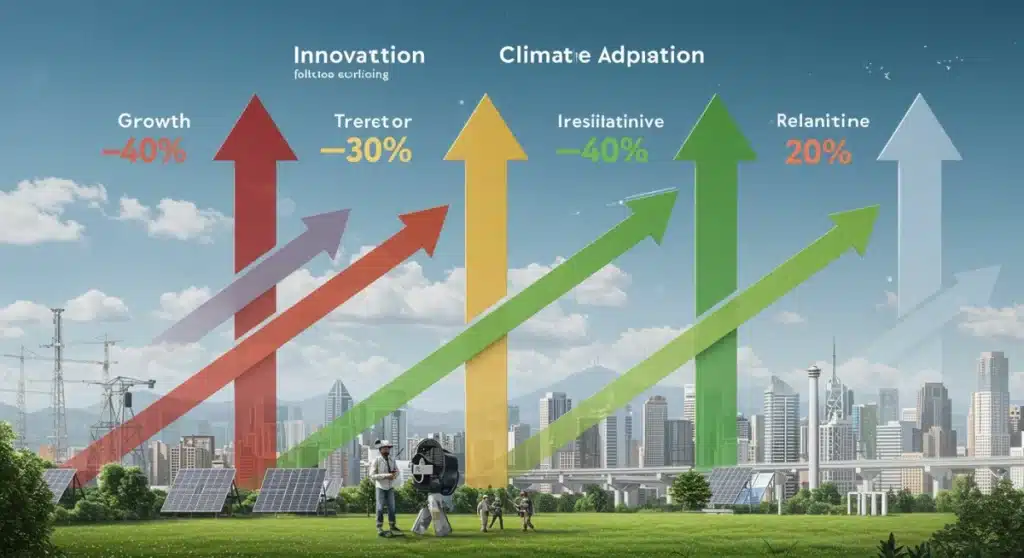
Latest developments on Climate Resilience investing in the United States highlight strong momentum across infrastructure, clean energy, water management, and resilient agriculture. Analysts project up to 20% growth by 2026, driven by federal funding and private sector innovation.
Recent updates show increased investment in grid modernization, flood protection systems, and climate-smart construction. Verified insights indicate that both government programs and ESG-focused funds are accelerating capital into these sectors.
Looking ahead, investors should monitor policy incentives, infrastructure spending, and technological advancements. Key factors include regulatory support, climate risk exposure, and how effectively these sectors scale to meet growing environmental challenges.
The Rising Tide of Climate Resilience Investment
As climate change impacts intensify across the United States, a significant shift in investment strategy is emerging. Financial markets and governmental bodies are increasingly recognizing the imperative of Climate Resilience, moving beyond mere mitigation to proactive adaptation.
This strategic pivot is not simply about environmental protection; it is a pragmatic response to escalating physical and economic risks. Reports from major financial institutions highlight that companies and municipalities failing to adapt face substantial long-term liabilities, making resilience a crucial factor for sustained growth.
Consequently, capital is now flowing into sectors uniquely positioned to develop and implement solutions that protect communities and infrastructure from extreme weather events, sea-level rise, and other climate-related challenges. The economic opportunities within these sectors are rapidly expanding, attracting both public and private funding.
Infrastructure Fortification and Adaptation
One of the most immediate and critical areas for Climate Resilience is infrastructure. The aging infrastructure across the U.S. is particularly vulnerable to climate impacts, necessitating massive upgrades and new construction designed for durability and adaptability.
This includes everything from coastal defenses and flood control systems to resilient transportation networks and hardened utility grids. The demand for engineering, construction, and specialized materials capable of withstanding future climate shocks is surging, creating a robust market for innovative solutions.
Government initiatives, such as the Bipartisan Infrastructure Law, are channeling billions into these projects, directly stimulating growth in firms specializing in climate-resilient infrastructure. This public investment acts as a catalyst, drawing in private capital eager to participate in long-term, essential developments.
Coastal and Water Management Solutions
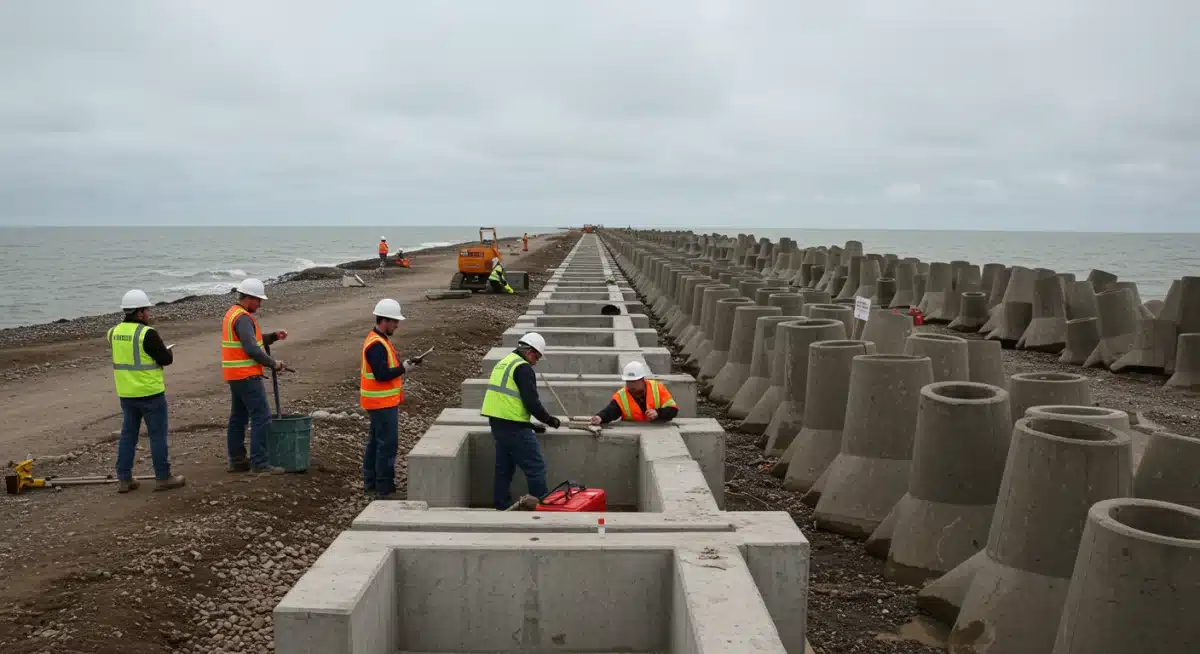
Coastal communities face unprecedented threats from rising sea levels and more frequent, intense storms. This drives significant investment into barrier construction, wetland restoration, and advanced drainage systems.
Companies offering innovative solutions for managing water resources, including smart irrigation, desalination, and stormwater capture, are seeing exponential demand.
These services are vital for ensuring water security in regions prone to drought or excessive rainfall.
- Development of sea walls and natural coastal buffers.
- Implementation of advanced flood protection technologies.
- Investment in smart water management and purification systems.
- Restoration of wetlands and natural floodplains.
Renewable Energy and Grid Modernization
The energy sector is another primary beneficiary of Climate Resilience. A resilient energy system must be less reliant on centralized, vulnerable infrastructure and more diversified with renewable sources.
This involves substantial investment in solar, wind, and geothermal power generation, coupled with advanced energy storage solutions like battery technology. Modernizing the grid to handle distributed energy resources and withstand disruptions is also paramount.
Utilities and energy companies are increasingly prioritizing decentralized power generation and microgrids, which can operate independently during widespread outages. This not only reduces carbon emissions but also enhances energy security and reliability for homes and businesses.
Smart Grid Technologies and Storage
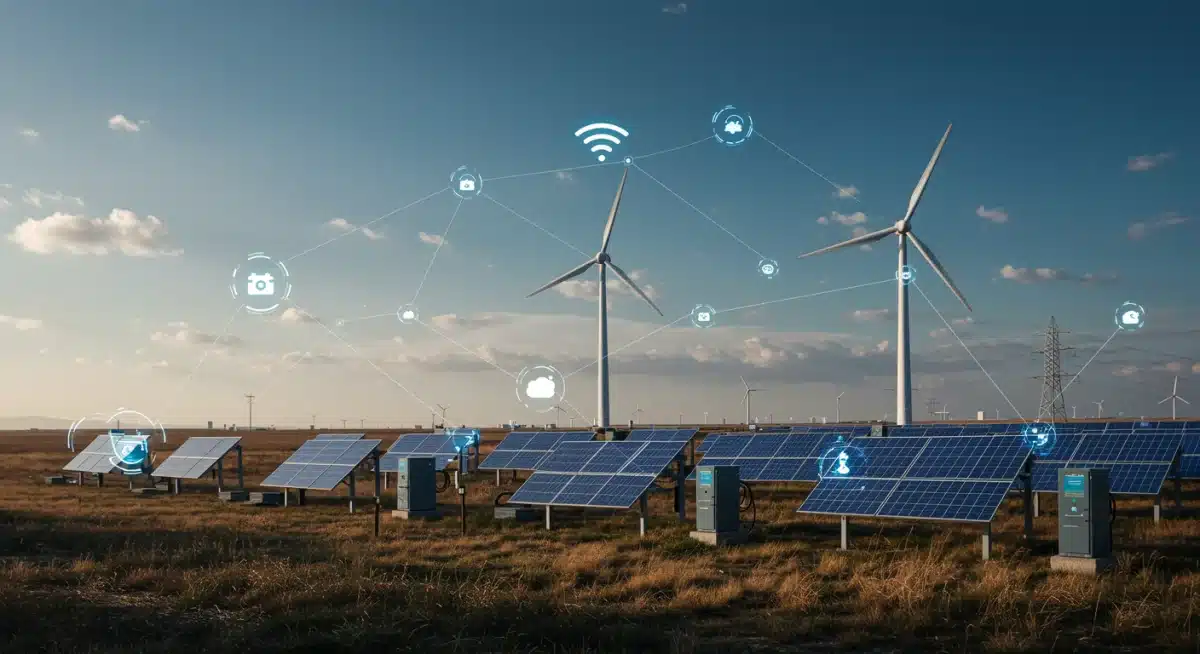
The integration of smart grid technologies allows for better management of energy flow, predictive maintenance, and rapid response to outages. This enhances the resilience of the entire energy network.
Energy storage solutions, particularly large-scale batteries, are crucial for balancing intermittent renewable energy sources and providing backup power.
This reduces vulnerability to extreme weather events that can disrupt traditional power supplies.
- Deployment of advanced sensors and analytics for grid monitoring.
- Expansion of utility-scale and residential battery storage.
- Development of microgrids for localized energy independence.
- Investment in cybersecurity for energy infrastructure.
Climate-Resilient Agriculture and Food Systems
Agriculture, highly susceptible to climate shifts, is undergoing a transformation driven by the need for resilience. Climate Resilience includes significant capital directed towards sustainable farming practices and resilient food supply chains.
This encompasses precision agriculture, drought-resistant crops, vertical farming, and innovative irrigation techniques that conserve water. The goal is to ensure food security amidst changing weather patterns and resource scarcity.
Companies developing climate-smart agricultural technologies, from advanced sensors to bio-engineered seeds, are experiencing rapid expansion. Consumers and investors alike are increasingly demanding sustainable and resilient food systems, driving market growth.
Sustainable Farming Practices and Innovation
Adopting sustainable farming practices, such as no-till farming and cover cropping, improves soil health and water retention, making farms more resilient to drought and erosion. These methods also reduce reliance on chemical inputs.
Investment in agricultural technology, including drones for crop monitoring and AI-driven predictive analytics, helps farmers optimize resource use and adapt to changing conditions. This innovation is critical for maintaining productivity.
- Development of new drought and heat-tolerant crop varieties.
- Expansion of precision agriculture technologies.
- Investment in vertical and indoor farming solutions.
- Improvements in cold chain logistics for food distribution.
Climate Risk Management and Financial Services
The financial sector itself is playing an increasingly vital role in Climate Resilience. This involves developing new financial instruments, insurance products, and risk assessment tools tailored to climate change impacts.
Insurance companies are innovating to offer policies that cover climate-related damages, while financial institutions are integrating climate risk into their lending and investment decisions. Green bonds and other sustainable finance products are also gaining traction.
Consulting firms specializing in climate risk assessment, adaptation planning, and environmental, social, and governance (ESG) reporting are seeing high demand. Their expertise helps businesses and governments navigate the complex landscape of climate-related financial exposures.
Innovative Insurance and Risk Assessment
Parametric insurance, which pays out based on predefined triggers like wind speed or rainfall levels, offers faster and more transparent compensation for climate-related losses. This innovation is crucial for rapid recovery.
Advanced climate modeling and data analytics are enabling more precise risk assessments, allowing businesses and investors to make informed decisions. This leads to better allocation of resources for resilience measures.
- Development of climate-linked financial products and bonds.
- Expansion of climate risk assessment and consulting services.
- Integration of ESG factors into investment portfolios.
- Growth in catastrophe bonds and other risk transfer mechanisms.
Urban Planning and Resilient Development
Urban areas are at the forefront of climate vulnerability, necessitating significant investment in resilient urban planning and development. This sector focuses on redesigning cities to withstand climate impacts while improving quality of life.
This includes green infrastructure projects like permeable pavements and urban forests, which help manage stormwater and reduce heat island effects. Smart building technologies and resilient construction materials are also key components.
City planners, architects, and developers are collaborating on projects that integrate climate resilience into every aspect of urban design. This holistic approach is essential for creating sustainable and safe environments for future generations, driving further Climate Resilience.
Green Infrastructure and Sustainable Buildings
Green infrastructure solutions are becoming essential in modern urban planning. Elements like rain gardens, green roofs, and urban tree canopies help manage stormwater, improve air quality, and reduce heat in cities.
These natural systems not only enhance environmental quality but also strengthen urban resilience against climate challenges. By integrating nature into cities, they create healthier and more sustainable living spaces.
At the same time, sustainable building practices are gaining prominence. Energy-efficient designs and resilient materials reduce environmental impact and improve durability, making these approaches a standard in both new constructions and retrofits.
- Implementation of nature-based solutions in urban areas.
- Development of climate-adaptive building codes and standards.
- Investment in passive cooling and heating technologies.
- Promotion of mixed-use, walkable communities to reduce emissions.
Technological Innovations Driving Resilience
Underpinning the growth in these sectors is a wave of technological innovation. From advanced sensors for environmental monitoring to AI-driven predictive analytics for disaster preparedness, technology is a crucial enabler for effective Climate Resilience.
Companies developing solutions in areas like geospatial intelligence, climate modeling, and data visualization are providing essential tools for understanding and mitigating climate risks. These technologies allow for more informed decision-making and targeted interventions.
The convergence of digital technology with environmental science is creating new markets and opportunities for growth. This technological advancement ensures that resilience efforts are data-driven, efficient, and scalable.
AI and Data Analytics for Climate Adaptation
Artificial intelligence and machine learning are transforming how we predict and respond to climate events.
AI models can analyze vast datasets to forecast extreme weather with greater accuracy, allowing for better preparedness and resource allocation.
Data analytics provides critical insights into vulnerability hotspots and the effectiveness of resilience measures. This data-driven approach ensures that investments are impactful and yield measurable benefits for communities and ecosystems.
- Use of satellite imagery and remote sensing for environmental monitoring.
- Development of early warning systems for natural disasters.
- Application of blockchain for transparent carbon accounting.
- Innovation in climate-tech startups and research.
Policy and Regulatory Frameworks
The pace of Climate Resilience is significantly influenced by evolving policy and regulatory frameworks. Government mandates, incentives, and standards are shaping investment priorities and fostering market growth.
Policies related to carbon pricing, renewable energy mandates, and resilient building codes are creating a favorable environment for businesses operating in these sectors. Clear regulatory signals reduce uncertainty for investors and encourage long-term commitments.
Furthermore, international agreements and national climate strategies are reinforcing the global commitment to resilience, providing a broader context for domestic investment. This alignment ensures sustained momentum in the push for climate-adaptive solutions.
Government Incentives and Standards
Tax credits, grants, and subsidies for renewable energy projects and resilient infrastructure development are powerful incentives for private sector investment. These financial mechanisms accelerate the adoption of new technologies and practices.
The establishment of stringent building codes and environmental standards ensures that new developments are built with resilience in mind.
These regulations protect assets and reduce future repair costs, driving demand for compliant solutions.
- Federal and state-level funding for climate-resilience projects.
- Implementation of climate risk disclosure requirements for corporations.
- Development of adaptive land-use planning guidelines.
- Promotion of public-private partnerships for resilience initiatives.
| Key Sector | Growth Driver |
|---|---|
| Infrastructure | Upgrades for coastal defense, flood control, and transportation. |
| Energy | Renewable sources, smart grids, and advanced storage solutions. |
| Agriculture | Drought-resistant crops, precision farming, and sustainable practices. |
| Financial Services | Climate risk assessment, innovative insurance, and green finance. |
Frequently Asked Questions About Climate Resilience Investment
Climate resilience investment refers to allocating capital towards projects, technologies, and services that help communities and systems adapt to and withstand the impacts of climate change. This includes physical infrastructure, innovative agricultural methods, and advanced risk assessment tools.
The projected growth stems from a confluence of factors: increasing climate impacts, growing public and private sector demand for solutions, significant government funding, and rapid technological innovation. These sectors offer tangible ways to mitigate risks and seize new market opportunities.
Government policies, including infrastructure spending, tax incentives for green technologies, and stricter environmental regulations, play a crucial role. They create a supportive framework that encourages both public and private entities to prioritize and fund climate resilience initiatives, reducing investment risk.
Technology is fundamental to climate resilience, offering solutions from predictive analytics for weather events to advanced materials for infrastructure. Innovations in AI, data science, and sustainable engineering provide the tools necessary to assess, adapt, and respond effectively to climate challenges.
While promising, investments in climate resilience carry risks, including policy uncertainty, technological obsolescence, and the long-term nature of some projects. However, the escalating costs of inaction against climate change often outweigh these investment risks, making it a critical area for capital allocation.
Looking Ahead: The Future of Resilience Investment
The trajectory of Climate Resilience suggests a profound and lasting transformation of the U.S. economy.
As climate impacts continue to unfold, the imperative to invest in resilience will only intensify, driving further innovation and capital deployment.
This shift represents not just a response to environmental threats but a proactive embrace of new economic opportunities and sustainable development.
Investors, policymakers, and communities must remain vigilant, adapting strategies as new data emerges and climate science evolves to ensure effective and impactful resilience efforts.