Top 5 Carbon Sequestration Technologies for U.S. Businesses 2026
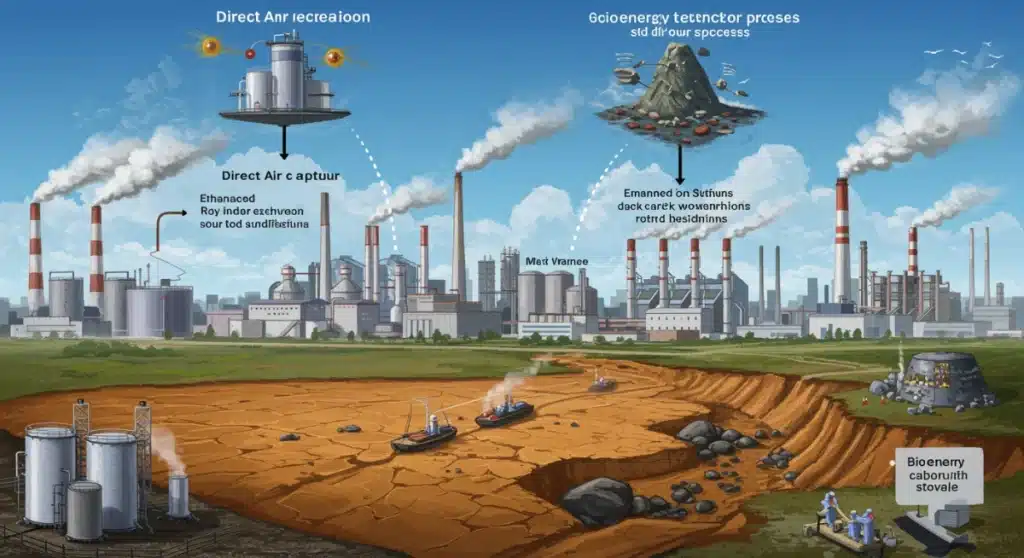
U.S. businesses can leverage carbon sequestration technologies in 2026 to significantly reduce their environmental impact and meet sustainability targets, offering practical and effective solutions for a greener future.
As the urgency of climate change intensifies, U.S. businesses are increasingly seeking tangible ways to mitigate their carbon footprint. The 5 Most Effective Carbon Sequestration Technologies for U.S. Businesses in 2026 (Practical Solutions) represent a crucial frontier in this endeavor, offering a diverse array of methods to capture and store carbon dioxide, turning environmental challenges into strategic opportunities. Understanding these innovations is not just about compliance; it’s about pioneering sustainable practices that drive both ecological responsibility and economic foresight.
Direct Air Capture (DAC) Systems: Scaling Up for Impact
Direct Air Capture (DAC) technology is rapidly gaining traction as a transformative solution in the fight against atmospheric carbon. These systems are designed to chemically scrub carbon dioxide directly from ambient air, offering a direct pathway to reverse historical emissions. For U.S. businesses, investing in or partnering with DAC initiatives presents a powerful statement of environmental leadership and a tangible reduction in their net carbon output.
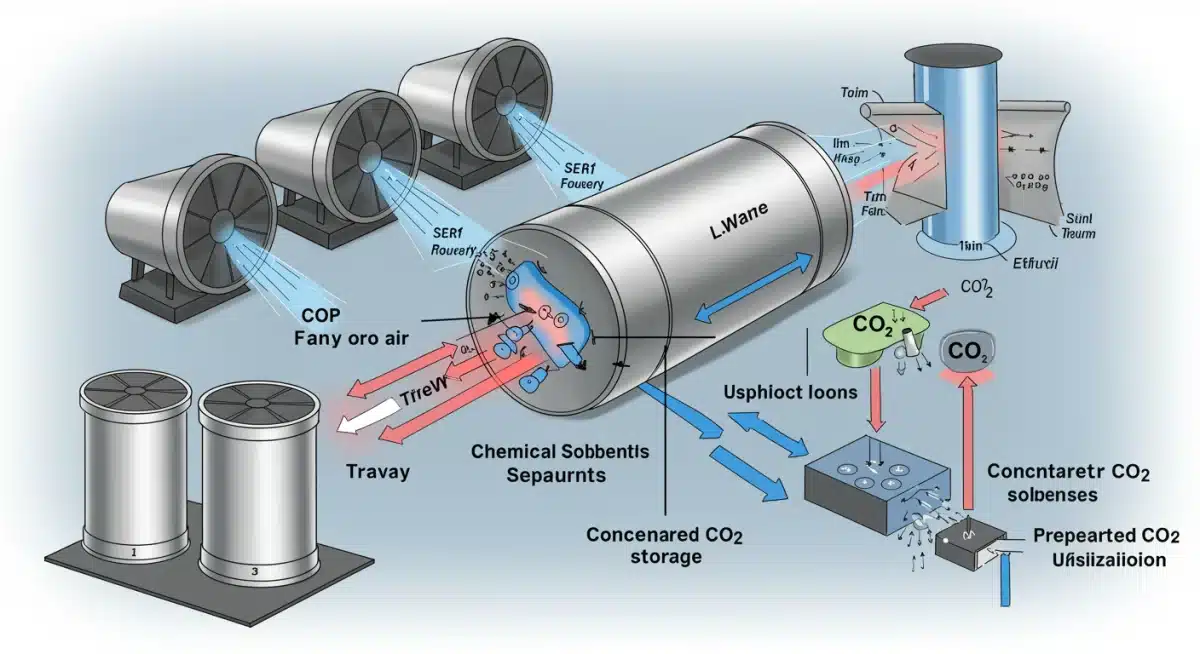
The operational principle of DAC involves large fans pulling in atmospheric air, which then passes through specialized chemical filters or solvents. These materials selectively bind with CO2 molecules. Once saturated, the filters are heated or depressurized, releasing a concentrated stream of CO2 that can then be permanently stored underground or utilized in various industrial applications. This cyclical process makes DAC a highly scalable and potentially game-changing technology for broader decarbonization efforts.
Technological Advancements and Efficiency
Recent breakthroughs in sorbent materials and energy efficiency are making DAC more viable. Researchers are developing new materials that require less energy for CO2 release, driving down operational costs and increasing capture rates. Furthermore, modular designs allow for easier deployment and scaling across different industrial settings, from manufacturing plants to energy facilities.
- Improved Sorbent Materials: Next-generation sorbents offer higher CO2 selectivity and lower regeneration energy.
- Modular System Designs: Facilitate flexible deployment and expansion based on business needs.
- Renewable Energy Integration: Powering DAC plants with renewable energy sources further enhances their net carbon removal capacity.
- Cost Reduction Pathways: Continued R&D is focused on reducing the capital and operational expenses of DAC.
While still relatively expensive, the cost of DAC is projected to decrease significantly with further innovation and economies of scale. Government incentives and carbon pricing mechanisms are also playing a crucial role in accelerating its adoption, making it an increasingly attractive option for businesses committed to deep decarbonization by 2026 and beyond.
DAC stands out for its ability to address diffuse emissions, not just those from point sources. This flexibility allows businesses to tackle their entire carbon footprint, including emissions from their supply chains or historical operations, positioning them as leaders in the climate action landscape.
Bioenergy with Carbon Capture and Storage (BECCS): A Dual-Benefit Approach
Bioenergy with Carbon Capture and Storage (BECCS) offers a unique dual benefit: generating renewable energy while simultaneously removing carbon dioxide from the atmosphere. This technology involves burning biomass (such as agricultural waste, forest residues, or dedicated energy crops) to produce electricity or heat, then capturing the CO2 emissions from the combustion process and storing them geologically. The carbon neutrality of biomass, combined with the capture of its emissions, results in a net negative carbon footprint.
For U.S. businesses, particularly those in energy-intensive sectors or with access to significant biomass resources, BECCS presents an opportunity to transition to a more sustainable energy model. It not only provides a source of renewable energy but also actively removes CO2 from the carbon cycle, contributing positively to climate goals. The integration of BECCS can be a complex undertaking, requiring careful planning around biomass sourcing, energy conversion efficiency, and secure geological storage.
Optimizing Biomass Sourcing and Energy Conversion
The sustainability of BECCS heavily relies on responsible biomass sourcing. Businesses must ensure that biomass is grown and harvested in a way that does not displace food crops, degrade ecosystems, or lead to deforestation. Advanced gasification and pyrolysis techniques are also being developed to improve the efficiency of energy conversion from biomass, maximizing energy output while minimizing waste.
- Sustainable Biomass Management: Prioritizing waste streams and sustainably managed energy crops.
- Advanced Conversion Technologies: Enhancing energy yield and reducing process emissions.
- Integrated Supply Chains: Developing efficient logistics for biomass procurement and transport.
The captured CO2 from BECCS facilities is typically transported via pipelines to suitable geological formations for permanent storage. These formations, often deep saline aquifers or depleted oil and gas reservoirs, are carefully selected and monitored to ensure the long-term integrity and safety of the stored carbon. The regulatory framework for CO2 storage is evolving, providing greater clarity and confidence for businesses considering BECCS projects.
BECCS offers a pathway for businesses to not only reduce their own emissions but also contribute to global carbon removal targets, positioning them as leaders in the circular economy and sustainable resource management. Its potential for large-scale negative emissions makes it a critical technology for achieving ambitious climate goals.
Enhanced Rock Weathering (ERW): Harnessing Nature’s Carbon Sink
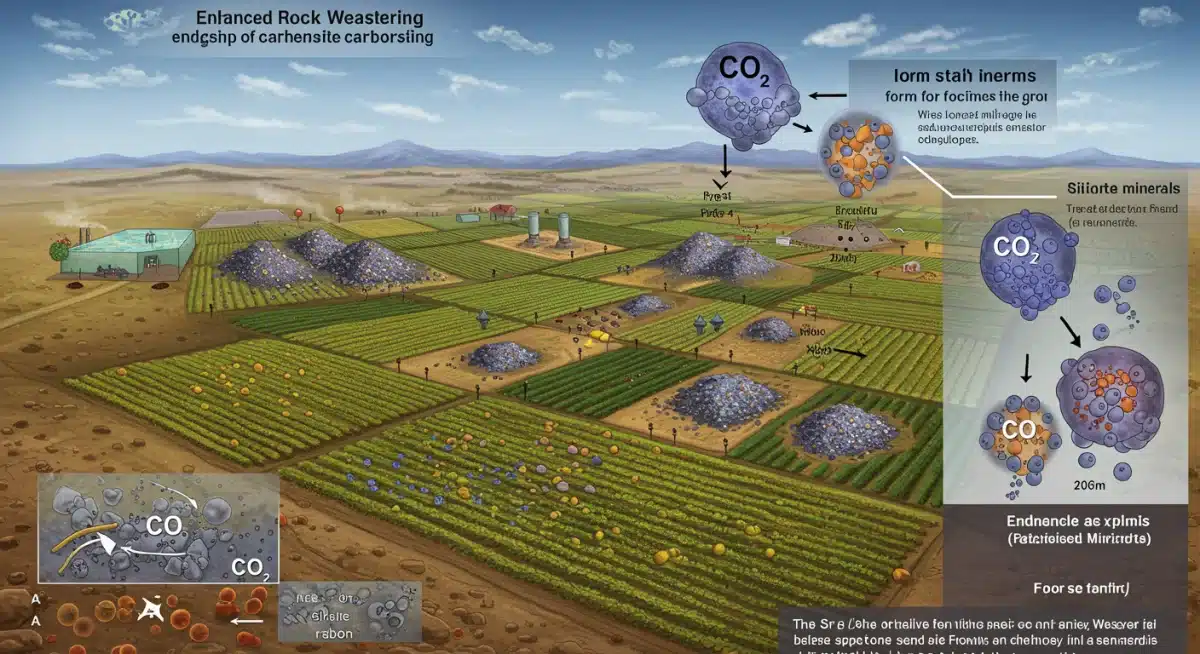
Enhanced Rock Weathering (ERW) is an innovative carbon sequestration technology that accelerates a natural geological process. In nature, rocks slowly react with atmospheric CO2 and water, forming stable carbonate minerals that lock away carbon for millennia. ERW speeds up this process by crushing silicate rocks, such as basalt, into fine powders and spreading them across agricultural lands or coastal areas. This increases the surface area available for reaction, significantly boosting the rate of CO2 uptake from the atmosphere.
For U.S. businesses, particularly those in agriculture, mining, or materials processing, ERW offers a scalable and potentially cost-effective method for carbon removal. It can be integrated into existing land management practices, simultaneously improving soil health and crop yields by releasing beneficial nutrients. The long-term stability of the sequestered carbon makes ERW an attractive option for permanent carbon removal.
Applications and Co-Benefits in Agriculture
The application of finely ground silicate minerals to agricultural soils is a primary focus for ERW. As the minerals weather, they not only absorb CO2 but also release essential nutrients like calcium, magnesium, and potassium, which can enhance soil fertility and reduce the need for synthetic fertilizers. This dual benefit makes ERW particularly appealing to the agricultural sector.
- Soil Health Improvement: Releases vital nutrients, enhancing soil structure and fertility.
- Increased Crop Yields: Potential for higher agricultural productivity due to improved soil conditions.
- Ocean Alkalinity Enhancement: Runoff from ERW applications can help counteract ocean acidification.
- Scalability: Utilizing vast areas of agricultural land for widespread deployment.
The U.S. has abundant reserves of suitable silicate rocks, and the agricultural sector provides extensive land for deployment. Companies can explore partnerships with research institutions and farmers to pilot and scale ERW projects, potentially generating carbon credits and enhancing their sustainability credentials. Monitoring and verification protocols are critical to accurately measure the carbon removal achieved through ERW, ensuring its credibility as a climate solution.
ERW represents a nature-based solution with significant potential for large-scale carbon removal, offering a resilient and environmentally friendly approach. Its integration into land management practices allows businesses to contribute to climate action while also deriving direct economic and environmental benefits.
Carbon Mineralization (In-Situ): Permanent Storage Solutions
Carbon mineralization, specifically in-situ mineralization, involves injecting CO2 into reactive rock formations deep underground where it chemically reacts with minerals to form stable carbonate rocks. This process effectively transforms gaseous CO2 into a solid, inert form, offering a highly secure and permanent method of carbon storage. Unlike traditional geological storage where CO2 remains in a gaseous or supercritical state, in-situ mineralization virtually eliminates the risk of leakage, making it an extremely attractive long-term solution.
For U.S. businesses with access to suitable geological sites, such as basaltic formations or ultramafic rocks, carbon mineralization presents a robust pathway for permanent carbon disposal. Industries with significant point-source emissions, like cement production or power generation, can directly integrate this technology into their operations, ensuring that captured CO2 is not just stored, but chemically locked away forever.
Geological Suitability and Process Efficiency
The success of in-situ carbon mineralization depends on the geological characteristics of the storage site. Basalt formations, which are abundant in regions of the U.S. like the Pacific Northwest, offer ideal conditions due to their high reactivity with CO2. Research is focused on optimizing injection methods and understanding the kinetics of mineralization to accelerate the reaction rates and maximize storage capacity.
- Reactive Rock Formations: Basalt and ultramafic rocks are prime targets for in-situ mineralization.
- Accelerated Reaction Rates: Innovations in injection techniques to speed up carbonate formation.
- Long-Term Storage Security: Converts CO2 into solid rock, minimizing leakage risks.
- Monitoring and Verification: Advanced techniques to confirm successful mineralization underground.
The process often involves injecting CO2 dissolved in water, which enhances its reactivity with the rock minerals. This creates a solution that can penetrate the rock matrix more effectively, leading to faster and more complete mineralization. Pilot projects in the U.S. and globally have demonstrated the technical feasibility and safety of this approach, paving the way for larger-scale commercial deployments.
In-situ carbon mineralization provides a compelling solution for businesses seeking the highest level of permanence for their carbon sequestration efforts. By turning CO2 into rock, it offers an irreversible commitment to climate action, aligning with the most stringent long-term sustainability goals.
Soil Carbon Sequestration (SCS): Regenerative Agriculture’s Promise
Soil Carbon Sequestration (SCS) refers to the process of increasing the organic carbon content in soil through improved land management and agricultural practices. Healthy soils act as natural carbon sinks, absorbing CO2 from the atmosphere and storing it in the form of organic matter. This technology is not about engineered capture but rather about enhancing natural biological processes to draw down carbon. Practices such as no-till farming, cover cropping, agroforestry, and improved grazing management can significantly boost soil carbon levels.
For U.S. businesses, particularly those with large landholdings, in the food and agriculture supply chain, or those looking to offset emissions through nature-based solutions, SCS offers a highly accessible and beneficial approach. It not only sequesters carbon but also enhances soil fertility, improves water retention, reduces erosion, and boosts biodiversity, providing multiple co-benefits that align with broader environmental, social, and governance (ESG) goals.
Key Practices for Maximizing Soil Carbon
Implementing regenerative agricultural practices is central to effective SCS. These practices focus on minimizing soil disturbance, maximizing biodiversity, and keeping the soil covered and alive with plants. The cumulative effect of these methods can lead to substantial increases in soil organic carbon over time, transforming agricultural lands into powerful carbon sinks.
- No-Till/Minimum Tillage: Reduces soil disturbance, preserving organic matter.
- Cover Cropping: Keeps soil covered, prevents erosion, and adds organic matter.
- Crop Rotation and Diversity: Enhances soil microbiology and nutrient cycling.
- Compost and Biochar Application: Directly adds stable carbon to the soil.
- Improved Grazing Management: Promotes healthy grasslands and root systems.
Businesses can support SCS through direct investment in regenerative farming initiatives, partnering with farmers, or purchasing carbon credits derived from verified soil carbon projects. The development of robust measurement, reporting, and verification (MRV) protocols is crucial to ensure the integrity and permanence of soil carbon sequestration efforts, providing confidence for investors and stakeholders.
SCS offers a practical, scalable, and ecologically beneficial approach to carbon removal, integrating climate action with sustainable land stewardship. It empowers businesses to contribute to a healthier planet while also supporting resilient agricultural systems and local communities.
Carbon Capture, Utilization, and Storage (CCUS): Industrial Decarbonization
Carbon Capture, Utilization, and Storage (CCUS) is a suite of technologies that capture CO2 from large point sources, such as power plants and industrial facilities, before it enters the atmosphere. Once captured, the CO2 can either be utilized in various industrial processes (e.g., enhanced oil recovery, concrete production, synthetic fuels) or permanently stored in deep geological formations. This technology is critical for decarbonizing hard-to-abate sectors where emissions are significant and direct electrification is challenging.
For U.S. businesses in heavy industries, CCUS represents an essential pathway to meet stringent emission reduction targets and maintain competitiveness in a carbon-constrained economy. By capturing emissions directly at the source, businesses can significantly reduce their environmental footprint without necessarily overhauling their core industrial processes, offering a pragmatic solution for immediate impact.
Integration and Economic Viability
The economic viability of CCUS is improving due to advancements in capture technologies, declining costs of renewable energy (which can power CCUS operations), and the emergence of carbon markets and incentive programs. Businesses are exploring various capture methods, including post-combustion, pre-combustion, and oxyfuel combustion, to find the most efficient and cost-effective solutions for their specific operations.
- Point Source Capture Efficiency: High capture rates from industrial exhaust streams.
- CO2 Utilization Opportunities: Generating revenue from captured carbon through various applications.
- Geological Storage Infrastructure: Expanding network of secure storage sites.
- Policy and Incentive Support: Government policies are driving CCUS investment and deployment.
The U.S. government has introduced significant incentives, such as the 45Q tax credit, to accelerate the deployment of CCUS projects. This financial support, coupled with growing corporate demand for decarbonization solutions, is making CCUS an increasingly attractive investment. Furthermore, the development of CO2 transport infrastructure, including pipelines, is crucial for connecting capture sites to utilization and storage locations, creating a comprehensive carbon management ecosystem.
CCUS offers a powerful tool for industrial decarbonization, enabling businesses to continue essential operations while drastically reducing their climate impact. By embracing CCUS, U.S. businesses can demonstrate a commitment to sustainability, enhance their brand reputation, and contribute significantly to national and global climate goals.
| Technology | Brief Description |
|---|---|
| Direct Air Capture (DAC) | Chemically removes CO2 directly from ambient air for storage or utilization. |
| Bioenergy with CCS (BECCS) | Generates energy from biomass and captures CO2 emissions for storage. |
| Enhanced Rock Weathering (ERW) | Accelerates natural CO2 absorption by spreading crushed silicate rocks. |
| Carbon Mineralization | Injects CO2 into reactive rocks to form stable, solid carbonate minerals. |
Frequently Asked Questions About Carbon Sequestration
Carbon sequestration helps U.S. businesses reduce their environmental footprint, meet regulatory requirements, enhance brand reputation, and potentially generate revenue through carbon credits. It demonstrates a commitment to sustainability and positions companies as climate leaders, attracting conscious consumers and investors.
DAC systems directly remove CO2 from the ambient air, offering a scalable solution to address diffuse emissions. This captured CO2 can then be stored permanently underground or utilized in various industrial applications, effectively reducing atmospheric carbon concentrations.
Yes, BECCS is considered carbon negative because the biomass used absorbs CO2 during its growth. When this biomass is burned for energy, the emitted CO2 is captured and stored, resulting in a net removal of carbon from the atmosphere, provided biomass sourcing is sustainable.
ERW enhances agricultural sustainability by sequestering atmospheric CO2 into stable minerals while also improving soil health and fertility. The crushed silicate rocks release beneficial nutrients, potentially boosting crop yields and reducing the need for chemical fertilizers, offering dual environmental benefits.
U.S. businesses can implement SCS by adopting regenerative agricultural practices like no-till farming, cover cropping, and agroforestry on their land or through partnerships. These methods increase organic carbon in soil, improving fertility, water retention, and biodiversity while actively removing CO2 from the atmosphere.
Conclusion: Paving the Way for a Sustainable Future
The landscape of climate action for U.S. businesses in 2026 is defined by innovation and a growing commitment to sustainability. The 5 Most Effective Carbon Sequestration Technologies for U.S. Businesses in 2026 (Practical Solutions) discussed—Direct Air Capture, Bioenergy with Carbon Capture and Storage, Enhanced Rock Weathering, Carbon Mineralization, and Soil Carbon Sequestration—offer a diverse toolkit for tackling carbon emissions head-on. Each technology, with its unique advantages and applications, provides a viable pathway for companies to significantly reduce their environmental impact, meet evolving regulatory demands, and contribute to global climate goals. By strategically investing in and implementing these solutions, businesses can not only safeguard the planet but also foster long-term resilience, drive innovation, and unlock new economic opportunities in the burgeoning green economy. The future of business is intrinsically linked to its ability to embrace and champion these transformative carbon management strategies, ensuring a healthier and more prosperous world for generations to come.