Battery Technology: Key to US Power Grid Stability by 2030
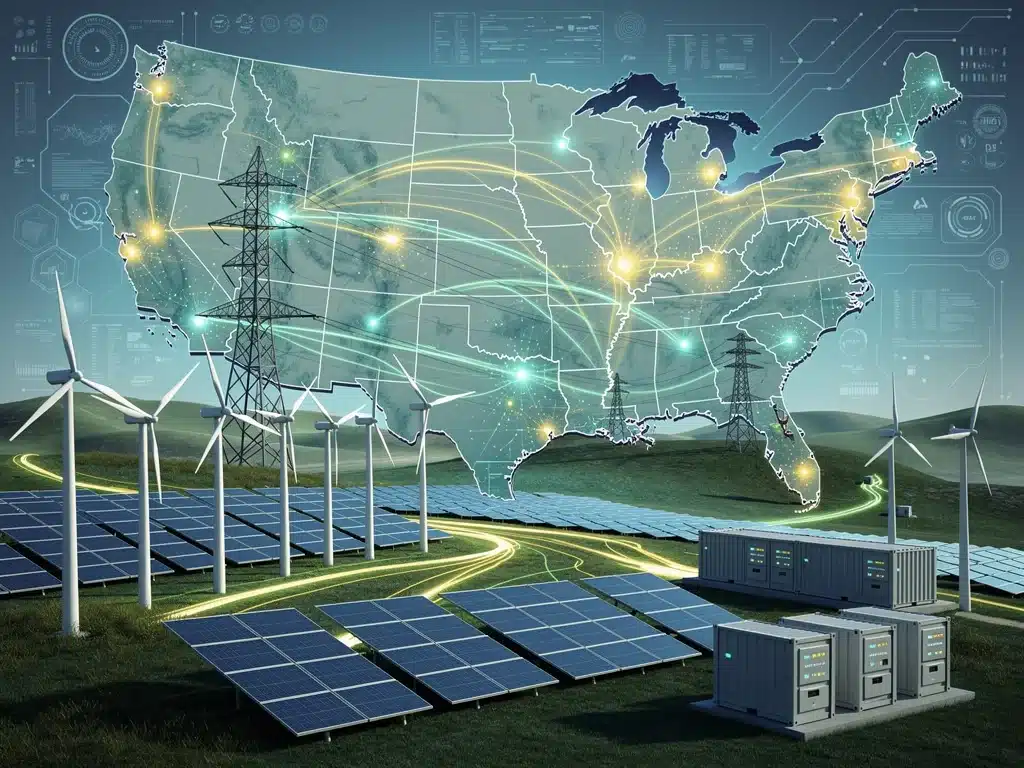
As the U.S. accelerates its clean energy transition, large-scale energy storage has moved from a long-term goal to an immediate necessity.
Renewable Energy Storage explores how emerging battery innovations, grid-scale deployments, and policy shifts are addressing intermittency to secure grid reliability over the next decade.
The Imperative for Grid Modernization by 2030
The United States’ ambitious clean energy goals hinge significantly on transforming its aging power grid into a resilient, intelligent network.
This modernization is paramount to accommodate the escalating influx of renewable energy sources like solar and wind power, which inherently present challenges due to their intermittent nature.
Without adequate storage, the grid’s stability is compromised when renewable generation fluctuates, leading to potential outages and inefficiencies.
The urgency of this transformation is amplified by growing electricity demand and the increasing frequency of extreme weather events, necessitating a more robust and adaptable infrastructure.
By 2030, the ability to store vast amounts of energy will dictate the success of the renewable energy transition.
This deadline places significant pressure on both technological development and policy implementation to ensure the US power grid can reliably serve its population.
Battery Technology: The Foundation of Future Grid Stability
Battery technology stands as the lynchpin for achieving a stable and reliable US power grid in the coming years.
These systems provide the flexibility needed to balance supply and demand, storing excess energy during periods of high renewable generation and discharging it when generation is low or demand peaks.
The rapid advancements in lithium-ion batteries, alongside emerging technologies such as solid-state and flow batteries, are making large-scale energy storage increasingly viable and cost-effective.
These innovations are critical for mitigating the variability inherent in renewable sources, ensuring a consistent power supply.
Deployment of advanced battery storage solutions is accelerating, with numerous projects across the nation aiming to enhance grid resilience and enable greater renewable energy penetration.
This widespread adoption is fundamental to the long-term sustainability of the US energy system.
Addressing Intermittency and Peak Demand with Storage
One of the primary challenges of integrating renewable energy into the grid is its intermittency; solar panels only generate power when the sun shines, and wind turbines require sufficient wind.
Battery storage systems directly address this by capturing surplus energy and dispatching it precisely when needed.
This capability effectively smooths out the power supply, preventing sudden drops or surges that could destabilize the grid.
Beyond managing intermittency, battery technology is also crucial for handling peak demand, allowing utilities to avoid firing up expensive and often carbon-intensive peaker plants.
By strategically deploying battery storage, grid operators can enhance efficiency, reduce operational costs, and significantly lower carbon emissions.
This dual benefit makes battery technology an indispensable tool for a cleaner, more reliable energy future.
Technological Advancements Driving Adoption
Recent breakthroughs in battery chemistry and manufacturing have dramatically improved performance, safety, and cost-effectiveness.
Innovations in cell design and material science are pushing the boundaries of energy density and cycle life, making batteries more suitable for grid-scale applications.
The development of advanced battery management systems (BMS) and sophisticated control algorithms allows for precise monitoring and optimization of battery performance.
These intelligent systems are vital for maximizing efficiency and extending the operational lifespan of large-scale battery installations.
- Improved energy density: Allows more energy to be stored in a smaller footprint.
- Enhanced cycle life: Batteries can undergo more charge/discharge cycles before degradation.
- Reduced costs: Economies of scale and technological improvements are lowering overall prices.
Current Landscape of Battery Deployment in the US
The United States is witnessing a significant surge in battery storage deployments, driven by state-level mandates, federal incentives, and declining technology costs.
California, Texas, and New York are leading the charge, with substantial investments in utility-scale battery projects.
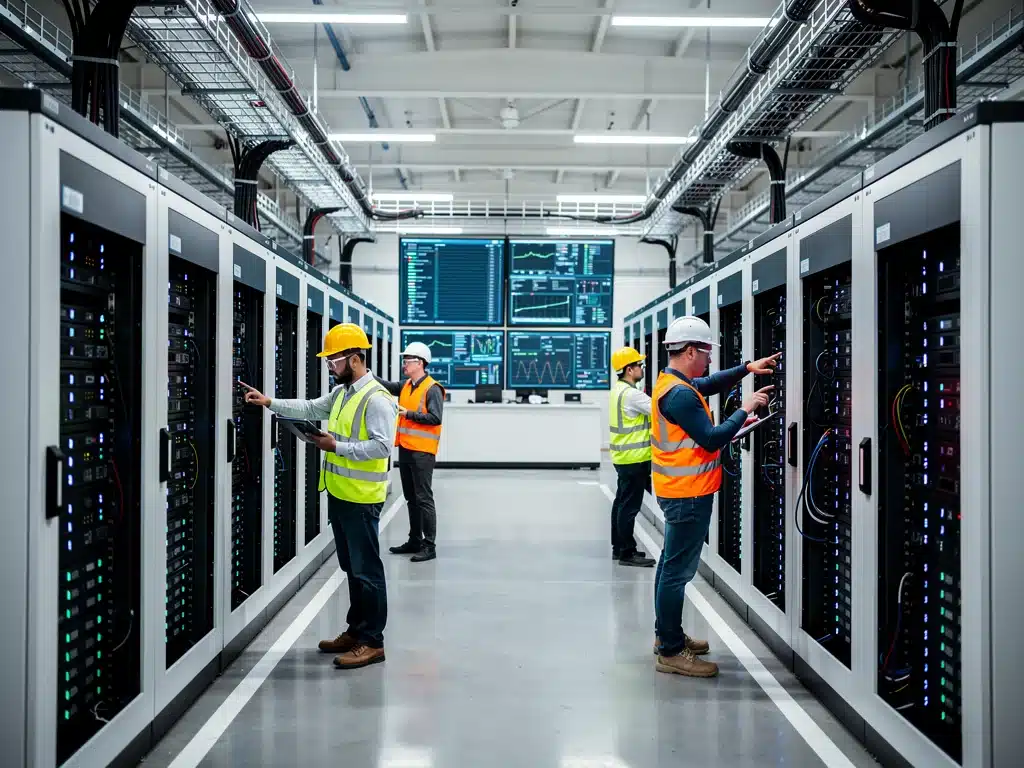
These projects range from small, localized systems supporting microgrids to massive installations capable of powering hundreds of thousands of homes for several hours.
The diversity of applications highlights the versatility and adaptability of battery technology in various grid contexts.
According to recent reports, the installed capacity of battery storage is projected to grow exponentially over the next decade. This rapid expansion is a clear indicator of the industry’s confidence in Renewable Energy Storage.
Key Projects and Future Outlook
Notable projects include the Moss Landing Energy Storage Facility in California, one of the world’s largest, demonstrating the immense scale achievable with current technology.
Texas is also seeing rapid growth, driven by its deregulated market and abundant wind energy resources.
The future outlook for battery deployment remains exceptionally strong, with projections indicating continued growth in both capacity and sophistication.
Industry analysts anticipate that by 2030, battery storage will be an integral component of the national energy infrastructure, providing essential grid services.
- California’s leadership: Driven by ambitious renewable energy and storage mandates.
- Texas’s growth: Responding to high renewable penetration and grid reliability needs.
- Northeast expansion: Focus on urban resilience and distributed energy resources.
Policy and Regulatory Frameworks Supporting Growth
Government policies and regulatory frameworks play a pivotal role in accelerating the adoption of battery storage.
Federal incentives, such as the Investment Tax Credit (ITC), have been instrumental in driving down initial costs and making projects more financially attractive.
At the state level, various initiatives like renewable portfolio standards and energy storage mandates are creating a robust market for battery technology.
These policies provide certainty for investors and developers, fostering a competitive environment for innovation and deployment.
Ongoing efforts by the Federal Energy Regulatory Commission (FERC) to remove market barriers for energy storage participation are further paving the way for its widespread integration.
These regulatory changes are critical for ensuring that battery technology can fully contribute to grid stability.
Challenges and Opportunities on the Path to 2030
While the momentum for battery storage is undeniable, significant challenges remain on the path to achieving a stable US power grid by 2030.
Supply chain vulnerabilities, particularly for critical minerals like lithium and cobalt, pose a potential bottleneck to rapid expansion.
Interconnection queues and permitting processes can also delay project deployment, hindering the pace of grid modernization.
Addressing these logistical and regulatory hurdles is crucial for maintaining the necessary speed of battery integration into the power system.
Despite these challenges, opportunities abound for innovation in battery chemistry, manufacturing processes, and grid integration strategies.
Continued investment in research and development, coupled with supportive policies, can overcome these obstacles and solidify Renewable Energy Storage.
Overcoming Supply Chain Dependencies
The reliance on foreign sources for critical battery minerals presents a geopolitical and economic challenge.
Efforts are underway to diversify supply chains, increase domestic mining and processing capabilities, and promote recycling initiatives to create a more circular economy for batteries.
Investing in alternative battery chemistries that use more abundant materials, such as sodium-ion or iron-air batteries, is another promising avenue.
These innovations could reduce dependence on scarce resources and lower overall production costs, making storage solutions more accessible.
- Domestic mineral extraction and processing: Reducing reliance on imports.
- Battery recycling programs: Recovering valuable materials from end-of-life batteries.
- Research into alternative chemistries: Exploring new materials for battery construction.
Regulatory Streamlining and Market Design
Expediting the interconnection process for new battery storage projects is essential. Streamlining federal and state permitting, alongside improving grid modeling and planning, can significantly reduce project timelines and deployment costs.
Reforms in wholesale electricity markets are also critical to properly value the diverse services that battery storage provides, including frequency regulation, voltage support, and capacity firming.
Fair compensation mechanisms will incentivize further investment and deployment, ensuring the economic viability of these projects.
These market design changes must reflect the unique capabilities of battery technology. Without appropriate valuation, the full potential of Renewable Energy Storage cannot be realized, potentially slowing the transition.
Economic and Environmental Benefits of Battery Storage
The widespread adoption of battery technology offers substantial economic and environmental benefits for the United States.
Economically, it reduces reliance on volatile fossil fuel prices, leading to more stable electricity costs for consumers and businesses.
By deferring or avoiding the need for expensive new transmission and distribution infrastructure upgrades, battery storage provides a cost-effective solution for grid modernization.
It also creates new jobs in manufacturing, installation, and maintenance, stimulating economic growth.
Environmentally, battery storage is a cornerstone of decarbonization efforts, enabling deeper penetration of renewable energy and significantly reducing greenhouse gas emissions from the power sector.
This directly contributes to combating climate change and improving air quality.
The Role of Distributed Energy Resources and Microgrids
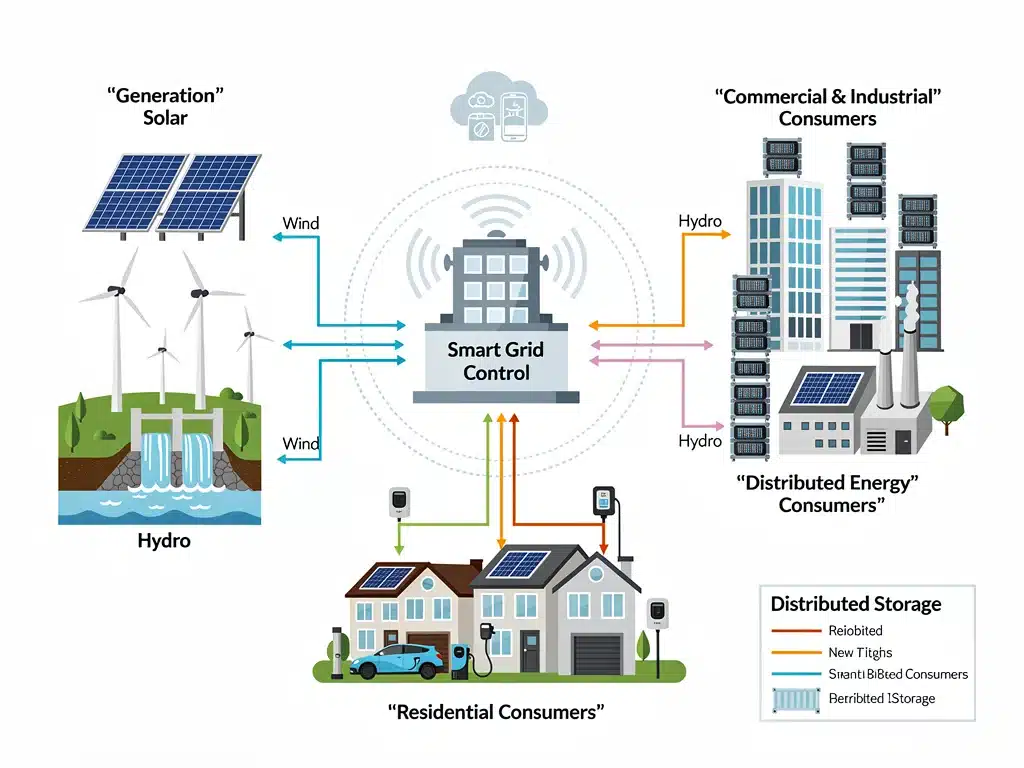
Beyond utility-scale projects, battery technology is also transforming distributed energy resources (DERs) and microgrids.
Residential and commercial battery storage systems, often paired with rooftop solar, provide localized resilience and grid support.
Microgrids, self-contained energy systems capable of operating independently from the main grid, are increasingly incorporating batteries to enhance reliability for critical facilities like hospitals and emergency services.
These systems offer protection against widespread outages and support local energy independence.
The proliferation of DERs and microgrids, powered by advanced battery technology, contributes to a more decentralized and robust energy infrastructure.
This distributed approach complements large-scale grid solutions, further strengthening the overall resilience of the US power system by 2030.
| Key Point | Brief Description |
|---|---|
| Grid Modernization | Essential for integrating renewables and enhancing resilience against disruptions. |
| Battery Technology Role | Crucial for managing intermittency, balancing supply, and meeting peak demand. |
| Deployment Challenges | Supply chain issues and regulatory hurdles impact the speed of implementation. |
| Future Outlook | Continued growth and innovation are expected to solidify grid stability by 2030. |
Frequently Asked Questions About Battery Storage and Grid Stability
Battery technology is crucial because it addresses the intermittency of renewable energy sources like solar and wind. It stores excess power when available and releases it when needed, ensuring a consistent and reliable electricity supply. This capability is vital for stabilizing the grid as renewable penetration increases.
Large-scale battery storage offers several benefits, including enhanced grid stability, reduced reliance on fossil fuel peaker plants, and improved energy efficiency. It also helps manage peak demand, prevents transmission congestion, and provides ancillary services like frequency regulation, making the grid more robust.
Key challenges include ensuring a stable supply chain for critical minerals, navigating complex permitting processes, and addressing high upfront capital costs. Interconnection queues for new projects can also cause delays, requiring streamlined regulatory frameworks and innovative financing solutions to accelerate deployment.
Policies such as the Investment Tax Credit (ITC) and state-level renewable energy mandates provide financial incentives and market certainty for battery storage projects. Regulatory actions by FERC aim to remove market barriers, allowing storage to compete on a level playing field with traditional generation sources, fostering growth.
Distributed energy resources (DERs) like rooftop solar paired with batteries enhance local resilience and grid support. Microgrids, using battery storage, can operate independently during outages, ensuring power for critical facilities. This decentralized approach complements utility-scale solutions, strengthening overall grid reliability.
Looking Ahead: Ensuring Grid Resilience
The trajectory for Renewable Energy Storage: The Critical Role of Battery Technology in Stabilizing the US Power Grid by 2030 is clear, with continued innovation and strategic deployment being paramount.
The nation’s ability to integrate ever-increasing amounts of renewable energy hinges on the success of these storage solutions.
Further investments in domestic manufacturing and advanced research are crucial to mitigate supply chain risks and foster sustainable growth.
To explore how advanced energy technologies and manufacturing initiatives are accelerating these solutions, check out this guide on next-generation battery breakthroughs.
Policymakers and industry stakeholders must maintain a collaborative approach, streamlining regulatory processes and adapting market structures to fully capitalize on battery technology’s potential.
The coming years will demonstrate the efficacy of these efforts in creating a robust, reliable, and decarbonized energy future for the United States.
Monitoring critical mineral availability, technological breakthroughs, and the pace of grid modernization projects will provide key insights into whether the US is on track to achieve its ambitious energy goals.
The stability of the US power grid by 2030 is directly tied to the successful widespread adoption of battery technology.