Arctic Melt 2026: US Weather, Agriculture Impact
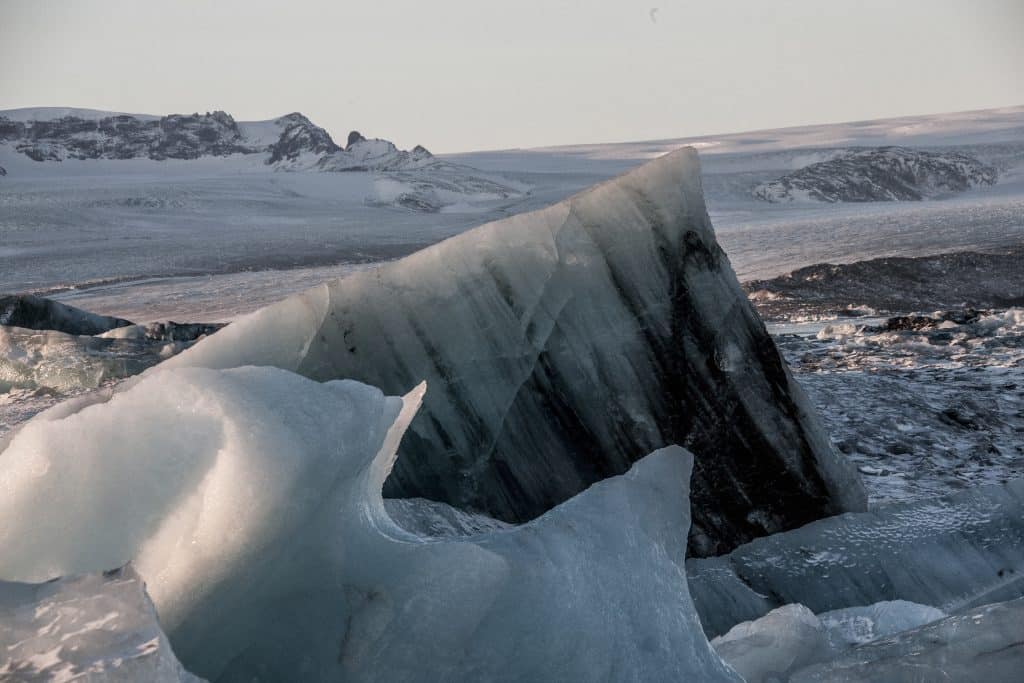
In 2026, climate forecasting operates under the model of “Atmospheric Teleconnection Forcing.”
Driven by accelerating polar ice loss, the breakdown of the historical thermal gradient between the poles and the equator is reshaping mid-latitude climate stability.
This update analyzes The Arctic Melt, focusing directly on how these shifting polar dynamics alter American weather systems, disrupt traditional growing seasons, and require immediate adaptation from the agricultural sector.
The Accelerating Arctic Melt: A 2026 Outlook
The Arctic region is experiencing unprecedented warming, with temperatures rising at more than twice the global average.
This rapid heating is driving a dramatic reduction in sea ice extent and thickness, creating a feedback loop that further exacerbates the melting process.
Projections for 2026 indicate a continuation of this trend, with significant implications for global climate systems.
Scientific consensus, as documented by reports from the National Snow and Ice Data Center (NSIDC), points to an Arctic Ocean that could see ice-free summers within decades, with noticeable changes accumulating by the mid-2020s.
These developments are not confined to the polar regions; they initiate a cascade of atmospheric and oceanic responses that extend far beyond the Arctic Circle.
The interconnectedness of Earth’s climate means that changes in one critical area inevitably influence others, particularly affecting distant mid-latitude weather.
Disappearing Ice and Ocean Warming
The loss of Arctic sea ice exposes darker ocean water, which absorbs more solar radiation than reflective ice, leading to further warming.
This process, known as Arctic amplification, is a key driver of current and future climate shifts, intensifying the pace of planetary warming.
Ocean currents, such as the Atlantic Meridional Overturning Circulation (AMOC), are also influenced by freshwater influx from melting ice sheets.
Disruptions to these critical currents could alter heat distribution patterns globally, with profound implications for regional climates, including those in the United States.
- Arctic sea ice extent continues to decline, reaching record lows in recent years.
- The albedo effect is diminishing, leading to increased absorption of solar energy.
- Freshwater input from Greenland and other land ice contributes to ocean stratification changes.
How Arctic Changes Influence U.S. Weather Patterns
The dramatic changes occurring in the Arctic are not isolated events; they directly impact weather systems across the globe, including the United States.
Scientists are increasingly linking Arctic warming to anomalies in the jet stream, a high-altitude air current that dictates much of North America’s weather.
As the temperature difference between the Arctic and mid-latitudes diminishes, the jet stream tends to become wavier and slower.
This altered configuration can lead to more persistent weather patterns, such as prolonged heatwaves, extended droughts, or persistent cold snaps, affecting various U.S. regions.
These atmospheric shifts mean that once-rare extreme weather events could become more frequent and intense by 2026.
Understanding these connections is crucial for predicting future agricultural challenges and preparing infrastructure for increased climate volatility across the nation.
Jet Stream Dynamics and Extreme Weather
A wavier jet stream can cause cold Arctic air to plunge southward more frequently, leading to severe winter storms in unexpected areas. Conversely, warm air masses can become stagnant, intensifying heatwaves and exacerbating drought conditions in agricultural heartlands.
The persistence of these weather patterns, driven by a weakened jet stream, poses significant risks to ecosystems and human activities. The increased frequency of blocking patterns, where weather systems become stationary for extended periods, is a direct consequence of Arctic amplification.
- Weakening polar vortex events become more probable, pushing Arctic air south.
- Increased likelihood of prolonged drought conditions in the Western U.S.
- Enhanced risk of intense rainfall events and flooding in the Eastern U.S.
Projected Impacts on U.S. Agriculture by 2026
The agricultural sector in the United States faces a myriad of challenges stemming from the Arctic melt and its influence on weather.
Farmers, already contending with various environmental pressures, will likely experience increased variability in growing seasons, affecting crop yields and livestock.
By 2026, altered precipitation patterns could lead to more frequent and severe droughts in some regions, while others might grapple with excessive rainfall and flooding.
These extremes directly threaten crop production, impacting food security and the economic stability of agricultural communities.
Furthermore, changes in temperature regimes can influence pest outbreaks and plant diseases, necessitating new strategies for crop protection and management.
The cumulative effect of these factors creates a complex landscape for American farmers, requiring significant adaptation and resilience.
Crop Vulnerability and Water Scarcity
Major agricultural regions, such as the U.S. Midwest and California, are particularly vulnerable to these shifts.
Wheat, corn, and soy production could see significant fluctuations due to unpredictable rainfall and temperature extremes, directly affecting global food supplies.
Water resources, already strained in many parts of the U.S., will come under even greater pressure.
Reduced snowpack in mountain ranges, a critical source of freshwater for irrigation, combined with increased evaporation rates, will intensify water scarcity issues for agricultural operations.
- Yields for staple crops like corn and soybeans are projected to become more volatile.
- Increased demand for irrigation in regions facing prolonged dry spells.
- Shifts in growing zones may force farmers to adapt to new crop varieties.
Regional Vulnerabilities Across the United States
The impacts of The Arctic Melt: Understanding its 2026 Impact on U.S. Weather Patterns and Agriculture will not be uniform across the United States; different regions face distinct vulnerabilities.
The West, Southwest, Midwest, and Southeast are all bracing for unique challenges, shaping local economies and communities.
The Western U.S., already prone to drought and wildfires, anticipates intensified water scarcity due to diminished snowpack and altered precipitation.
This will exacerbate existing conflicts over water resources, particularly impacting agriculture and urban centers alike.
Conversely, the Midwest and Southeast may experience increased frequency of heavy rainfall and flooding, threatening crop inundation and soil erosion.
These regional disparities highlight the need for tailored adaptation strategies and localized climate resilience plans across the nation.
Western Drought and Eastern Flooding
California and other Western states rely heavily on winter snowpack for summer water supplies.
Projections for 2026 suggest a continuation of lower snow accumulation and earlier melt, leading to extended dry periods during critical growing seasons for fruits, vegetables, and nuts.
In contrast, states along the Mississippi River basin and the Gulf Coast face heightened risks of severe storms and flooding.
This can devastate agricultural lands, destroy infrastructure, and displace communities, demanding robust flood mitigation and recovery efforts.
- Increased frequency and intensity of droughts in the U.S. Southwest.
- Greater risk of flash floods and riverine flooding in the Central and Eastern U.S.
- Coastal agricultural areas face threats from sea-level rise and saltwater intrusion.
Economic Repercussions for U.S. Food Supply Chains
The disruptions to U.S. agriculture stemming from The Arctic Melt will inevitably ripple through the nation’s food supply chains.
Volatile crop yields and increased input costs will translate into higher food prices for consumers, impacting household budgets and food security.
Beyond direct production, the entire logistical framework—from transportation to storage and processing—will face challenges.
Extreme weather events can disrupt roadways and infrastructure, leading to delays and spoilage, further adding to the complexity and cost of bringing food to market.
These economic repercussions extend beyond the immediate agricultural sector, affecting related industries like manufacturing, retail, and international trade.
The interconnected nature of the global economy means that U.S. agricultural instability has far-reaching consequences, influencing global food markets.
Price Fluctuations and Market Instability
Unpredictable harvests will lead to greater volatility in commodity prices, creating instability for both producers and consumers.
Farmers may struggle with income uncertainty, while consumers face fluctuating prices for essential goods, particularly fresh produce and meat.
The need for climate-resilient infrastructure and diversified supply sources will become paramount.
Investments in advanced agricultural technologies, such as precision farming and drought-resistant crops, will be crucial to mitigate these economic shocks and maintain market stability.
- Consumer food prices are likely to increase due to supply chain disruptions.
- Increased insurance costs for farmers facing greater climatic risks.
- Potential for global trade imbalances as U.S. agricultural exports fluctuate.
Adaptation Strategies for U.S. Agriculture
In light of the anticipated impacts of The Arctic Melt, proactive adaptation strategies are essential for the resilience of U.S. agriculture.
Farmers, researchers, and policymakers must collaborate to implement innovative solutions that safeguard food production.
These strategies encompass a range of approaches, from adopting climate-smart farming practices to investing in advanced irrigation technologies.
The goal is to build a more robust and adaptable agricultural system capable of withstanding increased weather variability and extreme events.
Furthermore, policy frameworks that support research, provide financial incentives for sustainable practices, and facilitate knowledge sharing among agricultural communities will be critical.
Such integrated efforts are vital for ensuring long-term food security and economic stability.
Technological Innovations and Policy Support
Precision agriculture, utilizing data analytics and IoT devices, can optimize water use, fertilizer application, and pest management, enhancing efficiency and reducing vulnerability.
The development of genetically modified crops that are more tolerant to drought, heat, or salinity will also play a crucial role.
Governmental support through agricultural subsidies, research grants, and extension services can accelerate the adoption of these new technologies and practices.
Policies promoting soil health, water conservation, and diversified farming systems offer pathways toward greater resilience.
- Implementation of drought-resistant crop varieties and alternative irrigation methods.
- Investment in early warning systems for extreme weather and pest outbreaks.
- Development of robust crop insurance programs to mitigate financial losses.
The Role of Climate Science and Research
Understanding the full scope of The Arctic Melt relies heavily on ongoing climate science and research. Advanced modeling and data collection are crucial for refining predictions and informing effective adaptation and mitigation strategies.
Researchers are continuously improving climate models to better simulate the complex interactions between the Arctic, the jet stream, and global weather patterns.
This scientific rigor provides the foundational knowledge necessary for anticipating future changes and developing proactive responses.
Furthermore, interdisciplinary studies that combine climatology with agricultural science, economics, and social sciences are vital.
These holistic approaches help to assess the broader societal implications of Arctic melting and guide comprehensive policy development.
Advancing Predictive Capabilities
Improved satellite monitoring of sea ice, ocean temperatures, and atmospheric conditions provides real-time data crucial for short-term weather forecasting and long-term climate projections.
These observational data sets validate and enhance the accuracy of climate models.
Investing in supercomputing capabilities and data analysis techniques allows scientists to run more sophisticated simulations, exploring a wider range of future scenarios.
This predictive power is indispensable for policymakers and stakeholders to make informed decisions regarding climate resilience.
- Enhanced climate models provide more accurate regional impact assessments.
- Interdisciplinary research bridges gaps between climate science and practical applications.
- International collaboration fosters shared knowledge and accelerates scientific progress.
Global Implications and International Cooperation
While the focus is on The Arctic Melt, it is crucial to recognize the global nature of this challenge. The melting Arctic is a shared concern, necessitating international cooperation to address its multifaceted impacts effectively.
Changes in U.S. agricultural output, driven by Arctic-influenced weather, will have ripple effects on global food markets.
As a major food exporter, any significant disruption to American farming can affect food security in other nations, particularly those reliant on U.S. imports.
Therefore, international agreements and collaborative research initiatives are vital for developing coordinated responses to climate change.
Sharing best practices, scientific data, and technological innovations can strengthen global resilience against the pervasive effects of Arctic warming.
Shared Responsibility and Collective Action
The Paris Agreement and other international climate accords provide frameworks for nations to collectively reduce greenhouse gas emissions, the primary driver of Arctic melt.
Adhering to these commitments is essential for slowing the pace of global warming.
Collaborative efforts in scientific research, such as the Arctic Council’s working groups, facilitate a deeper understanding of polar changes and their global teleconnections.
These partnerships are critical for generating the knowledge needed to inform international climate policies.
- International forums promote shared understanding of Arctic climate dynamics.
- Global food security hinges on the stability of major agricultural producers like the U.S.
- Cooperative efforts are crucial for developing and deploying mitigation technologies worldwide.
| Key Point | Brief Description |
|---|---|
| Arctic Warming Rate | Arctic heats twice as fast as global average, accelerating ice loss. |
| Jet Stream Impact | Weakened Arctic-mid-latitude temperature gradient causes wavier, slower jet stream. |
| Agricultural Risks | Increased extreme weather, water scarcity, and pest outbreaks threaten U.S. crops. |
| Economic Consequences | Food price volatility and supply chain disruptions expected due to climate impacts. |
Frequently Asked Questions About Arctic Melt and U.S. Impacts
The primary cause is Arctic amplification, where the region warms at more than twice the global rate. This is largely due to the loss of reflective sea ice, exposing darker ocean water that absorbs more solar radiation, creating a feedback loop that intensifies warming.
As the Arctic warms, the temperature difference between the pole and mid-latitudes decreases. This weakens the jet stream, causing it to become wavier and slower, which can lead to more persistent and extreme weather patterns across the United States.
The Western U.S. faces severe drought and water scarcity issues, threatening fruit and vegetable production. The Midwest and Southeast are vulnerable to increased heavy rainfall, flooding, and potential crop damage, impacting staple crops like corn and soybeans.
Consumers can expect increased volatility in food prices due to disrupted crop yields and higher supply chain costs. Extreme weather events may lead to transportation delays and spoilage, further contributing to inflationary pressures on food items.
Adaptation strategies include adopting climate-smart farming, investing in precision agriculture, and developing drought-resistant crops. Policy support for research, sustainable practices, and robust crop insurance programs is also crucial for building resilience.
Looking Ahead: Preparing for a Changing Climate
The scientific consensus on The Arctic Melt: Understanding its 2026 Impact on U.S. Weather Patterns and Agriculture demands immediate attention and proactive measures.
The trajectory of Arctic warming and its cascading effects on U.S. weather and food systems are clear, necessitating a strategic approach to resilience.
Policymakers, agricultural stakeholders, and communities must leverage the latest climate science to inform critical decisions, from water management to crop diversification.
The coming years will serve as a crucial period for implementing adaptive strategies and mitigating potential disruptions, particularly in the agricultural sector.
Continued investment in research, innovative farming techniques, and robust climate policies will be paramount.
The long-term stability of the U.S. economy and its food supply depends on a collective commitment to understanding and addressing the profound implications of the Arctic melt.
To track the core planetary baseline driving these systemic shifts—including historical data showing how summer ice cover shrinks by an average of 12.2% per decade—explore the verified tracking metrics provided by the NASA Arctic Sea Ice Minimum Extent Indicator Hub.