Geothermal Energy U.S. 2026: Next Big Climate Solution?
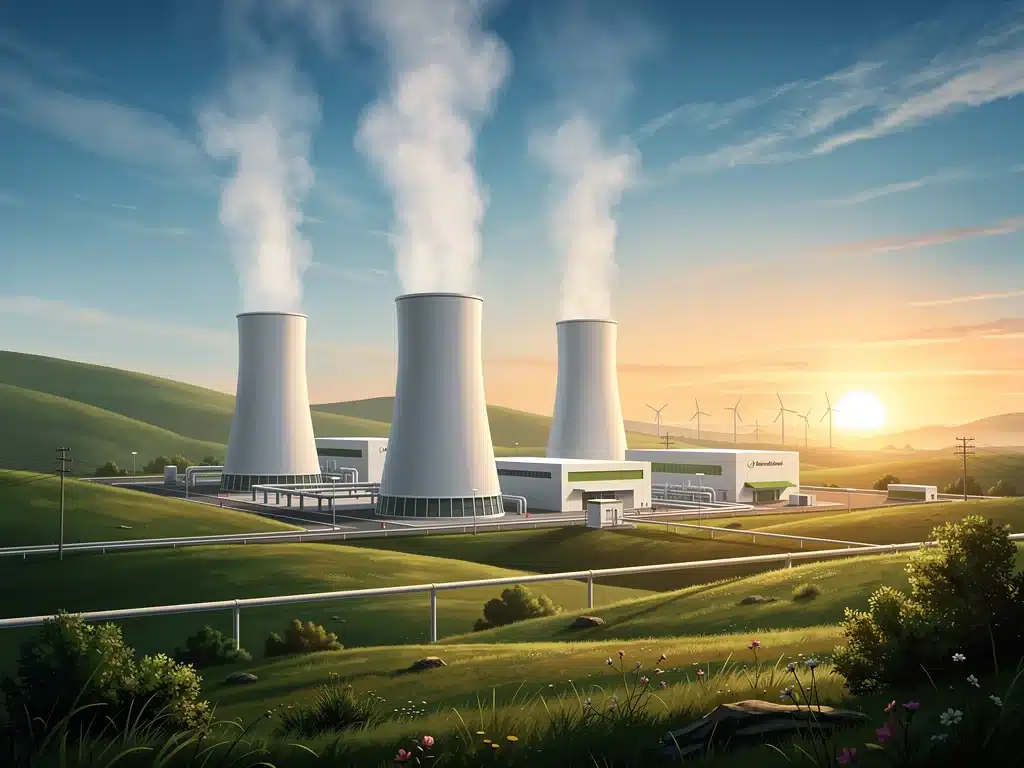
The 2026 outlook for geothermal energy in the U.S. is gaining momentum as a key climate solution.
This update highlights recent policy support, technological breakthroughs, and economic shifts driving the industry forward, along with what to watch next.
The Resurgence of Geothermal Energy in the U.S.
Geothermal energy, long considered a niche renewable resource, is experiencing a significant resurgence across the United States.
This renewed interest stems from its unique advantages, particularly its ability to provide baseload power consistently, unlike intermittent sources such as solar and wind.
The Biden administration’s focus on clean energy and climate goals has further propelled geothermal into the national spotlight.
Policy initiatives and increased funding are now creating a more favorable environment for its development and deployment, making the 2026 outlook for geothermal energy in the U.S. particularly promising.
Experts are increasingly recognizing geothermal’s potential to play a pivotal role in decarbonizing the U.S. energy grid.
Its continuous operation offers a crucial complement to other renewables, ensuring grid stability and reliability as the nation transitions away from fossil fuels.
Technological Breakthroughs Driving Geothermal Expansion
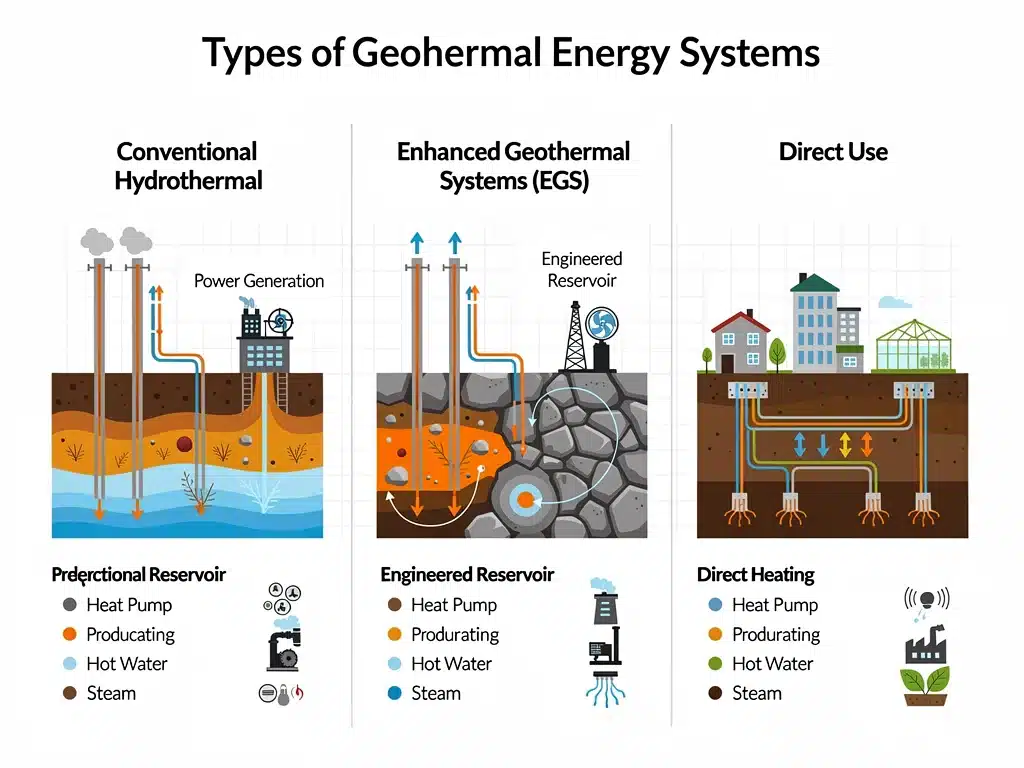
Recent advancements in drilling techniques and enhanced geothermal systems (EGS) are fundamentally transforming the industry’s capabilities.
These innovations allow for access to geothermal resources in areas previously deemed uneconomical or inaccessible, significantly expanding the potential footprint of geothermal development.
EGS technology, in particular, involves creating artificial reservoirs by fracturing hot, dry rock formations and injecting water to generate steam.
This approach unlocks vast untapped heat resources beneath the Earth’s surface, making the 2026 outlook for geothermal energy in the U.S. more robust.
Additionally, innovations in closed-loop systems and advanced materials are reducing operational costs and environmental impacts.
These technological leaps are critical for scaling geothermal power to meet future energy demands and achieving ambitious climate targets.
Enhanced Geothermal Systems (EGS) explained
Enhanced Geothermal Systems represent a paradigm shift, moving beyond reliance on naturally occurring hydrothermal reservoirs.
By actively engineering underground heat exchangers, EGS can harness geothermal energy virtually anywhere with sufficient subsurface heat, greatly increasing resource availability.
This technology involves injecting fluid under high pressure into deep rock formations to create or enlarge fractures, allowing water to circulate and absorb heat.
The heated water is then brought to the surface to generate electricity, providing a continuous, clean power source.
- EGS expands geothermal potential beyond traditional volcanic regions.
- It enables power generation from hot, dry rock formations.
- Significant research and development investments are accelerating its deployment.
Closed-Loop Geothermal Systems
Closed-loop systems offer another innovative pathway, circulating a working fluid through sealed pipes deep underground to absorb heat without direct interaction with the subsurface.
This minimizes water usage and eliminates concerns about induced seismicity often associated with conventional EGS.
These systems are particularly attractive for their reduced environmental footprint and operational flexibility. They can be deployed in diverse geological settings, further broadening the applicability of geothermal technology.
- Reduced water consumption compared to open-loop systems.
- Minimizes geological disturbance and seismic risk.
- Offers a more environmentally benign approach to geothermal power.
These technological advancements are pivotal to realizing the full potential of geothermal as a climate solution. They address many of the historical limitations, making the 2026 outlook for geothermal energy in the U.S. increasingly optimistic.
Policy and Funding Landscape for 2026
The current U.S. policy environment is demonstrably supportive of renewable energy, with significant legislative actions impacting geothermal development.
The Infrastructure Investment and Jobs Act and the Inflation Reduction Act (IRA) have allocated substantial funding and tax incentives to accelerate clean energy projects, including geothermal.
These policies provide critical financial incentives for developers, reducing the upfront capital costs associated with geothermal projects.
This governmental backing is essential for de-risking investments and encouraging widespread adoption, directly influencing the 2026 outlook for geothermal energy in the U.S.
Furthermore, federal agencies like the Department of Energy (DOE) are actively funding research, development, and demonstration projects for advanced geothermal technologies.
This concerted effort from both legislative and executive branches signals a strong commitment to geothermal’s future.
Federal Incentives and Tax Credits
The Inflation Reduction Act (IRA) offers a robust suite of tax credits, including the Investment Tax Credit (ITC) and Production Tax Credit (PTC), which are highly beneficial for geothermal projects.
These credits can cover a significant portion of project costs, making geothermal more competitive with traditional energy sources.
For instance, geothermal power projects can qualify for a 30% ITC, or an equivalent PTC, contingent on meeting certain labor and domestic content requirements. These long-term incentives provide much-needed financial certainty for investors and developers.
- 30% Investment Tax Credit (ITC) for geothermal projects.
- Production Tax Credit (PTC) as an alternative option.
- Bonus credits available for meeting domestic content and prevailing wage requirements.
Department of Energy Initiatives
The DOE’s Geothermal Technologies Office (GTO) is at the forefront of driving innovation through various programs and initiatives.
GTO supports projects ranging from early-stage research to commercial-scale demonstrations, fostering a pipeline of new technologies and deployment strategies.
Key initiatives include funding for EGS pilot projects, advanced drilling R&D, and resource assessment programs aimed at mapping untapped geothermal potential.
These efforts are crucial for overcoming technical barriers and accelerating market penetration, significantly shaping the 2026 outlook for geothermal energy in the U.S.
The DOE also collaborates with national laboratories, universities, and industry partners to share knowledge and best practices.
This collaborative approach ensures that scientific advancements quickly translate into practical applications, strengthening the entire geothermal ecosystem.
Economic Viability and Market Dynamics
The economic landscape for geothermal energy is becoming increasingly favorable, driven by declining development costs and growing demand for reliable, clean power.
While initial capital expenditures for geothermal plants can be high, their low operating costs and consistent output make them economically attractive over the long term.
Moreover, the rising cost of carbon emissions and the increasing volatility of fossil fuel prices further enhance geothermal’s competitive edge.
As carbon pricing mechanisms become more prevalent, the inherent cleanliness of geothermal power will provide a distinct economic advantage, improving the 2026 outlook for geothermal energy in the U.S.
Market dynamics are also shifting, with a greater emphasis on energy resilience and grid modernization.
Geothermal’s baseload capacity and minimal land footprint contribute to its appeal for utilities and policymakers seeking stable and sustainable energy solutions.
Cost Reductions and Efficiency Gains
Advances in drilling technology, particularly the development of faster and more efficient drilling techniques, are significantly reducing the capital costs associated with geothermal exploration and development.
These efficiency gains are making projects more financially viable and attracting new investors.
Improvements in power plant design and binary cycle technology are also increasing the efficiency of electricity generation, meaning more power can be extracted from a given geothermal resource.
This directly translates to higher returns on investment and lower levelized cost of electricity (LCOE).
- Reduced drilling costs through advanced techniques and automation.
- Increased power generation efficiency with binary cycle plants.
- Economies of scale as project sizes grow and technology matures.
Investment Trends and Private Sector Engagement
Private sector investment in geothermal energy is on an upward trend, reflecting growing confidence in its economic potential and technological maturity.
Venture capital firms and large energy companies are increasingly allocating funds to geothermal startups and innovative projects.
This surge in private funding complements government incentives, creating a powerful synergy that accelerates development.
The involvement of major players signals a broader recognition of geothermal’s role in the future energy mix, bolstering the 2026 outlook for geothermal energy in the U.S.
Furthermore, partnerships between traditional oil and gas companies and geothermal developers are emerging, leveraging existing drilling expertise and infrastructure.
This cross-sector collaboration is proving instrumental in driving down costs and speeding up project timelines.
Environmental Impact and Sustainability Credentials
Geothermal energy boasts an impressive environmental profile, producing minimal greenhouse gas emissions during operation.
Unlike fossil fuels, it does not burn anything, leading to significantly reduced air pollution and a smaller carbon footprint.
Its continuous operation also means it requires less land per megawatt-hour of electricity generated compared to other renewables like solar farms.
This minimal land use is a critical advantage, especially in densely populated areas or regions with sensitive ecosystems.
While some concerns exist regarding water usage and potential induced seismicity, ongoing research and technological advancements are actively addressing these issues.
The overall sustainability credentials make the 2026 outlook for geothermal energy in the U.S. highly attractive for environmental advocates.
Low Carbon Footprint
Geothermal power plants emit negligible amounts of greenhouse gases, primarily water vapor and trace amounts of non-condensable gases.
These emissions are vastly lower than those from fossil fuel plants, making geothermal a critical tool in the fight against climate change.
The life cycle emissions of geothermal are comparable to or even lower than those of solar and wind power, establishing it as a truly clean energy source.
This low carbon footprint is a major driver for its increased adoption in climate-conscious policies.
- Near-zero operational greenhouse gas emissions.
- Significantly lower life cycle emissions than fossil fuels.
- Contributes directly to national decarbonization goals.
Resource Management and Mitigation Strategies
Effective resource management is crucial for ensuring the long-term sustainability of geothermal reservoirs.
This involves careful monitoring of fluid levels and temperatures, as well as responsible reinjection practices to maintain reservoir pressure and heat.
Regarding induced seismicity, advanced geological modeling and real-time monitoring systems are being deployed to minimize risks.
Projects are designed with careful consideration of local geology, and operational protocols are in place to manage and mitigate any seismic activity.
Innovations in closed-loop systems, as mentioned, also play a role in reducing these concerns.
These proactive measures underscore the industry’s commitment to responsible development, further solidifying the 2026 outlook for geothermal energy in the U.S. as a sustainable option.
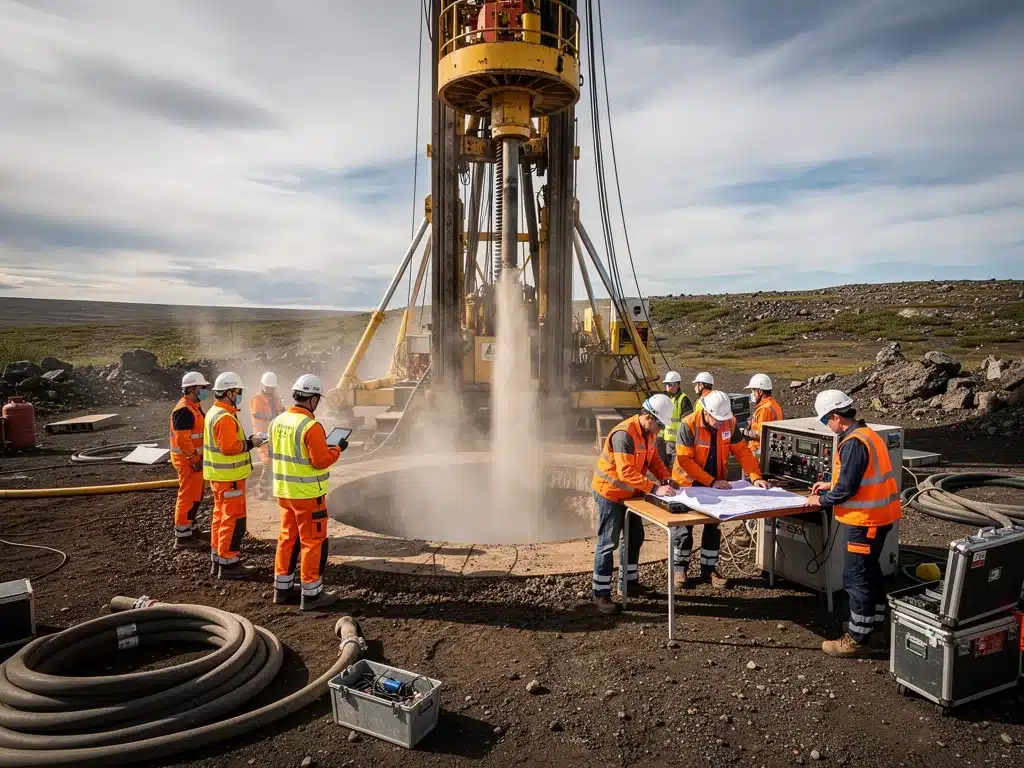
Challenges and Barriers to Widespread Adoption
Despite its significant potential, geothermal energy faces several challenges that could impede its widespread adoption.
High upfront capital costs for exploration and drilling remain a primary barrier, often requiring substantial investment before the viability of a resource is fully confirmed.
Geological uncertainty is another inherent challenge; locating and characterizing economically viable geothermal reservoirs requires extensive and costly exploration.
This risk factor can deter investors who prefer more predictable returns, impacting the 2026 outlook for geothermal energy in the U.S.
Permitting processes can also be complex and time-consuming, varying significantly across different states and jurisdictions. Streamlining these regulatory hurdles is crucial for accelerating project development and deployment.
High Upfront Costs
The initial investment required for geothermal projects, particularly for deep drilling and reservoir development, is considerable.
This capital intensity can make financing difficult, especially for smaller developers or projects in unproven regions.
While federal incentives help, bridging the gap between initial investment and long-term returns remains a challenge.
Innovative financing mechanisms and risk-sharing models are needed to de-risk these early stages and attract broader investment.
- Significant capital outlay for exploration and drilling.
- Long development timelines before revenue generation.
- Need for specialized equipment and skilled labor.
Geological Risk and Resource Uncertainty
Unlike solar or wind, where resource assessment is relatively straightforward, identifying and confirming a viable geothermal resource requires extensive subsurface exploration.
This involves expensive geological surveys, seismic imaging, and exploratory drilling, all with inherent risks.
The uncertainty associated with hitting a productive reservoir can be a major deterrent for investors.
Further advancements in subsurface imaging and predictive modeling are essential to reduce this geological risk and improve project success rates.
This risk directly influences the bankability of projects and their ability to secure financing. Reducing this uncertainty is paramount to improving the 2026 outlook for geothermal energy in the U.S. and attracting more mainstream investment.
Regional Potential and Deployment Strategies
The U.S. possesses vast geothermal resources, with significant potential concentrated in the Western states, particularly California, Nevada, and Utah.
These regions have historically been at the forefront of geothermal development due to their favorable geological conditions and abundant hydrothermal resources.
However, with the advent of EGS and closed-loop technologies, the geographical scope for geothermal development is expanding. States in the Eastern U.S. and even the Midwest are now being considered for potential projects, leveraging deeper heat resources.
Strategic deployment involves identifying optimal locations, integrating geothermal with existing grid infrastructure, and tailoring projects to specific regional energy needs.
This diversified approach will be key to maximizing the contribution of geothermal to the national energy mix.
Western States Leadership
California, with its Imperial Valley and The Geysers complex, remains the undisputed leader in U.S. geothermal power generation.
These regions benefit from highly permeable rock formations and abundant hot water reservoirs, supporting large-scale conventional geothermal plants.
Nevada and Utah are also significant players, with numerous operating plants and active development pipelines.
Their experience and established infrastructure provide a strong foundation for continued growth and innovation in the sector.
- California’s Geysers is the largest complex in the world.
- Nevada and Utah have extensive conventional hydrothermal resources.
- These states offer established regulatory frameworks and skilled workforces.
Emerging Regions and New Opportunities
The development of advanced geothermal technologies is opening up new opportunities in states that previously lacked conventional resources.
Regions with sedimentary basins, such as Texas and Oklahoma, are being explored for their potential to host EGS projects or utilize abandoned oil and gas wells for geothermal heat extraction.
Even states with lower temperature geothermal resources, like those in the Appalachian Basin, are exploring direct-use applications for heating and cooling.
This diversification of applications and geographical reach significantly enhances the overall 2026 outlook for geothermal energy in the U.S.
The potential for co-production of geothermal energy from existing oil and gas wells presents a particularly intriguing opportunity, leveraging existing infrastructure and expertise.
This could accelerate deployment and reduce costs in new regions.
Geothermal’s Role in Grid Stability and Energy Security
Geothermal energy offers invaluable benefits for grid stability and energy security, distinguishing it from other renewable sources.
Its ability to provide continuous, dispatchable power means it can operate 24/7, providing a reliable baseload that helps balance the grid when solar and wind output fluctuates.
This inherent reliability is crucial for modernizing the U.S. electricity grid and enhancing its resilience against disruptions.
As extreme weather events become more frequent, geothermal’s consistent performance becomes an even greater asset, positively impacting the 2026 outlook for geothermal energy in the U.S.
Furthermore, geothermal power plants are typically located closer to demand centers, reducing transmission losses and strengthening local grid infrastructure.
This decentralized potential contributes significantly to national energy security by diversifying supply sources.
Baseload Power and Grid Integration
The consistent, non-intermittent nature of geothermal power makes it an ideal source for baseload electricity generation.
This constant output helps stabilize the grid, reducing the need for fossil fuel peaker plants and ensuring a reliable power supply.
Integrating geothermal effectively into the existing grid requires careful planning and investment in transmission infrastructure. However, its predictable output simplifies grid management compared to variable renewables.
- Provides continuous, 24/7 power generation.
- Reduces reliance on fossil fuel baseload plants.
- Enhances overall grid stability and reliability.
Energy Security and Resilience
By tapping into an indigenous, inexhaustible heat source, geothermal energy enhances national energy security by reducing dependence on imported fuels.
This local resource provides a stable, predictable energy supply, insulated from geopolitical volatility and supply chain disruptions.
Geothermal plants are also less vulnerable to surface-level disruptions compared to other energy infrastructure, contributing to greater energy resilience.
Their underground nature offers inherent protection against severe weather and physical threats.
This aspect of energy security is becoming increasingly important for policymakers. The 2026 outlook for geothermal energy in the U.S. is increasingly tied to its role in building a more resilient and independent energy future for the nation.
The Future: Geothermal as a Major Climate Solution?
Considering the rapid technological advancements, supportive policy landscape, and growing economic viability, the question of whether geothermal energy can become the next big climate solution in the U.S. is becoming less hypothetical.
The industry is poised for significant growth, with projections indicating a substantial increase in installed capacity by 2030 and beyond.
Continued investment in research and development, coupled with streamlined regulatory processes, will be crucial for unlocking geothermal’s full potential.
The ability to deploy EGS across diverse geological settings offers a pathway to truly scalable and widespread adoption.
Ultimately, the successful integration of geothermal will depend on a multi-faceted approach involving government support, private sector innovation, and public acceptance.
The 2026 outlook for geothermal energy in the U.S. suggests it is on a promising trajectory to become a cornerstone of the nation’s clean energy future.
| Key Aspect | Brief Description |
|---|---|
| Technological Progress | EGS and closed-loop systems expanding access to resources. |
| Policy Support | IRA and federal funding providing significant financial incentives. |
| Economic Viability | Decreasing costs and baseload capacity improving competitiveness. |
| Climate Solution Potential | Low carbon footprint and grid stability make it a key decarbonization tool. |
Frequently Asked Questions about Geothermal Energy in the U.S.
Geothermal energy offers continuous, baseload power with near-zero operational emissions, unlike intermittent renewables. Its ability to provide stable, clean electricity 24/7 makes it a crucial component for grid decarbonization and achieving national climate goals, as highlighted in the 2026 outlook for geothermal energy in the U.S.
Enhanced Geothermal Systems (EGS) and closed-loop technologies are revolutionizing the industry by allowing access to geothermal resources in more diverse geological settings. These innovations significantly expand the potential geographical footprint for geothermal development, making the 2026 outlook for geothermal energy in the U.S. much broader.
U.S. government policies, such as the Inflation Reduction Act (IRA) and federal funding initiatives, provide essential tax credits and financial incentives. These policies de-risk investments, reduce upfront costs, and accelerate project development, fundamentally shaping the positive 2026 outlook for geothermal energy in the U.S.
Key challenges include high upfront capital costs for exploration and drilling, geological uncertainty in locating viable resources, and complex permitting processes. Addressing these barriers through continued innovation and regulatory streamlining is crucial for the 2026 outlook for geothermal energy in the U.S. to fully materialize.
The Western U.S., particularly California, Nevada, and Utah, are traditional leaders due to abundant hydrothermal resources. However, new technologies are opening up opportunities in other regions, including the Midwest and Eastern U.S., diversifying the 2026 outlook for geothermal energy in the U.S. deployment.
Looking Ahead
The unfolding narrative of geothermal energy in the U.S. points towards a pivotal moment by 2026.
The confluence of technological advancement, robust policy support, and an increasingly favorable economic climate suggests a powerful trajectory for this reliable renewable.
The emphasis on baseload power and enhanced grid stability positions geothermal as more than just another clean energy source; it’s a foundational element for a resilient, decarbonized future.
Continued monitoring of policy implementation, R&D breakthroughs, and regional initiatives—such as geothermal energy in Wisconsin—as well as private investment flows, will reveal the extent to which the 2026 outlook for geothermal energy in the U.S. transforms into a tangible climate solution.