US States’ Renewable Energy Portfolios: Effective Policies for 2026 Climate Goals
Recent policy shifts and federal regulatory rollouts are reshaping the outlook for clean energy investors across the United States.
How Recent Legislative Updates Affect Your Investment in U.S. Renewable Energy Projects for 2026 and Beyond breaks down key tax incentive updates, grid reform rules, and critical policy changes you need to track to protect and grow your portfolio.
Understanding the Inflation Reduction Act’s Enduring Impact
The Inflation Reduction Act (IRA) of 2022 continues to be a cornerstone of federal policy, significantly influencing the trajectory of renewable energy development.
Its provisions, particularly the extended and enhanced tax credits, are now solidifying their long-term effects.
Investors are keenly observing how these credits translate into tangible project viability and returns, especially as the industry moves beyond initial implementation phases.
The stability offered by these legislative measures is a critical factor for attracting substantial capital.
This legislative framework provides unprecedented certainty for projects initiated in 2026 and subsequent years, fostering an environment ripe for sustained growth and innovation.
The scope of eligible technologies has also broadened, encouraging diversification within the renewable portfolio.
Key Tax Credits and Their Evolution Post-2025
The Production Tax Credit (PTC) and Investment Tax Credit (ITC) remain central to the IRA’s strategy, offering substantial financial incentives for renewable energy generation and deployment.
For projects beginning construction in 2026, these credits will transition to technology-neutral structures.
This shift to technology-neutral credits aims to level the playing field across various clean energy sources, promoting efficiency and cost-effectiveness rather than specific technologies.
It represents a mature phase of renewable energy policy, focusing on outcomes over prescriptive methods.
The value of these credits is tied to prevailing wage and apprenticeship requirements, introducing a social equity component to project development.
Compliance with these labor standards is crucial for maximizing the financial benefits, directly impacting a US renewable energy investment.
Transition to Technology-Neutral Credits
The move away from technology-specific incentives marks a significant evolution in federal support for clean energy.
This design encourages innovation and allows market forces to determine the most efficient renewable solutions.
Projects starting construction after 2024 will benefit from these new credit structures, provided they meet specific greenhouse gas emission reduction targets. This long-term outlook provides a stable foundation for US renewable energy investment.
- The Clean Electricity Production Credit (CEPC) will replace the PTC for new facilities.
- The Clean Electricity Investment Credit (CEIC) will succeed the ITC for eligible projects.
- Both credits require zero or net-zero greenhouse gas emissions for eligibility.
Domestic Content and Energy Community Bonus Credits
Beyond the base tax credits, the IRA introduces significant bonus incentives for projects that meet specific criteria related to domestic content and location within energy communities.
These provisions are designed to bolster American manufacturing and support regions historically reliant on fossil fuels.
The domestic content bonus, offering a 10% increase in tax credit value, encourages developers to source components from the United States.
This aims to create a robust domestic supply chain, reducing reliance on foreign imports and fostering local job creation, directly impacting a US renewable energy investment.
Similarly, the energy community bonus, also providing a 10% increase, directs investment towards areas experiencing economic dislocation from the transition away from fossil fuels.
This ensures a just transition, leveraging renewable development for regional revitalization.
Boosting American Manufacturing and Job Creation
The domestic content requirements are becoming increasingly important for developers aiming to maximize their project economics.
Meeting these thresholds involves navigating complex supply chains and verifying the origin of materials and components.
This focus on domestic manufacturing is not merely an incentive but a strategic imperative for the long-term resilience of the U.S. renewable energy sector.
It ensures that the economic benefits of the clean energy transition are broadly distributed across the nation, supporting US renewable energy investment.
- Projects must meet specific percentages of domestically produced steel, iron, and manufactured products.
- The threshold for manufactured products increases over time, pushing for greater domestic integration.
- Non-compliance can lead to a reduction or loss of the bonus credit.

Direct Pay and Transferability: Enhancing Project Financing
Two transformative features of the IRA are direct pay and transferability, mechanisms designed to expand access to tax credits and streamline project financing.
These provisions significantly de-risk projects for a broader range of investors and developers.
Direct pay allows tax-exempt entities, state and local governments, and certain other organizations to receive the cash equivalent of tax credits directly from the U.S. Treasury.
This eliminates the need for complex tax equity structures for these entities, simplifying their participation in renewable projects.
Transferability permits eligible taxpayers to sell all or a portion of their clean energy tax credits to unrelated third parties for cash.
This creates a liquid market for tax credits, enabling developers without sufficient tax liability to monetize their incentives efficiently, thereby supporting US renewable energy investment.
Simplifying Capital Access for Developers
The introduction of direct pay and transferability fundamentally alters the landscape of renewable energy finance.
These tools broaden the pool of potential investors and reduce the transaction costs associated with traditional tax equity financing.
For many developers, particularly smaller and mid-sized firms, these mechanisms unlock capital that was previously inaccessible, accelerating project deployment.
The clarity and flexibility they offer are invaluable for navigating the complexities of large-scale infrastructure projects, directly impacting a US renewable energy investment.
- Direct pay is available for certain entities, including non-profits and governmental bodies.
- Transferability allows for the sale of credits to any unrelated taxpayer.
- Both provisions aim to increase the efficiency and speed of capital deployment in renewable energy.
Permitting Reform and Grid Modernization Initiatives
While the IRA provided significant financial incentives, the pace of renewable energy deployment is also heavily influenced by permitting processes and grid infrastructure.
Recent legislative discussions and initiatives are focusing on streamlining these critical aspects.
Efforts to reform federal permitting aim to reduce timelines and complexities for large-scale energy projects, including transmission lines crucial for evacuating renewable power.
These reforms are essential to ensure that projects can be built as quickly as they can be financed, accelerating US renewable energy investment.
Concurrently, significant investments are being directed towards modernizing and expanding the U.S. electrical grid.
An aging grid and insufficient transmission capacity have been identified as major bottlenecks to integrating vast amounts of new renewable generation, impacting future US renewable energy investment.
Challenges and Opportunities in Infrastructure Development
The intersection of permitting reform and grid modernization presents both significant challenges and immense opportunities for the renewable energy sector.
Resolving these issues is paramount for the continued growth envisioned by the IRA.
Developers are closely watching legislative progress on permitting, as delays can significantly impact project costs and timelines.
The ability to connect new projects to the grid efficiently is a make-or-break factor for many ventures, directly influencing the viability of a US renewable energy investment.
- Proposed legislation seeks to set clearer deadlines for federal environmental reviews.
- Funding from the Bipartisan Infrastructure Law is being allocated to grid upgrades and new transmission projects.
- Interconnection queues remain a significant hurdle, requiring innovative policy solutions.
State-Level Policies and Regional Dynamics
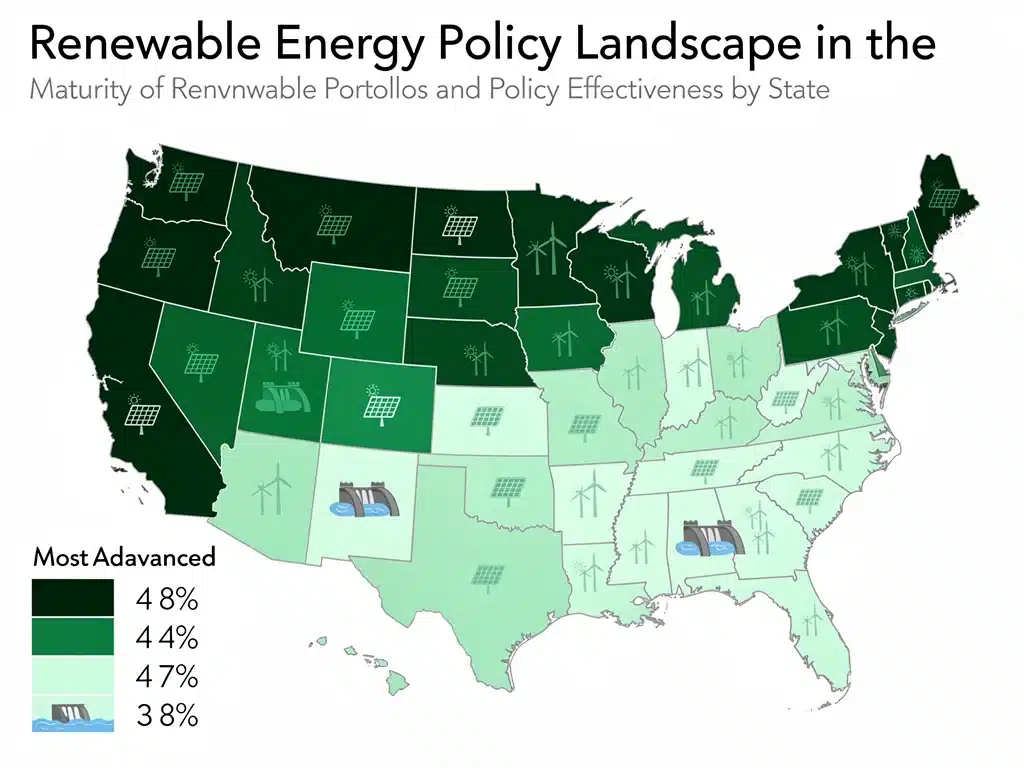
While federal legislation provides a broad framework, state-level policies and regional market dynamics play a crucial role in shaping the landscape for US renewable energy investment. States are increasingly adopting their own clean energy mandates, incentives, and regulatory structures.
Renewable Portfolio Standards (RPS) and clean energy goals vary significantly across states, creating diverse investment environments.
Some states offer additional tax incentives or grant programs that complement federal benefits, enhancing project attractiveness.
Regional transmission organizations (RTOs) and independent system operators (ISOs) manage electricity markets and grid operations, and their policies directly impact project siting, interconnection, and revenue streams.
Understanding these regional nuances is vital for strategic investment decisions for US renewable energy investment.
Varying Regulatory Environments Across States
The patchwork of state regulations means that a successful US renewable energy investment strategy often requires a detailed understanding of local policies.
What works in one state might not be optimal in another, necessitating tailored approaches.
Governors and state legislatures are actively debating and implementing new energy policies, often driven by local economic development goals and environmental concerns.
These ongoing developments add layers of complexity and opportunity for investors.
- States like California, New York, and Texas continue to lead in renewable energy deployment.
- Emerging markets in the Midwest and Southeast are gaining traction due to new policies and resource availability.
- Community engagement and local permitting processes also significantly influence project success.

Emerging Technologies and Market Trends for 2026
Beyond established solar and wind technologies, legislative updates are also catalyzing investment in emerging clean energy solutions.
Battery storage, green hydrogen, and advanced geothermal are seeing increased support, broadening the scope of US renewable energy investment opportunities.
The IRA specifically includes tax credits for standalone energy storage, a critical component for grid stability and renewable energy integration.
This recognition of storage as a foundational technology is driving rapid innovation and deployment.
Green hydrogen, produced using renewable electricity, is also receiving significant incentives, positioning the U.S. as a potential global leader in this nascent but promising sector.
These emerging technologies represent the next frontier for sustainable energy, impacting a US renewable energy investment.
Innovations Driving Future Clean Energy Growth
The focus on emerging technologies underscores a broader strategy to diversify the clean energy portfolio and address different energy needs. Investors are increasingly looking beyond traditional renewables to capture growth in these new areas.
Research and development, coupled with legislative backing, are accelerating the commercialization of these advanced solutions.
This creates new avenues for investment and technological leadership within the United States, further driving US renewable energy investment.
- Advanced manufacturing tax credits support the domestic production of various clean energy components.
- Demonstration projects for novel technologies are receiving federal funding and support.
- The long-term tax credit certainty extends to many of these developing technologies.
Risk Assessment and Due Diligence for Investors
Despite the favorable legislative environment, investors in U.S. renewable energy projects for 2026 and beyond must conduct thorough risk assessment and due diligence.
Market volatility, regulatory changes, and project-specific challenges remain important considerations.
Understanding the nuances of tax credit eligibility, particularly the prevailing wage and apprenticeship requirements, is crucial.
Non-compliance can significantly impact project economics and investor returns, affecting a US renewable energy investment.
Geopolitical factors, supply chain disruptions, and evolving interest rates can also influence project viability and financing costs.
A comprehensive risk management strategy is essential for navigating these complexities and ensuring a successful US renewable energy investment.
Navigating the Complexities of Renewable Energy Finance
Investors should engage with legal and financial experts specializing in renewable energy to fully understand the implications of recent legislative updates.
The intricacies of tax equity, direct pay, and transferability require expert guidance.
Furthermore, evaluating off-take agreements, power purchase agreements (PPAs), and utility regulations is paramount for securing stable revenue streams.
The long-term success of a US renewable energy investment hinges on a robust financial structure.
- Thorough site assessment and resource evaluation are fundamental for project success.
- Understanding local community sentiment and potential environmental impacts is critical for permitting.
- Monitoring political developments and potential changes to legislative frameworks is an ongoing necessity.
| Key Point | Brief Description |
|---|---|
| IRA’s Long-Term Impact | Extended and enhanced tax credits provide stability for 2026 and beyond. |
| Technology-Neutral Credits | Transition to performance-based credits after 2024, fostering innovation. |
| Financing Enhancements | Direct pay and transferability simplify capital access for projects. |
| Permitting & Grid Focus | Efforts to streamline permitting and modernize the grid are crucial. |
Frequently Asked Questions About US Renewable Energy Investment
For projects beginning construction in 2026, the traditional Production Tax Credit (PTC) and Investment Tax Credit (ITC) will transition to technology-neutral Clean Electricity Production Credit (CEPC) and Clean Electricity Investment Credit (CEIC). Eligibility will be based on achieving net-zero greenhouse gas emissions rather than specific technology types, offering more flexibility.
The domestic content bonus provides an additional 10% tax credit for projects that meet specific thresholds for domestically produced steel, iron, and manufactured components. This incentive aims to strengthen the U.S. manufacturing supply chain for renewable energy, creating jobs and reducing reliance on foreign sources, which is key for a US renewable energy investment.
Direct pay allows tax-exempt entities to receive tax credit cash directly, while transferability enables credit holders to sell them for cash. Both mechanisms significantly simplify project financing by broadening access to capital and reducing reliance on complex tax equity markets, making US renewable energy investment more accessible.
Legislative efforts are underway to streamline federal permitting processes for energy infrastructure, including renewable projects and transmission lines. The goal is to reduce timelines and bureaucratic hurdles that have historically caused delays, ensuring that projects can move from conception to operation more efficiently, positively impacting US renewable energy investment.
State-level policies, such as Renewable Portfolio Standards and additional incentives, significantly influence the attractiveness of renewable energy projects within their borders. These policies complement federal legislation, creating diverse market conditions and requiring investors to understand regional regulatory landscapes for successful US renewable energy investment.
Looking Ahead
The legislative framework established by the Inflation Reduction Act, coupled with ongoing efforts in permitting reform and grid modernization, creates a robust, albeit evolving, environment for US renewable energy investment from 2026 onwards.
Investors should remain vigilant regarding regulatory interpretations, state-level policy shifts, and the continued development of domestic supply chains.
To explore current federal funding opportunities and initiatives driving this transformation, review the U.S. Department of Energy investment resources.
The long-term trajectory points towards sustained growth, but strategic adaptation will be key to capitalizing on these profound changes in the U.S. renewable energy market.