US Carbon Capture Technologies: Innovations & 2026 Targets
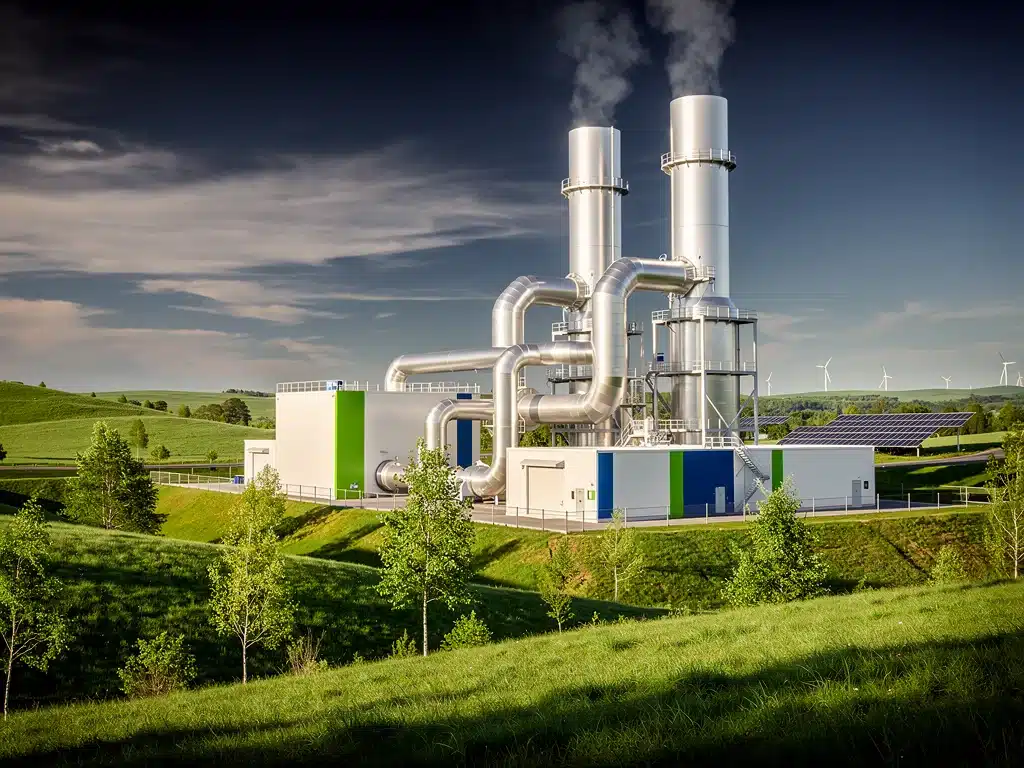
US Carbon Capture Technologies are seeing accelerated deployment ahead of their 2026 targets.
This direct, objective report details the latest federal and industry developments, key technological innovations, and the essential regulatory milestones to monitor next.
The Urgency of Carbon Capture in the US Climate Strategy
The United States faces increasing pressure to reduce greenhouse gas emissions, making carbon capture technologies a critical component of its climate strategy.
Recent policy shifts and significant federal funding have accelerated research, development, and deployment efforts across the nation.
Policymakers and environmental organizations recognize that while renewable energy expansion is vital, capturing emissions from hard-to-abate sectors like heavy industry and power generation is equally essential.
This dual approach aims to achieve ambitious decarbonization goals by mid-century.
The focus on US Carbon Capture Technologies reflects a consensus that a diverse portfolio of climate solutions is necessary to mitigate the impacts of climate change effectively.
The coming years, particularly leading up to 2026, will be pivotal in demonstrating the scalability and economic viability of these solutions.
Key US Innovations Driving Carbon Capture Forward
Recent breakthroughs in US Carbon Capture Technologies are transforming the landscape of emissions reduction.
Innovations range from advanced solvent systems to novel direct air capture (DAC) mechanisms, each promising higher efficiency and lower costs.
Scientists and engineers are developing materials with enhanced CO2 absorption capabilities, such as metal-organic frameworks (MOFs) and porous polymers, which can selectively capture carbon dioxide from industrial flue gases and the atmosphere.
These advancements are crucial for making capture processes more energy-efficient and economically feasible.
Furthermore, significant progress is being made in modular capture technologies, allowing for more flexible and scalable deployment across various industrial sites.
These modular units can be integrated into existing infrastructure with less disruption, accelerating the adoption of carbon capture solutions.
Advancements in Direct Air Capture (DAC)
- New sorbent materials: Development of highly selective and regenerative sorbents that can capture CO2 directly from ambient air, even at low concentrations.
- Energy efficiency improvements: Research into processes that require less energy for CO2 release and regeneration, reducing the operational costs of DAC plants.
- Modular DAC systems: Introduction of smaller, scalable DAC units that can be deployed in various locations, offering flexibility for localized carbon removal.
Enhanced Solvent and Adsorbent Technologies
- Next-generation solvents: Creation of amine-based solvents with improved stability and lower degradation rates, leading to longer lifespans and reduced environmental impact.
- Solid adsorbent development: Exploration of solid materials that can capture CO2 at lower temperatures and pressures, significantly cutting down energy consumption during the capture process.
- Integrated capture systems: Designing capture systems that are seamlessly integrated with industrial processes, optimizing heat recovery and overall energy balance.
Understanding the 2026 Deployment Targets and Their Significance
The 2026 deployment targets for US Carbon Capture Technologies are ambitious, aiming to significantly scale up operational capacity.
These targets are driven by federal incentives and private sector investments, reflecting a concerted effort to accelerate climate action.
By 2026, several large-scale carbon capture and storage (CCS) projects are expected to be operational, focusing on sectors such as cement, steel, and power generation.
These projects are intended to demonstrate the commercial viability and environmental benefits of the technology at scale.
Achieving these targets is crucial for the US to meet its nationally determined contributions (NDCs) under the Paris Agreement and to position itself as a global leader in climate innovation.
The success of these early projects will pave the way for broader adoption and investment in carbon capture infrastructure.
Federal Funding and Policy Support
The Infrastructure Investment and Jobs Act (IIJA) and the Inflation Reduction Act (IRA) provide unprecedented financial incentives for US Carbon Capture Technologies.
These acts offer billions in funding for demonstration projects, tax credits, and grants, significantly de-risking investments in the sector.
The 45Q tax credit, in particular, has been enhanced, offering up to $85 per metric ton for CO2 stored geologically and $60 per metric ton for CO2 utilized.
This substantial financial support is designed to make carbon capture projects economically competitive with traditional emissions reduction methods.
These policies aim to create a stable regulatory environment and foster a robust market for carbon capture, utilization, and storage (CCUS) technologies.
The focus is on accelerating deployment and ensuring these technologies contribute meaningfully to climate goals.
Major Projects and Regional Hubs in Development
Across the United States, several significant carbon capture projects are rapidly progressing towards their 2026 operational goals.
These initiatives represent a diverse range of applications and technological approaches, showcasing the versatility of US Carbon Capture Technologies.
Regional carbon capture hubs are also emerging, designed to consolidate infrastructure for CO2 transport and storage, thereby reducing costs and increasing efficiency.
These hubs often leverage existing geological formations for secure, long-term sequestration.
Key projects include large-scale capture facilities at industrial plants, power stations, and direct air capture sites, each contributing to the overall national strategy.
This concentrated effort aims to establish a robust carbon management ecosystem.
Prominent Carbon Capture Projects
- Project Tundra (North Dakota): Aims to capture CO2 from a coal-fired power plant, with plans for geological storage in saline formations. This project represents a significant step for decarbonizing the power sector.
- Port of Corpus Christi (Texas): Developing a major carbon capture and storage hub, leveraging extensive industrial emissions and nearby geological storage sites in the Gulf Coast region.
- Occidental Petroleum’s Stratos (Permian Basin): A direct air capture plant designed to remove 500,000 metric tons of CO2 annually, showcasing the potential of DAC at commercial scale.
Challenges and Opportunities for Widespread Adoption
Despite significant progress, widespread adoption of US Carbon Capture Technologies faces several challenges, including high initial capital costs, public perception, and the need for extensive infrastructure development.
Overcoming these hurdles is critical for meeting deployment targets.
One major challenge is the development of a comprehensive CO2 transport network, including pipelines, to connect capture sites with geological storage locations.
Permitting and siting new infrastructure can be a lengthy and complex process.
However, these challenges also present opportunities for innovation and economic growth, creating new jobs and industries.
The development of advanced materials, efficient processes, and robust infrastructure will drive technological progress and enhance energy security.
Addressing Economic and Regulatory Hurdles
The economic viability of US Carbon Capture Technologies is heavily reliant on policy support and market mechanisms.
Continued and stable federal incentives, alongside the development of carbon markets, are essential to attract private investment and reduce financial risks.
Regulatory frameworks need to be streamlined to facilitate faster project approval and ensure environmental safety standards are met.
Clear guidelines for CO2 transport and storage, including liability frameworks, are critical for investor confidence.
Establishing robust monitoring, reporting, and verification (MRV) protocols is also paramount to ensure the effectiveness and integrity of carbon capture projects.
Transparency and accountability will build public trust and support for these technologies.
The Role of Carbon Utilization and Storage
Beyond simply capturing carbon, the effective utilization and secure storage of CO2 are integral to the long-term success of US Carbon Capture Technologies.
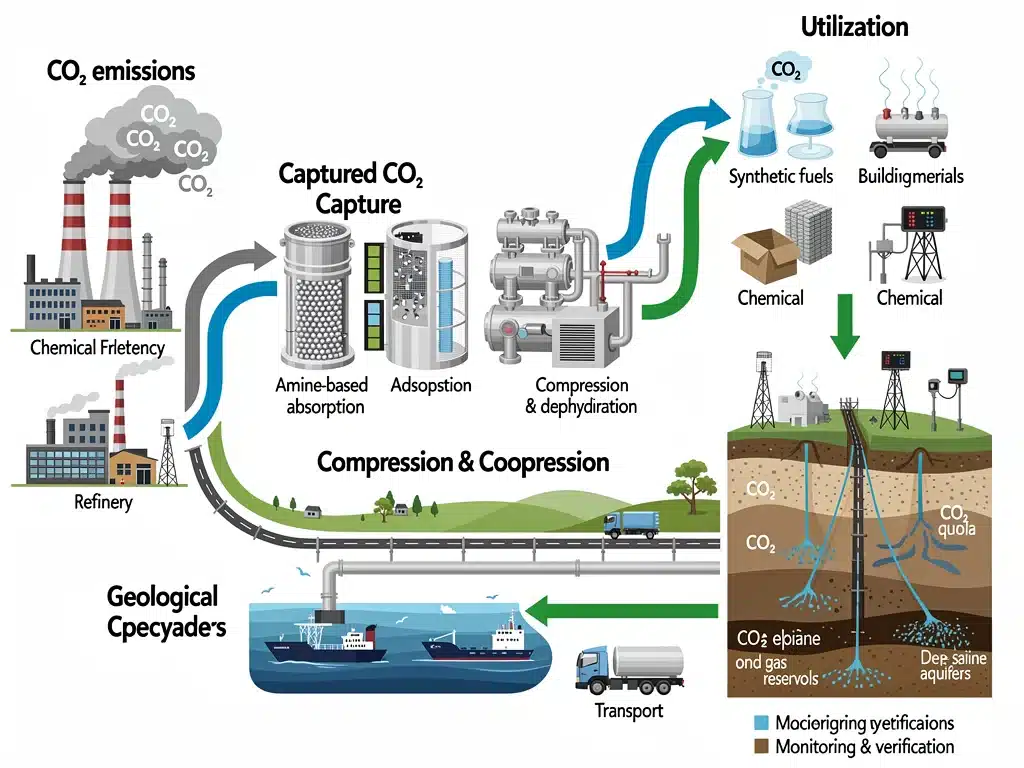
Carbon utilization, or CCU, transforms captured CO2 into valuable products, creating new economic opportunities.
Captured CO2 can be used in various industrial processes, such as enhanced oil recovery (EOR), the production of synthetic fuels, building materials, and chemicals.
These applications not only sequester carbon but also generate revenue streams that can offset capture costs.
For permanent removal, geological storage in deep saline aquifers or depleted oil and gas reservoirs is a proven method.
Rigorous site selection, monitoring, and verification are essential to ensure the long-term integrity and safety of these storage sites.
Environmental and Economic Impacts of Carbon Capture
The deployment of US Carbon Capture Technologies promises significant environmental benefits, primarily through the reduction of atmospheric greenhouse gas concentrations.
This directly contributes to mitigating climate change and improving air quality in industrial regions.
Economically, the carbon capture industry is poised to create thousands of jobs across various sectors, including engineering, construction, manufacturing, and operations.
It also fosters innovation, driving technological advancements and attracting domestic and international investment.
However, careful consideration must be given to the potential environmental impacts of large-scale infrastructure development, such as pipelines and storage sites.
Robust environmental assessments and community engagement are crucial to ensure sustainable and equitable deployment.
Job Creation and Economic Growth
- Skilled labor demand: The construction and operation of carbon capture facilities will require a diverse workforce, including engineers, technicians, and construction workers.
- Manufacturing opportunities: Growth in the carbon capture sector will stimulate demand for specialized equipment and materials, boosting domestic manufacturing.
- Regional economic development: Investment in carbon capture hubs can revitalize industrial regions, creating new economic engines and diversifying local economies.
International Collaboration and Global Implications
The advancements in US Carbon Capture Technologies have significant global implications, fostering international collaboration and influencing climate policies worldwide.
The US is actively engaging with other nations to share knowledge and accelerate global deployment.
International partnerships are crucial for developing standardized best practices, sharing technological breakthroughs, and addressing cross-border CO2 transport and storage challenges.
This collaborative approach enhances the collective capacity to combat climate change.
The success of US projects can serve as a blueprint for other countries, demonstrating the feasibility and benefits of carbon capture.
This global leadership reinforces the urgency and necessity of these technologies in achieving global net-zero targets.
Public Perception and Community Engagement
Public perception and effective community engagement are vital for the successful deployment of US Carbon Capture Technologies.
Transparency, education, and addressing local concerns are paramount to building trust and support for these projects.
Misconceptions about carbon capture, particularly regarding safety and environmental impact, need to be addressed through clear communication and verifiable data.
Engaging local communities early and often in the planning process can help mitigate opposition and foster collaboration.
Ensuring that projects benefit local economies and address environmental justice concerns is also critical. A just transition approach that considers the needs of affected communities will be essential for the long-term social license to operate.
| Key Aspect | Description |
|---|---|
| 2026 Targets | Ambitious federal and private sector goals for scaling operational carbon capture capacity across key industrial sectors. |
| Key Innovations | Advances in direct air capture, efficient solvent systems, and modular technologies enhancing capture efficiency and reducing costs. |
| Policy Drivers | Significant federal funding and enhanced tax credits (e.g., 45Q) accelerating investment and deployment in carbon capture. |
| Regional Hubs | Development of integrated CO2 transport and storage infrastructure to support multiple capture facilities and optimize operations. |
Frequently Asked Questions About US Carbon Capture Technologies
The primary goals by 2026 involve scaling up operational carbon capture capacity, particularly in hard-to-abate sectors like heavy industry and power generation. The aim is to demonstrate commercial viability and significantly contribute to national decarbonization targets, supported by federal incentives and private investment.
Innovations are improving carbon capture through advanced materials like MOFs and porous polymers, leading to higher CO2 absorption efficiency and lower energy consumption. Direct air capture technologies are becoming more efficient and modular, making them more adaptable for various deployment scenarios and cost-effective.
Federal policies, such as the Infrastructure Investment and Jobs Act and the Inflation Reduction Act, provide crucial financial incentives, including substantial tax credits like 45Q. These policies de-risk investments, attract private capital, and create a stable regulatory environment essential for accelerating deployment of US Carbon Capture Technologies.
Major projects are spread across various regions, including North Dakota (Project Tundra), Texas (Port of Corpus Christi hub), and the Permian Basin (Occidental’s Stratos DAC plant). These projects focus on diverse applications, from industrial emissions to direct air capture, establishing regional carbon management ecosystems.
Challenges include high initial capital costs, the need for extensive CO2 transport infrastructure like pipelines, and public perception issues. Overcoming these requires sustained policy support, streamlined regulatory processes, and transparent community engagement to build trust and ensure equitable and safe deployment.
Looking Ahead: The Trajectory of US Carbon Capture Technologies
The current trajectory for US Carbon Capture Technologies indicates a period of accelerated growth and significant deployment leading up to and beyond 2026.
The confluence of technological breakthroughs, robust federal support, and increasing climate urgency is creating a fertile ground for these solutions.
Stakeholders should closely monitor the progress of flagship projects, the evolution of policy frameworks, and ongoing innovations in carbon utilization.
Successfully scaling these complex systems requires more than just physical infrastructure; it demands sophisticated digital modeling, risk analysis, and resource planning.
Deploying advanced process simulations and AI-assisted controls helps industrial facilities optimize their capture costs and identify the most economically feasible pathways for long-term storage.
To explore how leading energy and chemical operators utilize digital twins and advanced engineering software to meet these aggressive decarbonization targets, you can read the AspenTech white paper on optimizing carbon capture, utilization, and storage.
The commitment to US Carbon Capture Technologies underscores a pragmatic approach to climate action, acknowledging that a multi-faceted strategy is necessary to achieve net-zero emissions.
The impact of these developments will resonate across industrial sectors, energy markets, and environmental policies for decades to come.