Federal Funding for Climate Resilience 2026: Top 3 Grants

Discover the latest updates on federal funding for climate resilience in 2026, focusing on the top three grant opportunities available across the United States.
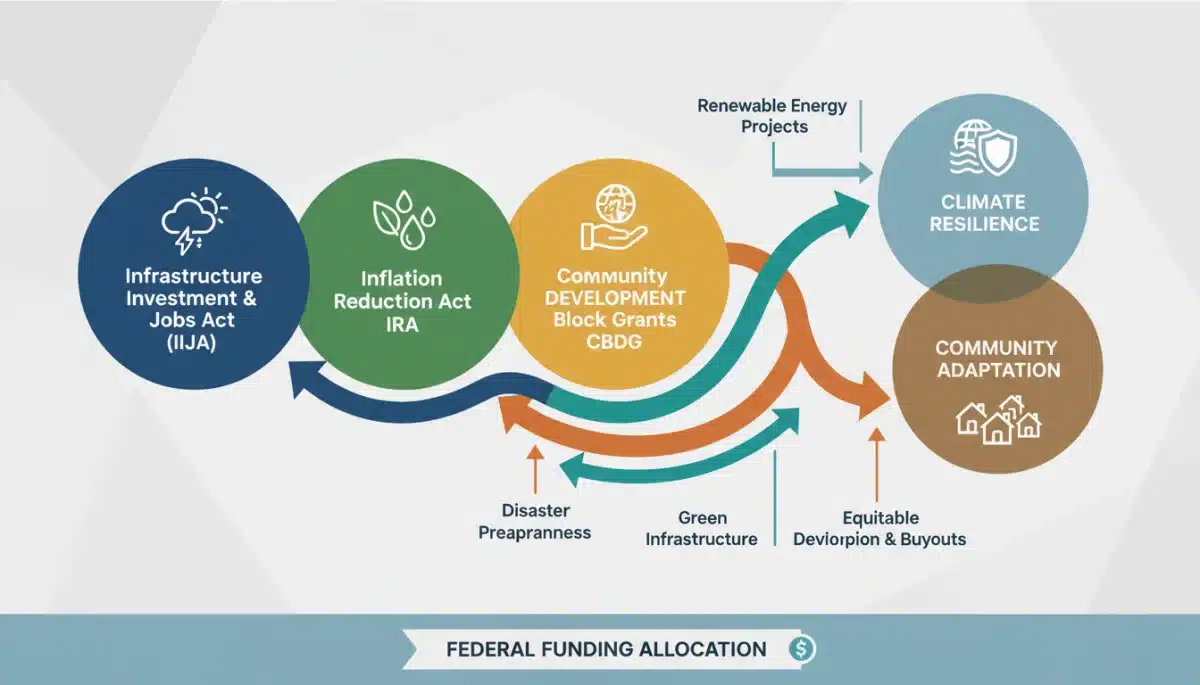
Synthesizing new details released by officials and industry experts, this straightforward update highlights what has changed in environmental funding, why these grants matter for community adaptation, and what key deadlines applicants need to watch next.
Navigating the Landscape of Federal Climate Resilience Funding
As the United States confronts the escalating impacts of climate change, the availability of robust federal funding for climate resilience is more critical than ever.
Communities nationwide are seeking resources to protect infrastructure, safeguard natural ecosystems, and ensure public safety against extreme weather events, sea-level rise, and other climate-related hazards.
The year 2026 marks a pivotal period, with several key federal programs poised to offer substantial financial assistance.
Understanding these opportunities is essential for state, local, tribal, and territorial governments, as well as non-profit organizations and academic institutions, to effectively plan and implement resilience projects.
This report delves into the anticipated top three grant opportunities, providing a strategic overview to help potential applicants prepare.
The focus is on programs that offer significant, sustained support for comprehensive climate resilience initiatives.
Understanding the Strategic Priorities for 2026
The federal government’s approach to climate resilience funding in 2026 reflects a commitment to proactive measures and equitable distribution of resources.
Strategic priorities include investing in nature-based solutions, upgrading critical infrastructure, and supporting vulnerable communities that disproportionately bear the brunt of climate impacts.
Agencies are emphasizing projects that demonstrate long-term sustainability, inter-agency collaboration, and a clear return on investment in terms of reduced risk and enhanced community well-being.
This holistic perspective aims to build not just resilient physical structures, but also resilient social and economic systems.
Applicants should align their proposals with these overarching federal objectives to maximize their chances of securing funding.
A strong understanding of the specific goals for federal climate resilience funding will be a distinguishing factor in competitive grant processes.
The Role of Interagency Coordination
Effective climate resilience often requires a coordinated effort across multiple federal agencies. Programs in 2026 are expected to encourage or even mandate partnerships between different levels of government and within various sectors.
This approach helps to avoid duplication of efforts, leverage diverse expertise, and ensure that projects address complex, interconnected challenges comprehensively. Such collaboration strengthens the overall impact of federal climate resilience funding.
Top Grant Opportunity 1: The Infrastructure Resilience Program (IRP)
The Infrastructure Resilience Program (IRP), administered by the Department of Transportation and the Environmental Protection Agency, is projected to be a cornerstone of federal climate resilience funding in 2026.
This program targets critical infrastructure vulnerabilities, including transportation networks, water systems, and energy grids.
The IRP focuses on projects that enhance the durability and adaptive capacity of these essential systems against climate threats.
Funding is allocated for both structural improvements and the integration of advanced technologies for monitoring and early warning.
Communities seeking to fortify their foundational services against future climate events should prioritize this grant.
Its broad scope and significant funding potential make it a prime target for those aiming to secure substantial federal climate resilience funding.
Key Focus Areas for IRP Grants
IRP grants are expected to fund a diverse range of projects.
These include hardening coastal roads against storm surge, improving stormwater management systems to prevent flooding, and upgrading power grids to withstand extreme weather.
Emphasis will also be placed on innovative solutions that incorporate green infrastructure, such as permeable pavements and restored wetlands, which provide multiple co-benefits beyond pure resilience.
Understanding these specific areas is vital for crafting competitive applications for federal climate resilience funding.
- Modernization of transportation infrastructure (roads, bridges, ports)
- Enhancements to water and wastewater treatment facilities
- Upgrades to energy transmission and distribution systems
- Development of nature-based solutions for infrastructure protection
Top Grant Opportunity 2: Community Adaptation and Protection Initiative (CAPI)
The Community Adaptation and Protection Initiative (CAPI), primarily managed by FEMA and NOAA, will be another leading source of federal climate resilience funding in 2026.
CAPI is designed to support community-driven projects that enhance local adaptive capacity and protect vulnerable populations.
This initiative typically funds projects ranging from hazard mitigation planning and early warning systems to relocation assistance and public education campaigns.
It places a strong emphasis on equity, ensuring that resources reach communities most at risk and often with limited capacity to respond.
CAPI represents a critical avenue for localities to access federal climate resilience funding to implement comprehensive, localized strategies.
Its focus on community involvement ensures that solutions are tailored to specific local needs and circumstances.
Eligibility and Project Examples for CAPI
Eligibility for CAPI grants often extends to local governments, tribal nations, and non-profit organizations. Projects that demonstrate strong community engagement and address social vulnerabilities are highly favored.
Examples include developing community-level climate action plans, establishing resilience hubs, and implementing nature-based solutions like oyster reefs for coastal protection.
Securing this type of federal climate resilience funding can transform a community’s ability to withstand future climate shocks.
- Development of comprehensive hazard mitigation plans
- Implementation of nature-based coastal and riverine protection
- Creation of community resilience centers and early warning systems
- Support for climate-related public health initiatives

Top Grant Opportunity 3: Natural Infrastructure Restoration Fund (NIRF)
The Natural Infrastructure Restoration Fund (NIRF), a joint effort by the Department of Interior and the USDA, is set to become a significant source of federal climate resilience funding in 2026.
This fund specifically targets projects that leverage natural systems to build resilience and restore ecosystems.
NIRF supports initiatives such as wetland restoration, reforestation for wildfire prevention, riparian buffer creation for flood control, and soil health improvements for drought resistance.
The program recognizes the intrinsic value of healthy ecosystems in buffering communities from climate impacts.
For organizations and agencies focused on ecological solutions, NIRF offers a distinct opportunity to secure federal climate resilience funding.
These projects often yield additional benefits, such as enhanced biodiversity and improved water quality.
NIRF’s Emphasis on Ecosystem Services
NIRF prioritizes projects that not only enhance resilience but also restore vital ecosystem services. This includes initiatives that improve carbon sequestration, support wildlife habitats, and provide recreational opportunities.
The fund seeks proposals that are scientifically sound and demonstrate a clear understanding of ecological principles in achieving resilience objectives.
Successful applications for this federal climate resilience funding will highlight both environmental and community benefits.
- Restoration of coastal wetlands and estuaries
- Reforestation and sustainable forest management
- Implementation of green infrastructure in urban areas
- Conservation of agricultural lands for water retention
Preparing Your Application for Federal Funding in 2026
Securing federal climate resilience funding requires meticulous preparation and a thorough understanding of each grant program’s specific requirements.
Early planning is paramount, as application processes can be complex and highly competitive.
Potential applicants should begin by thoroughly reviewing program guidelines, attending informational webinars, and engaging with agency representatives.
Building strong partnerships with relevant stakeholders, including local governments, community groups, and technical experts, can significantly strengthen a proposal.
Furthermore, demonstrating a clear understanding of the local climate risks and how the proposed project will directly address those vulnerabilities is crucial.
A well-articulated narrative that connects local needs to federal priorities will be key to success in obtaining federal climate resilience funding.
Best Practices for Grant Proposal Development
Successful grant proposals often share common characteristics, including clear objectives, a detailed work plan, a realistic budget, and measurable outcomes. Highlighting the long-term benefits and sustainability of the project is also vital.
Applicants should also consider how their projects contribute to broader national goals, such as equity and environmental justice.
A compelling narrative combined with robust technical details will enhance the competitiveness of applications for federal climate resilience funding.
The Importance of Data and Science in Proposals
Federal funding for climate resilience in 2026 will undoubtedly prioritize proposals backed by strong scientific evidence and data.
Agencies are increasingly looking for projects that demonstrate a clear understanding of climate science and its local implications.
This includes utilizing climate projections, vulnerability assessments, and cost-benefit analyses to justify proposed interventions.
Projects that can quantify their expected resilience benefits will stand out in the competitive landscape.
Integrating robust data and scientific methodologies into grant applications is not just a recommendation, but often a requirement for securing federal climate resilience funding.
This ensures that investments are made in the most effective and impactful ways.
Leveraging Local Expertise and Research
Incorporating local data, community knowledge, and partnerships with academic institutions can significantly strengthen a proposal. This approach grounds the project in local realities while leveraging scientific rigor.
Demonstrating how local expertise informs the project design and implementation shows a comprehensive understanding of the challenges and opportunities.
Such integration is a strong indicator of a well-conceived plan for federal climate resilience funding.
Future Outlook and Emerging Trends in Funding
Looking beyond 2026, the trajectory of federal funding for climate resilience is expected to continue its upward trend, driven by increasing climate impacts and growing recognition of the need for proactive adaptation.
Emerging trends suggest a greater emphasis on regional collaboration and innovative financing mechanisms.
There will likely be continued investment in technologies that support early warning, climate monitoring, and predictive modeling.
Furthermore, programs are expected to evolve to address new and unanticipated climate challenges, requiring flexibility and adaptability from applicants.
Staying informed about these evolving priorities and trends will be crucial for communities and organizations seeking to continually access federal climate resilience funding.
The landscape is dynamic, and successful applicants will be those who can adapt quickly.
The Role of Private Sector Engagement
While federal funding for climate resilience is substantial, there is a growing push for greater private sector involvement in resilience initiatives. Public-private partnerships are seen as a way to leverage additional capital and expertise.
Future grant programs may incentivize projects that include private sector contributions or innovative financing models.
This collaborative approach could unlock new opportunities for comprehensive climate resilience efforts and diversify funding sources beyond traditional federal climate resilience funding.
| Key Grant | Primary Focus |
|---|---|
| Infrastructure Resilience Program (IRP) | Strengthening critical infrastructure against climate threats. |
| Community Adaptation and Protection Initiative (CAPI) | Supporting localized, community-driven resilience projects. |
| Natural Infrastructure Restoration Fund (NIRF) | Leveraging natural systems for ecosystem and community resilience. |
| General Preparation | Early planning, stakeholder partnerships, data-driven proposals. |
Frequently Asked Questions on Climate Resilience Funding
The primary goal is to enhance the nation’s capacity to withstand and recover from climate change impacts. This includes protecting critical infrastructure, safeguarding natural resources, and supporting vulnerable communities through strategic investments and innovative solutions in climate resilience.
Eligibility typically extends to state, local, tribal, and territorial governments, as well as non-profit organizations, academic institutions, and certain community groups. Specific eligibility criteria vary by grant program, so reviewing individual program guidelines is essential for federal climate resilience funding.
Preparation involves early planning, conducting thorough vulnerability assessments, developing data-driven proposals, and fostering strong partnerships. Aligning projects with federal priorities and demonstrating a clear understanding of local climate risks are crucial for securing federal climate resilience funding.
Funded projects range from hardening infrastructure and implementing nature-based solutions to developing early warning systems and community adaptation plans. The focus is on comprehensive strategies that build both physical and social resilience against climate change impacts, supported by federal climate resilience funding.
Yes, the need for climate resilience is ongoing, and federal funding is expected to continue and evolve. Agencies are committed to long-term investment in adaptation and mitigation, with new programs and priorities likely to emerge in response to changing climate challenges and scientific advancements.
Looking Ahead: Sustaining Resilience Efforts
The allocation of federal funding for climate resilience in 2026 represents a critical step in the nation’s ongoing efforts to adapt to a changing climate.
These grant opportunities provide essential resources for communities to implement vital projects that protect lives, livelihoods, and ecosystems.
The emphasis on data-driven approaches, interagency collaboration, and community engagement underscores a comprehensive strategy for building a more resilient future.
For organizations looking to expand their capacity and discover additional capital resources beyond public grants, aligning with philanthropic platforms like the Climate Resilience Fund can help bridge the gap between strategic planning and local project implementation.
Staying informed about these programs and preparing robust, well-aligned proposals will be paramount for those seeking to leverage this federal climate resilience funding effectively.