Carbon Capture: US Industrial Emissions Reduction by 10% in 2026
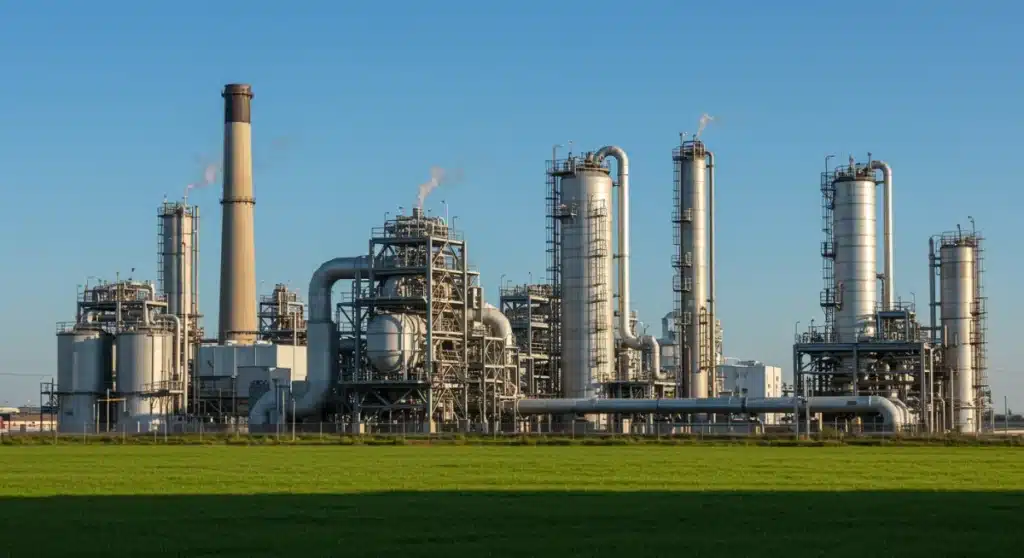
Carbon capture technologies are projected to significantly reduce U.S. industrial emissions by 10% by 2026, offering a crucial strategy for achieving national decarbonization goals and fostering a greener economy.
As the urgency of climate change intensifies, the critical role of carbon capture US emissions reduction strategies becomes undeniably clear. By 2026, these innovative technologies are anticipated to cut U.S. industrial emissions by a significant 10%, marking a pivotal step towards a sustainable future. But how exactly will this transformation unfold, and what challenges lie ahead?
Understanding Carbon Capture Technologies
Carbon capture, utilization, and storage (CCUS) technologies are essential tools in the global fight against climate change. They involve capturing carbon dioxide (CO2) emissions from large point sources, such as power plants and industrial facilities, before they are released into the atmosphere. Once captured, the CO2 can be transported and either stored permanently underground or utilized in various industrial processes.
The goal is not just to prevent new emissions but to manage existing ones, especially from hard-to-abate sectors. These technologies are complex, requiring significant investment and sophisticated engineering. However, their potential impact on reducing the carbon footprint of heavy industries is immense.
Types of Carbon Capture
Several methods exist for capturing carbon, each with its own advantages and applications. Understanding these distinctions is key to appreciating the versatility of CCUS.
- Post-combustion capture: This is the most common method, involving the separation of CO2 from flue gases after fuel combustion. It’s adaptable to existing power plants and industrial facilities.
- Pre-combustion capture: CO2 is captured before combustion, typically by converting fuel into a syngas mixture of hydrogen and CO2. This method is often integrated with gasification processes.
- Oxyfuel combustion: Fuel is burned in a mixture of oxygen and recycled flue gas, resulting in a flue gas that is primarily CO2 and water vapor, making CO2 separation easier.
- Direct air capture (DAC): This emerging technology captures CO2 directly from the ambient air, offering a solution for diffuse emissions and historical CO2.
Each type of carbon capture technology plays a unique role in the broader strategy for emissions reduction. The choice of technology often depends on the specific industrial process, the concentration of CO2, and economic considerations. The integration of these technologies into existing infrastructure is a critical aspect of their deployment and effectiveness.
In essence, carbon capture technologies represent a diverse portfolio of solutions tailored to different emission sources. Their deployment is not a one-size-fits-all approach but rather a strategic combination of methods designed to maximize CO2 removal efficiency and minimize environmental impact. This adaptability makes them a cornerstone of future decarbonization efforts.
The 2026 Target: Reducing U.S. Industrial Emissions
The ambitious goal of reducing U.S. industrial emissions by 10% by 2026 through carbon capture technologies is not just an aspiration; it’s a strategic imperative. This target reflects a growing recognition of the industrial sector’s significant contribution to greenhouse gas emissions and the necessity of targeted interventions. Industrial processes, including cement production, steel manufacturing, and chemical synthesis, are notoriously difficult to decarbonize due to their reliance on high-temperature processes and chemical reactions that inherently produce CO2.
Achieving this 10% reduction requires a concerted effort across multiple fronts: technological innovation, supportive policy frameworks, and substantial investment. The year 2026 serves as a near-term milestone, pushing for rapid deployment and scalability of existing and nascent CCUS projects. This accelerated timeline is crucial for staying on track with broader climate goals and demonstrating tangible progress in decarbonization.
Key Industrial Sectors and Their Emissions
Several heavy industrial sectors are primary targets for carbon capture deployment due to their large emission footprints. Understanding these sectors helps to prioritize efforts and allocate resources effectively.
- Cement production: A major emitter, accounting for about 8% of global CO2 emissions, primarily from the chemical process of converting limestone to clinker.
- Iron and steel manufacturing: Another significant source, with emissions stemming from the use of coal as a reducing agent and energy source.
- Chemical and petrochemical industries: These sectors produce a wide array of chemicals and plastics, often involving energy-intensive processes and CO2-emitting reactions.
- Refining: Oil refineries consume substantial energy and produce CO2 from fuel combustion and process heaters.
Each of these sectors presents unique challenges and opportunities for CCUS implementation. For example, cement plants have high-concentration CO2 streams, making capture potentially more efficient. Steel manufacturing, on the other hand, might require integrated solutions that address both process emissions and energy-related emissions. The aggregated impact of reducing emissions from these key sectors will be instrumental in reaching the 2026 target.
The 10% reduction target by 2026 is a testament to the growing confidence in CCUS technologies. It highlights a pragmatic approach to climate action, acknowledging that while renewable energy adoption is vital, it cannot single-handedly address all emission sources. Carbon capture offers a complementary pathway, ensuring that even the most challenging industrial emissions can be mitigated effectively, paving the way for a more sustainable industrial landscape in the U.S.
Policy and Economic Drivers for CCUS Deployment
The ambitious goal of achieving a 10% reduction in U.S. industrial emissions by 2026 through carbon capture technologies is heavily reliant on robust policy and economic drivers. Government incentives, regulatory frameworks, and market mechanisms are crucial in de-risking investments and accelerating the deployment of CCUS projects. Without these supportive structures, the significant upfront capital costs and operational complexities of carbon capture could deter widespread adoption.
In the U.S., various legislative actions and tax credits have been instrumental in fostering a more favorable environment for CCUS. These policies aim to bridge the economic gap between traditional, emissions-intensive industrial processes and cleaner alternatives. The effectiveness of these drivers will ultimately determine the pace and scale of carbon capture deployment in the coming years.
Key Policy Mechanisms
Several policy mechanisms are at play, each designed to stimulate different aspects of the CCUS value chain, from capture to transport and storage.
- 45Q Tax Credit: This federal tax credit provides a per-ton incentive for captured CO2 that is either permanently stored or utilized. Recent enhancements have significantly increased its value, making CCUS projects more economically viable.
- Infrastructure Investment and Jobs Act: This act allocated substantial funding for CCUS demonstration projects, CO2 pipeline infrastructure, and regional direct air capture hubs, addressing critical infrastructure needs.
- State-level initiatives: Many states are developing their own incentives, permitting processes, and regulatory frameworks to support CCUS, often aligning with federal goals.
These policy mechanisms collectively create a powerful impetus for industries to invest in carbon capture. The 45Q tax credit, in particular, has been a game-changer, transforming the economic calculus for many potential projects. By providing long-term financial certainty, it encourages industries to commit to the significant capital expenditures required for CCUS. Furthermore, the focus on infrastructure development ensures that once CO2 is captured, there are viable pathways for its transport and safe storage or utilization.
The economic landscape for carbon capture is evolving rapidly, driven by these policy tailwinds. As more projects come online and demonstrate successful operation, the costs are expected to decrease through economies of scale and technological advancements. This virtuous cycle of policy support leading to increased deployment and subsequent cost reductions is vital for achieving the 2026 emissions reduction target and beyond. The interplay between policy, economics, and technological readiness forms the bedrock of a successful CCUS strategy in the U.S.
Technological Advancements and Innovation
The pursuit of reducing U.S. industrial emissions by 10% by 2026 is heavily underpinned by continuous technological advancements and innovation in carbon capture. While the fundamental principles of CCUS have been understood for decades, recent breakthroughs are making these technologies more efficient, cost-effective, and scalable. This rapid pace of innovation is crucial for overcoming previous barriers to widespread adoption and for meeting ambitious decarbonization targets.
Researchers and engineers are exploring novel materials, improved process designs, and integrated systems that can significantly reduce the energy penalty associated with CO2 capture. These innovations are not only enhancing the performance of existing capture methods but also unlocking new possibilities, such as direct air capture at economically viable scales.
Emerging Technologies and Research Areas
The landscape of carbon capture is dynamic, with several promising technologies and research areas poised to revolutionize the field.
- Advanced solvents and sorbents: Development of new chemical solvents and solid sorbents that can capture CO2 with less energy and higher selectivity, reducing operational costs.
- Membrane technology: Innovative membrane materials that selectively separate CO2 from gas mixtures, offering a compact and potentially less energy-intensive capture method.
- Modular capture systems: Designing smaller, standardized capture units that can be prefabricated and deployed more rapidly and affordably across various industrial sites.
- Biosequestration and mineralization: Exploring natural and engineered biological processes or chemical reactions that convert CO2 into stable forms, such as carbonates or biomass.
These emerging technologies are critical for expanding the applicability of carbon capture to a wider range of industrial sources and for improving overall system economics. For example, highly efficient solvents can dramatically lower the energy required for CO2 regeneration, which has historically been a major cost component. Modular designs can reduce construction times and capital expenditure, making CCUS more attractive to smaller industrial facilities.
Furthermore, significant research is being conducted on carbon utilization pathways, transforming captured CO2 into valuable products like fuels, chemicals, or building materials. This not only creates new economic incentives but also helps to offset the costs of capture, moving towards a circular carbon economy. The synergy between capture efficiency, cost reduction, and utilization opportunities is what will ultimately drive the success of carbon capture in meeting the 2026 emissions reduction goals and establishing a long-term sustainable industrial future.
Challenges and Overcoming Obstacles
While the potential for carbon capture technologies to reduce U.S. industrial emissions by 10% by 2026 is immense, significant challenges remain. Overcoming these obstacles is critical for successful deployment and for realizing the full climate benefits of CCUS. These challenges span technical, economic, and social dimensions, requiring concerted efforts from policymakers, industry, and the scientific community.
Addressing these hurdles effectively will involve continued investment in research and development, supportive regulatory frameworks, and robust public engagement strategies. The success of CCUS is not just about the technology itself, but also about creating an ecosystem that enables its widespread and equitable adoption.
Major Obstacles to Deployment
Several key challenges must be navigated to ensure carbon capture reaches its full potential.
- High capital costs: The initial investment required for building and integrating CCUS facilities can be substantial, posing a barrier for many industrial operators, despite tax incentives.
- Energy penalty: The capture process itself consumes energy, which can reduce the overall efficiency of the industrial facility and increase operational costs.
- Transportation and storage infrastructure: A lack of extensive CO2 pipeline networks and readily available, geologically suitable storage sites can limit deployment options.
- Public perception and social license: Concerns about safety, environmental impacts, and the long-term viability of storage can lead to public opposition.
The high capital costs are often cited as the primary barrier, as they can significantly impact the financial attractiveness of CCUS projects. While tax credits like 45Q help, further financial de-risking mechanisms, such as loan guarantees or direct grants, may be necessary to accelerate deployment. The energy penalty is also a critical technical challenge, driving research into more energy-efficient capture methods. Innovations in this area are vital for improving the overall economic and environmental performance of CCUS.
Infrastructure development for CO2 transport and storage is another major undertaking. Building new pipelines and identifying and characterizing suitable geological storage sites require extensive planning, permitting, and investment. Finally, gaining public trust and a social license to operate is paramount. Transparent communication about project safety, environmental benefits, and community engagement are essential to address concerns and build support for CCUS initiatives. By systematically addressing these challenges, the path to achieving the 2026 emissions reduction target becomes more feasible and sustainable.
Case Studies and Success Stories in the U.S.
Examining real-world case studies and success stories offers tangible evidence of carbon capture’s viability and its potential to significantly reduce U.S. industrial emissions. These examples demonstrate that despite the challenges, CCUS projects are being successfully implemented across various sectors, providing valuable lessons and paving the way for broader adoption. These pioneering projects serve as blueprints, showcasing integrated solutions and proving the economic and environmental benefits of carbon capture.
These success stories are crucial for building confidence among investors, policymakers, and the public, proving that the technology works and can deliver on its promises. They highlight the collaborative efforts between industry, government, and research institutions to drive innovation and deployment.
Notable U.S. Carbon Capture Projects
- Petra Nova Carbon Capture Project (Texas): Although currently idled, this project demonstrated post-combustion capture from a coal-fired power plant, capturing over a million tons of CO2 annually for enhanced oil recovery.
- Archer Daniels Midland (ADM) Decatur Carbon Capture and Storage Project (Illinois): This facility captures CO2 from ethanol production and stores it in a deep saline formation, showcasing CCUS in the biorefining sector.
- Port Arthur Refinery (Texas): Valero’s refinery uses carbon capture to reduce emissions from its hydrogen production unit, providing a model for the refining industry.
- Net Power Plant (Texas): This innovative power plant design integrates natural gas combustion with full carbon capture, producing emissions-free electricity with inherent CO2 capture.
The ADM project in Decatur, for instance, has been operational for years, safely storing millions of tons of CO2, providing critical data and experience for future projects. Net Power’s approach represents a paradigm shift, where carbon capture is an intrinsic part of the power generation process, rather than an add-on. While Petra Nova faced economic hurdles due to fluctuating oil prices, its technical success in capturing CO2 at scale was undeniable.
These projects, alongside others in various stages of development, provide invaluable insights into the technical feasibility, operational challenges, and economic considerations of CCUS. They are instrumental in refining best practices, optimizing technologies, and informing future policy decisions. As more such projects come online and demonstrate long-term success, the pathway to achieving the 2026 U.S. industrial emissions reduction target through carbon capture becomes clearer and more attainable, fostering a cleaner and more sustainable industrial future.
The Future Outlook: Beyond 2026
Looking beyond the immediate 2026 target for a 10% reduction in U.S. industrial emissions, the future outlook for carbon capture technologies is one of continued growth, diversification, and increasing integration into broader decarbonization strategies. The momentum generated by initial successes and supportive policies is expected to accelerate, pushing CCUS to play an even more expansive role in achieving net-zero emissions by mid-century. The long-term vision involves not only expanding the scale of capture but also diversifying its applications and integrating it with other green technologies.
This includes a greater emphasis on direct air capture, which can address legacy emissions and those from dispersed sources, and the development of robust CO2 utilization markets that transform captured carbon into valuable products. The journey beyond 2026 is about scaling up, innovating further, and solidifying carbon capture’s position as an indispensable climate solution.
Long-Term Vision for Carbon Management
The trajectory for carbon capture extends far beyond industrial point sources, envisioning a comprehensive carbon management ecosystem.
- Hubs and clusters: Development of regional CCUS hubs with shared CO2 transport and storage infrastructure, fostering economies of scale and reducing individual project costs.
- Direct air capture (DAC) scale-up: Significant expansion of DAC capacity to address hard-to-abate and historical emissions, complementing point-source capture.
- Enhanced carbon utilization: Growth in markets for CO2-derived products, including sustainable aviation fuels, building materials, and advanced chemicals, creating a circular carbon economy.
- Integration with hydrogen production: Coupling CCUS with blue hydrogen production (from natural gas) to create low-carbon hydrogen, a critical fuel for industrial processes and transportation.
The concept of CCUS hubs and clusters is particularly promising for reducing the cost and complexity of individual projects. By sharing infrastructure, industries can collectively achieve greater emissions reductions more efficiently. The maturation of DAC technology will be pivotal, as it offers a solution for emissions that are not easily captured at their source or for removing CO2 already in the atmosphere. This technology is crucial for achieving net-negative emissions, which may be necessary to meet the most ambitious climate targets.
Furthermore, the growth of carbon utilization markets will transform CO2 from a waste product into a valuable resource, creating new industries and economic opportunities. This shift can provide additional revenue streams for CCUS projects, improving their financial viability. The synergy between carbon capture and hydrogen production is also a significant long-term trend, as low-carbon hydrogen is expected to play a central role in decarbonizing heavy industry and other sectors. Collectively, these developments paint a picture of a future where carbon capture is not just an emissions reduction tool, but a cornerstone of a sustainable, circular economy, driving the U.S. towards its long-term climate goals.
| Key Aspect | Brief Description |
|---|---|
| 2026 Target | Aim to reduce U.S. industrial emissions by 10% using carbon capture technologies. |
| Key Technologies | Includes post-combustion, pre-combustion, oxyfuel, and direct air capture methods. |
| Policy Drivers | 45Q tax credit and Infrastructure Investment and Jobs Act boost CCUS adoption. |
| Challenges | High capital costs, energy penalty, and infrastructure needs remain significant hurdles. |
Frequently Asked Questions about Carbon Capture
Carbon capture and storage (CCS) is a process that captures carbon dioxide (CO2) emissions from large point sources, like industrial facilities and power plants, and prevents them from entering the atmosphere. The captured CO2 is then transported and permanently stored deep underground in geological formations.
By deploying CCUS technologies in high-emitting industrial sectors such as cement, steel, and chemicals, the U.S. aims to significantly reduce the CO2 released into the atmosphere. Policy support, like the 45Q tax credit, incentivizes industries to adopt these technologies, driving towards the 2026 target.
The primary types include post-combustion capture, which separates CO2 from flue gases; pre-combustion capture, which removes CO2 before fuel combustion; and oxyfuel combustion, where fuel is burned in oxygen. Direct air capture (DAC) is an emerging technology that captures CO2 directly from ambient air.
Key challenges include the high upfront capital costs of CCUS projects, the energy required for the capture process (energy penalty), the need for extensive CO2 transport and storage infrastructure, and ensuring positive public perception and regulatory certainty for long-term storage.
Beyond 2026, the vision includes establishing regional CCUS hubs, scaling up direct air capture, expanding carbon utilization markets for CO2-derived products, and integrating CCUS with blue hydrogen production to achieve broader decarbonization goals and a circular carbon economy.
Conclusion
The journey towards a sustainable future is complex, yet the critical role of carbon capture technologies in achieving a 10% reduction in U.S. industrial emissions by 2026 is becoming increasingly clear. Through a combination of robust policy support, continuous technological innovation, and strategic project deployment, the U.S. is poised to make significant strides in decarbonizing its heavy industries. While challenges such as high costs and infrastructure development persist, the ongoing advancements and successful case studies demonstrate the viability and necessity of CCUS. Looking ahead, the integration of carbon capture into a broader carbon management ecosystem, including direct air capture and utilization, promises to extend its impact far beyond 2026, solidifying its position as an indispensable tool in the global fight against climate change and fostering a cleaner, more resilient economy.