Beyond Solar: 3 Green Techs Poised for 15% US Growth by 2026
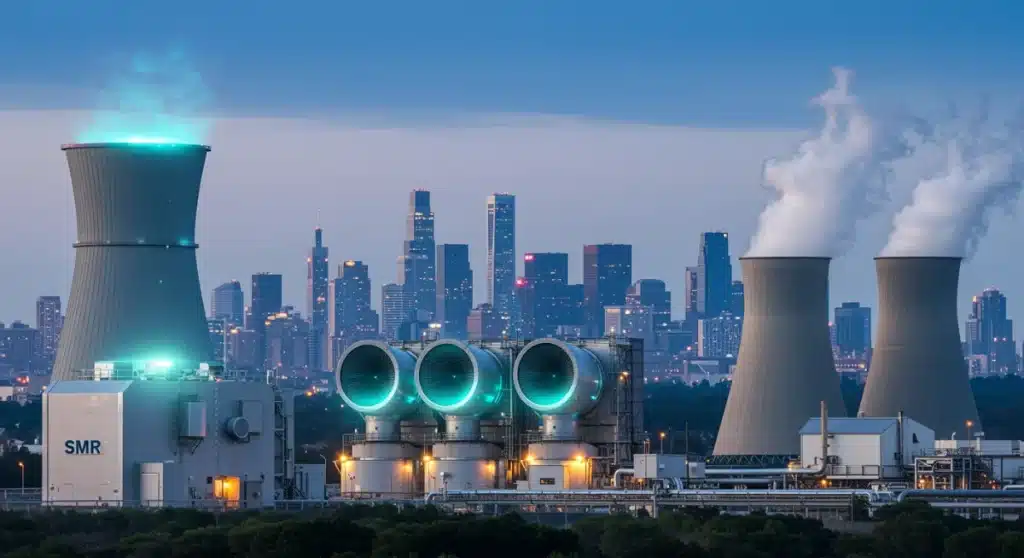
The U.S. market is poised for significant expansion in advanced green technologies, with three innovative sectors beyond traditional solar panels projected to grow by 15% by 2026, fundamentally reshaping the energy landscape.
Are you ready to look beyond the familiar solar panels and wind turbines? The landscape of sustainable energy is rapidly evolving, and we’re on the cusp of a transformative era. This article delves into Beyond Solar Panels: 3 Cutting-Edge Green Technologies Poised for 15% Growth in the U.S. Market by 2026, exploring innovations set to redefine our approach to environmental challenges and energy independence.
The New Frontier of Green Energy: Small Modular Reactors (SMRs)
Small Modular Reactors, or SMRs, represent a significant leap forward in nuclear energy technology. These advanced nuclear reactors are much smaller than conventional ones, designed for factory fabrication and modular construction, which significantly reduces build times and costs. Their compact size and inherent safety features make them suitable for a wider range of locations and applications, offering a powerful, carbon-free energy solution.
The appeal of SMRs lies in their versatility and potential to provide reliable, baseload power without the intermittency issues associated with renewables like solar and wind. They can be deployed to power remote communities, industrial complexes, or even to replace aging fossil fuel plants, providing a consistent energy supply while emitting no greenhouse gases during operation. This makes them a crucial component in achieving ambitious decarbonization goals for the U.S.
Enhanced Safety and Flexibility
One of the most compelling aspects of SMRs is their enhanced safety profile. Many designs incorporate passive safety systems that rely on natural forces like gravity and convection rather than active pumps or human intervention. This significantly reduces the risk of accidents and simplifies operational procedures.
- Passive Safety Systems: Designs often include systems that don’t require external power or human action to shut down safely.
- Reduced Footprint: Their smaller size means a lower environmental impact and easier site selection.
- Scalability: Modules can be added or removed to match changing energy demands, offering unprecedented flexibility.
- Economic Advantages: Factory production can lead to economies of scale and more predictable project costs.
Beyond electricity generation, SMRs can also be used for other critical applications. They can provide process heat for industrial facilities, support desalination plants to produce fresh water, or even generate hydrogen for clean fuel applications. This multi-faceted utility positions SMRs as a foundational technology for a sustainable future, capable of addressing diverse energy needs across various sectors. Their role in a diversified energy portfolio is becoming increasingly recognized.
In conclusion, Small Modular Reactors are poised to play a pivotal role in the U.S. energy transition. Their inherent safety, modular design, and diverse applications offer a compelling solution for clean, reliable power, driving significant growth and investment in the coming years. The potential for SMRs to integrate seamlessly into existing energy grids while providing carbon-free electricity makes them an exciting and impactful green technology.
Direct Air Capture (DAC): A Critical Tool for Carbon Removal
Direct Air Capture (DAC) technology is emerging as a vital strategy in the fight against climate change, moving beyond merely reducing emissions to actively removing existing carbon dioxide from the atmosphere. Unlike traditional carbon capture, which targets CO2 at its source, DAC systems can be placed anywhere, drawing CO2 directly from ambient air and then storing it or utilizing it in various industrial processes. This capability makes DAC a powerful complement to emission reduction efforts, tackling historical and hard-to-abate emissions.
The U.S. government and private sector are increasingly investing in DAC, recognizing its potential to achieve net-zero emissions targets. The technology involves passing ambient air over specialized contactors or filters that chemically bind to CO2 molecules. Once saturated, the filters are heated, releasing concentrated CO2, which can then be permanently stored underground in geological formations or reused in products like synthetic fuels, building materials, or beverages. This dual approach of removal and utilization creates a circular carbon economy.
Advancements and Scalability
Recent breakthroughs in material science and engineering are making DAC more efficient and cost-effective. Researchers are developing new sorbent materials that require less energy for regeneration, reducing the overall operational footprint of DAC plants. As these technologies mature, their scalability will increase, enabling larger volumes of CO2 to be removed from the atmosphere, which is essential for making a tangible impact on global carbon levels.
- Improved Sorbent Materials: Development of new chemicals that efficiently capture CO2 at lower energy costs.
- Modular Plant Designs: Allowing for easier construction and expansion of DAC facilities.
- Energy Integration: Coupling DAC plants with renewable energy sources to minimize their own carbon footprint.
- Government Incentives: Tax credits and funding initiatives accelerating DAC deployment and research.
The economic landscape for DAC is also improving, driven by policy support and a growing market for captured carbon. Companies are exploring innovative ways to monetize captured CO2, creating new industries and job opportunities. As the infrastructure for carbon transport and storage develops, DAC’s role in the broader carbon management strategy will become even more pronounced. The technology is not a silver bullet, but an indispensable part of a comprehensive climate solution, particularly for sectors where emissions are difficult to eliminate entirely.
In summary, Direct Air Capture is a cutting-edge green technology with immense potential to reverse atmospheric carbon buildup. Its ability to remove CO2 directly from the air, coupled with ongoing advancements and increasing investment, positions it for substantial growth in the U.S. market as a critical tool for achieving climate goals.
Advanced Geothermal Systems (AGS): Tapping Earth’s Deep Heat
Advanced Geothermal Systems (AGS) are revolutionizing how we harness the Earth’s natural heat, moving beyond conventional geothermal plants that rely on specific geological conditions. AGS technologies, such as Enhanced Geothermal Systems (EGS), aim to create geothermal reservoirs in areas where they don’t naturally exist. This involves drilling deep wells and injecting water at high pressure to fracture hot, dry rock, creating pathways for water to circulate, heat up, and then be brought to the surface to generate electricity. This method unlocks vast amounts of clean, baseload energy previously inaccessible.
The significance of AGS lies in its potential to provide a constant, always-on source of renewable energy, unlike intermittent solar or wind power. Geothermal energy operates 24/7, regardless of weather conditions or time of day, making it an ideal candidate for grid stability and reliability. The U.S. has enormous untapped geothermal resources, and AGS technologies are the key to unlocking this potential across a much wider geographical area, not just in volcanic regions.
Technological Innovations and Environmental Benefits
Innovations in drilling techniques, reservoir engineering, and seismic monitoring are making AGS projects more feasible and less environmentally disruptive. Companies are leveraging technologies developed in the oil and gas industry, adapting them for geothermal applications to drill deeper and more efficiently. This cross-sector collaboration is accelerating the deployment of AGS.
- Closed-Loop Systems: Newer AGS designs often use closed-loop systems, minimizing water usage and surface environmental impact.
- Reduced Land Footprint: Geothermal plants generally require less land per megawatt than other renewable energy sources.
- Low Emissions: AGS produces virtually no greenhouse gas emissions during operation.
- Resource Abundance: The Earth’s heat is a virtually inexhaustible energy source, offering long-term energy security.
Moreover, the economic benefits of AGS extend beyond energy production. Geothermal projects create high-paying jobs in drilling, engineering, and plant operations. They can also provide district heating and cooling, offering even greater energy efficiency and cost savings for communities. As the technology advances and costs decline, AGS is expected to become an increasingly competitive and attractive option for clean energy generation, contributing substantially to the U.S. energy mix and reducing reliance on fossil fuels.
In conclusion, Advanced Geothermal Systems represent a powerful, continuous source of clean energy, capable of transforming the U.S. power grid. With ongoing technological innovation and increasing investment, AGS is set for significant growth, providing reliable, baseload renewable energy to a broader range of locations and playing a crucial role in achieving energy independence and decarbonization.
The Economic Impact and Investment Landscape
The projected 15% growth in these cutting-edge green technologies by 2026 in the U.S. market signifies a robust economic shift. This expansion is not merely about environmental benefits; it represents a significant opportunity for job creation, technological advancement, and economic prosperity. Investment flowing into Small Modular Reactors, Direct Air Capture, and Advanced Geothermal Systems is catalyzing innovation and attracting skilled labor across various sectors, from engineering and manufacturing to construction and operations.
Government policies, including tax incentives, grants, and regulatory frameworks, are playing a crucial role in de-risking these nascent industries and accelerating their commercialization. The Inflation Reduction Act, for instance, provides substantial credits for clean energy technologies, making projects more financially viable and attractive to private investors. This supportive policy environment is essential for these long-term, capital-intensive ventures to thrive and scale.
Emerging Market Opportunities
Beyond direct energy production, these technologies are also creating new market opportunities and supply chains. For example, the need for specialized materials in SMRs, advanced sorbents for DAC, and precision drilling equipment for AGS is stimulating growth in related manufacturing and service industries. This ripple effect extends throughout the economy, fostering a broader ecosystem of green innovation.
- Job Creation: High-skilled jobs in research, development, manufacturing, construction, and operation.
- Supply Chain Development: Growth in industries providing components, materials, and services to these sectors.
- Technological Export: The U.S. could become a leader in exporting these advanced green technologies globally.
- Energy Security: Diversification of energy sources reduces reliance on volatile fossil fuel markets.
Private sector investment, driven by environmental, social, and governance (ESG) goals and the pursuit of long-term sustainable returns, is also a major catalyst. Venture capital firms and large institutional investors are increasingly allocating capital to companies developing these technologies, recognizing their potential for substantial future growth and their alignment with global sustainability objectives. This confluence of public and private funding is critical for transforming these promising concepts into widespread commercial realities.
In conclusion, the economic impact of these green technologies extends far beyond their primary function of clean energy. They are powerful engines for economic growth, job creation, and strategic investment, positioning the U.S. as a leader in the global green economy. The forecasted 15% growth underscores a profound and positive shift in the national economic landscape, driven by innovation and sustainability.
Addressing Challenges and Future Outlook
While the growth trajectory for Small Modular Reactors, Direct Air Capture, and Advanced Geothermal Systems is promising, it’s important to acknowledge and address the challenges that lie ahead. Each technology faces unique hurdles, ranging from regulatory complexities and public perception to significant upfront capital costs and the need for scaling up infrastructure. Overcoming these obstacles will be crucial for realizing their full potential and achieving the projected 15% growth by 2026.
For SMRs, public acceptance and navigating complex licensing processes remain key challenges. Ensuring robust safety standards and transparent communication with communities are essential for building trust. Direct Air Capture needs to further reduce its energy intensity and operational costs to become more economically competitive at scale. Similarly, Advanced Geothermal Systems require continued investment in drilling technologies and a better understanding of subsurface geology to minimize risks and optimize reservoir creation. Collaborative efforts between industry, government, and academia are vital for tackling these issues effectively.
Pathways to Accelerated Adoption
To accelerate the adoption of these technologies, several strategies are being pursued. Continued research and development funding is paramount for driving down costs and improving efficiency. Streamlined regulatory processes can reduce project timelines, while favorable tax policies and carbon pricing mechanisms can enhance economic viability. Furthermore, public education and engagement campaigns are necessary to foster a deeper understanding and acceptance of these innovative solutions.
- Policy Support: Consistent government incentives, subsidies, and clear regulatory pathways.
- R&D Investment: Continuous funding for technological breakthroughs and cost reduction.
- Infrastructure Development: Building out carbon transport and storage, and grid modernization for SMRs and AGS.
- Workforce Training: Developing a skilled labor force to support these emerging industries.
Looking ahead, the future of these green technologies appears bright, driven by increasing climate urgency and a global push towards decarbonization. The U.S. is well-positioned to lead in their development and deployment, leveraging its scientific expertise, entrepreneurial spirit, and robust investment climate. As these technologies mature and scale, they will not only contribute significantly to emissions reductions but also enhance energy independence and create a more resilient, sustainable energy system for the nation.
In conclusion, while challenges exist, the combined efforts of innovation, policy support, and strategic investment are paving the way for substantial growth in SMRs, DAC, and AGS. Their successful deployment will be instrumental in shaping a clean energy future and meeting climate objectives, making them indispensable components of the U.S. green technology portfolio.
Synergies and a Holistic Green Energy Future
The true power of these cutting-edge green technologies lies not in their individual capabilities alone, but in their potential for synergy within a holistic energy system. Small Modular Reactors can provide reliable baseload power, complementing the variable output of renewables. Direct Air Capture can offset residual emissions from hard-to-decarbonize sectors, serving as a critical carbon sink. Advanced Geothermal Systems offer constant, clean heat and electricity, filling gaps left by other intermittent renewable sources. This integrated approach is essential for building a resilient, fully decarbonized energy infrastructure.
Imagine a future where SMRs stabilize the grid, providing a steady supply of carbon-free electricity, while vast renewable energy farms capture solar and wind power. Excess renewable energy could be used to power DAC facilities, drawing down atmospheric carbon, or to support the energy-intensive processes of creating geothermal reservoirs. This creates a dynamic and robust energy ecosystem, where each technology enhances the others’ effectiveness, leading to greater overall efficiency and environmental impact. The U.S. is uniquely positioned to foster such an integrated system, given its diverse geography and technological prowess.
Building a Resilient Grid
Integrating these diverse technologies requires significant upgrades to the existing energy grid, including advanced energy storage solutions and smart grid technologies. These improvements will allow for better management of fluctuating energy supplies and demands, ensuring continuous power delivery. Furthermore, the development of regional energy hubs that combine multiple green technologies could optimize resource utilization and minimize transmission losses.
- Grid Modernization: Investing in smart grid technologies and infrastructure to handle diverse energy inputs.
- Energy Storage: Utilizing battery storage and other solutions to balance intermittent renewable generation.
- Regional Energy Hubs: Centralizing multiple green technologies for optimized production and distribution.
- Interoperability: Ensuring different green technologies can seamlessly communicate and operate together.
The transition to such a comprehensive green energy future will also drive significant research and development in areas like artificial intelligence and machine learning for grid optimization, advanced materials for energy storage, and innovative financing models for large-scale projects. This continuous cycle of innovation will further accelerate the growth and effectiveness of these technologies. The U.S. market, with its strong emphasis on innovation and investment, is an ideal incubator for these integrated solutions, paving the way for a truly sustainable and secure energy future.
To summarize, the synergistic integration of Small Modular Reactors, Direct Air Capture, and Advanced Geothermal Systems offers a powerful pathway to a fully decarbonized and resilient energy future. By combining their strengths, these technologies can create a robust and efficient green energy ecosystem, ensuring sustainable growth and energy security for the U.S. for decades to come.
| Green Technology | Key Benefit |
|---|---|
| Small Modular Reactors (SMRs) | Provides reliable, carbon-free baseload power with enhanced safety features. |
| Direct Air Capture (DAC) | Actively removes CO2 from the atmosphere, addressing historical emissions. |
| Advanced Geothermal Systems (AGS) | Offers continuous, always-on clean energy from Earth’s deep heat. |
| Overall Impact | Collectively drive significant U.S. market growth and decarbonization efforts. |
Frequently Asked Questions about Green Technology Growth
SMRs are advanced nuclear reactors much smaller than conventional ones, designed for modular construction. They are crucial because they offer reliable, carbon-free baseload power, enhanced safety features, and can be deployed in diverse locations, significantly contributing to decarbonization and energy independence in the U.S.
DAC technology actively removes existing carbon dioxide directly from the atmosphere, unlike traditional methods that only reduce emissions at the source. This capability is vital for addressing historical and hard-to-abate emissions, complementing other decarbonization efforts and working towards net-zero goals.
AGS, such as Enhanced Geothermal Systems (EGS), can create geothermal reservoirs in areas without natural ones by fracturing hot dry rock. This allows for continuous, always-on renewable energy generation across a much wider geographical area, unlike traditional geothermal which is limited to specific geological conditions.
The growth is primarily driven by increasing climate urgency, supportive government policies like tax incentives, significant private sector investment, and ongoing technological advancements. These factors combine to make these cutting-edge solutions more viable, scalable, and attractive for addressing energy and environmental challenges.
These technologies will significantly enhance the U.S. energy grid by providing reliable, baseload power (SMRs, AGS) and actively removing carbon (DAC). Their integration will lead to a more diversified, resilient, and decarbonized energy system, reducing reliance on fossil fuels and contributing to long-term energy security.
Conclusion
The future of green technology in the U.S. extends far beyond the familiar sight of solar panels. Small Modular Reactors, Direct Air Capture, and Advanced Geothermal Systems represent the vanguard of innovation, each poised for substantial growth and offering unique, powerful solutions to our most pressing energy and environmental challenges. Their collective 15% growth projection by 2026 underscores a pivotal shift towards a more diversified, resilient, and truly sustainable energy landscape. As these technologies mature and integrate, they promise not only to decarbonize our economy but also to stimulate significant economic growth, job creation, and technological leadership, securing a cleaner, more prosperous future for generations to come.