Top 5 States Leading Green Building Innovation for 2026
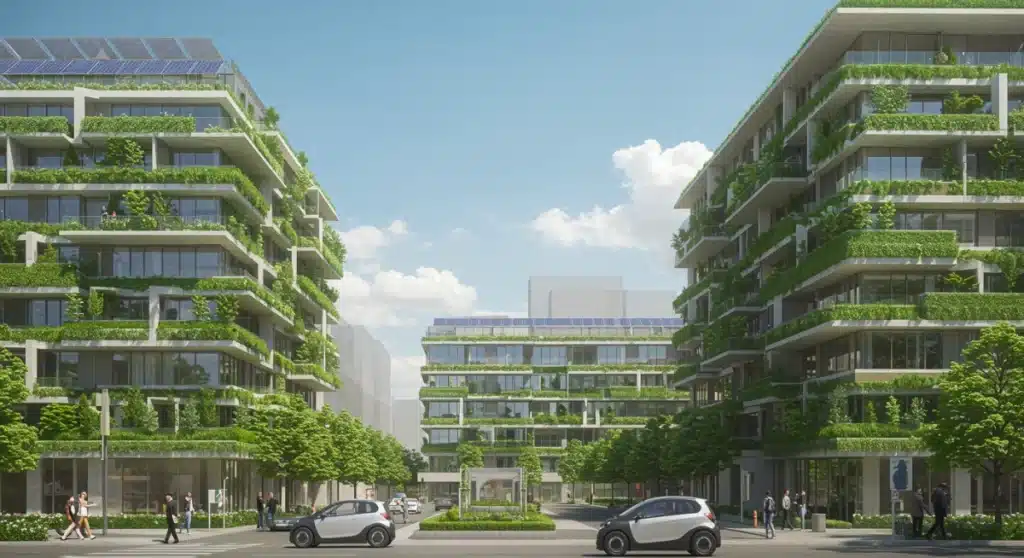
The Insider Report: The Top 5 States Leading Green Building Innovation and Why Their Strategies Matter for National Adoption in 2026 identifies key states driving sustainable construction through progressive policies and technological advancements, crucial for widespread environmental impact.
Have you ever wondered which states are truly pioneering the future of sustainable construction? An Insider Report: The Top 5 States Leading Green Building Innovation and Why Their Strategies Matter for National Adoption in 2026 reveals the trailblazers setting the pace. These states aren’t just adopting green practices; they’re actively shaping the landscape of eco-friendly architecture and engineering, offering invaluable lessons for national progress in environmental stewardship and economic resilience.
California: The Golden Standard in Green Building
California has long been at the forefront of environmental policy and technological advancement, and its leadership in green building is no exception. The state’s ambitious climate goals and a proactive regulatory environment have fostered an ecosystem where sustainable construction isn’t just encouraged, but often mandated. This commitment drives innovation from design to material selection, setting a high bar for others to follow.
The state’s approach is multifaceted, combining stringent building codes with economic incentives. This dual strategy encourages developers to not only meet minimum standards but to aspire to higher levels of sustainability, often exceeding national benchmarks. This continuous push for improvement has cultivated a robust industry focused on advanced green technologies and practices.
Pioneering Policy Frameworks
California’s building codes are among the most rigorous globally, frequently updated to incorporate the latest in energy efficiency and environmental performance. These codes serve as a blueprint for other states considering similar legislative actions.
- Title 24 Energy Standards: These standards mandate highly efficient building designs, including requirements for insulation, windows, and HVAC systems, significantly reducing energy consumption.
- CALGreen Code: The first statewide mandatory green building code in the U.S., CALGreen addresses everything from water efficiency and material selection to indoor air quality, promoting holistic sustainability.
- Net-Zero Energy Goals: California has set aggressive targets for all new residential and commercial buildings to be net-zero energy, meaning they produce as much energy as they consume, by specific deadlines.
Technological Advancements and Research
Beyond policy, California is a hub for green building research and development. Its universities and private sector companies are constantly exploring new materials, construction methods, and energy systems. This innovation translates into real-world applications that push the boundaries of what’s possible in sustainable design.
The state’s vibrant tech industry also plays a crucial role in integrating smart building technologies, leveraging data analytics and AI to optimize energy use and building performance. This synergy between policy, research, and technology makes California a true leader in the green building movement, influencing national trends and setting precedents for future development.
In conclusion, California’s comprehensive strategy, encompassing robust policy, cutting-edge research, and technological integration, firmly establishes it as a leader in green building innovation. Its success provides a valuable model for other states aiming to accelerate their own sustainable development initiatives.
Massachusetts: Blending Historic Charm with Modern Green
Massachusetts, a state rich in history and tradition, is demonstrating that green building innovation isn’t confined to new construction alone. It’s successfully integrating sustainable practices into its existing urban fabric, often by retrofitting historic buildings and revitalizing older neighborhoods with eco-friendly technologies. This approach presents a unique challenge and opportunity, proving that sustainability can coexist with preservation.
The state’s commitment is driven by a combination of public and private sector initiatives, focusing on energy efficiency, renewable energy adoption, and resilient design. Massachusetts understands that reducing the environmental impact of its vast existing building stock is just as critical as building new green structures.
Incentives for Sustainable Renovation
Massachusetts offers a variety of programs and incentives specifically designed to encourage green renovations and energy efficiency upgrades in both residential and commercial properties. These initiatives make sustainability economically viable for property owners.
- Mass Save: A collaborative of Massachusetts’s natural gas and electric utilities, Mass Save provides rebates, incentives, and services to help residents and businesses save energy and money.
- Green Communities Designation and Grant Program: This program offers financial and technical assistance to municipalities that commit to reducing energy consumption and adopting renewable energy.
- Historic Preservation Tax Credits: While not exclusively green, these credits can be combined with energy efficiency upgrades, making it more attractive to preserve and green older buildings.
Focus on Renewable Energy Integration
Beyond building efficiency, Massachusetts is a national leader in integrating renewable energy sources, particularly solar and offshore wind, into its energy grid and building designs. This focus helps reduce the carbon footprint of buildings from their energy supply.
The state’s academic institutions, like MIT and Harvard, also contribute significantly to research in renewable energy technologies and sustainable urban planning. Their work provides a strong foundation for innovative solutions that can be scaled statewide and nationally, proving that even states with a deep historical footprint can lead the charge in modern green practices.
Ultimately, Massachusetts showcases a powerful model for how states can marry historical preservation with cutting-edge green building. Its focus on retrofitting, combined with strong renewable energy initiatives, provides a valuable blueprint for urban sustainability.
Washington: Harnessing Natural Resources for Green Development
Washington State stands out for its progressive stance on green building, deeply rooted in its abundance of natural resources and a strong environmental ethos. The state leverages its hydropower, timber, and innovative tech sector to create a unique model for sustainable construction. This integrated approach prioritizes resource efficiency, minimal environmental impact, and healthy indoor environments.
Seattle, in particular, has become a hotbed for green building, with numerous projects achieving high certifications like LEED Platinum. The state’s commitment extends to both public and private sectors, driving demand for sustainable materials and practices across the construction industry.
Advanced Timber Construction
Washington is a pioneer in mass timber construction, utilizing sustainably harvested wood products to create visually appealing and environmentally friendly buildings. This approach not only sequesters carbon but also supports the state’s forestry industry.
- Cross-Laminated Timber (CLT): The state actively promotes the use of CLT in mid-rise and high-rise buildings, recognizing its structural integrity, aesthetic appeal, and carbon benefits.
- Sustainable Forestry Practices: Washington’s strong commitment to sustainable forest management ensures that timber used in construction is sourced responsibly, minimizing ecological impact.
- Research and Development: Universities and industry partners are continuously researching new applications and efficiencies for timber construction, positioning Washington as a leader in this field.
Energy Efficiency and Water Conservation
Given its natural landscape and abundant water resources, Washington places a strong emphasis on water conservation and maximizing energy efficiency in its green building standards. This focus helps protect its pristine environment while reducing operational costs for buildings.
The state’s energy codes are designed to push the envelope on building performance, often exceeding national standards. Furthermore, initiatives like the Living Building Challenge, which originated in the Pacific Northwest, inspire projects that go beyond mere sustainability to achieve regenerative design, demonstrating a holistic commitment to environmental stewardship.
In essence, Washington’s green building success is a testament to its ability to integrate natural resources with innovative construction methods. Its leadership in mass timber and emphasis on energy and water efficiency offer critical lessons for a sustainable future.
New York: Scaling Green Solutions in Densely Populated Areas
New York, with its immense urban density and vast infrastructure, presents a unique challenge and opportunity for green building innovation. The state has embraced this challenge head-on, implementing aggressive policies and investing heavily in technologies that can scale sustainable solutions across its sprawling cities. Its focus is on reducing greenhouse gas emissions from buildings, improving energy efficiency, and promoting healthy urban living.
New York City, as a global financial and cultural hub, plays a pivotal role in this transformation, showcasing how large-scale green initiatives can be successfully deployed in complex urban environments. The state’s strategies are often pioneering, providing a template for other major metropolitan areas worldwide.
Ambitious Decarbonization Targets
New York has set some of the most ambitious climate goals in the nation, with a significant portion of these targets focused on the building sector. This commitment drives innovation in energy retrofits and the development of new, highly efficient structures.
- Climate Leadership and Community Protection Act (CLCPA): This landmark legislation mandates economy-wide greenhouse gas emission reductions, with buildings being a primary focus area for achieving these targets.
- Local Law 97 (NYC): This groundbreaking law sets carbon emission limits for most large buildings in New York City, compelling property owners to invest in energy efficiency upgrades and renewable energy.
- Green Bonds and Financing: The state utilizes green bonds and other innovative financing mechanisms to fund sustainable building projects and infrastructure improvements, making green development more accessible.
Smart City Integration and Infrastructure
New York is actively integrating smart city technologies into its green building initiatives. This includes smart grid development, advanced building management systems, and the deployment of electric vehicle charging infrastructure, all contributing to a more sustainable and resilient urban environment.
The state’s efforts also extend to promoting green infrastructure solutions, such as green roofs and permeable pavements, to manage stormwater and reduce urban heat island effects. This holistic approach ensures that green buildings are part of a larger, integrated sustainable urban strategy, offering valuable insights for other densely populated regions.
New York’s leadership demonstrates that green building can thrive even in the most challenging urban settings. Its aggressive decarbonization goals and smart city integration are proving that large-scale sustainability is not only possible but essential for future urban development.
Colorado: Rocky Mountain High in Sustainable Design
Colorado is emerging as a significant player in green building innovation, particularly through its emphasis on resilient design, renewable energy integration, and sustainable community development. The state’s unique geography, with its abundant sunshine and commitment to outdoor living, naturally lends itself to a focus on energy independence and environmental stewardship.
From mountainous regions to bustling urban centers like Denver and Boulder, Colorado is embracing green building practices that are both ecologically sound and economically beneficial. Its strategies are often driven by a desire to protect its natural landscapes and promote a high quality of life for its residents.
Renewable Energy Leadership
Colorado is a national leader in renewable energy deployment, especially solar and wind power. This focus directly impacts green building by providing a cleaner energy supply and encouraging on-site renewable energy generation for homes and businesses.
- Community Solar Programs: The state actively supports community solar initiatives, allowing residents and businesses to benefit from solar energy even if they can’t install panels on their own properties.
- PACE Financing: Property Assessed Clean Energy (PACE) programs in Colorado enable property owners to finance energy efficiency and renewable energy improvements through their property taxes, making upgrades more affordable.
- Electric Vehicle Infrastructure: Colorado is rapidly expanding its EV charging infrastructure, which influences building design to accommodate charging stations and integrate smart grid technologies.
Sustainable Community Planning
Beyond individual buildings, Colorado is recognized for its innovative approaches to sustainable community planning. This includes developing walkable neighborhoods, promoting public transportation, and preserving open spaces, all of which contribute to a lower carbon footprint and enhanced quality of life.
Many communities in Colorado have adopted stringent green building codes that go beyond state minimums, reflecting a strong local commitment to sustainability. This grassroots effort, combined with state-level support, positions Colorado as a key innovator in creating truly sustainable living environments for the future.
Colorado’s blend of renewable energy leadership and sustainable community planning highlights its commitment to green building. Its focus on resilience and environmental preservation offers a compelling vision for future sustainable development.
The Path to National Adoption: Lessons Learned
The strategies employed by these top five states—California, Massachusetts, Washington, New York, and Colorado—offer invaluable insights into accelerating national adoption of green building innovation. While each state has tailored its approach to its unique context, several common themes emerge that are crucial for widespread implementation.
One primary takeaway is the critical role of robust policy frameworks. States with clear, ambitious, and enforceable building codes and energy efficiency standards consistently drive greater innovation. These policies create a level playing field and provide certainty for developers and investors, fostering a market for green technologies and practices. Without strong regulatory backing, voluntary measures alone often fall short of achieving significant environmental impact.
Key Drivers for Widespread Green Adoption
Several factors are consistently found in states successfully advancing green building. Understanding these drivers is essential for other regions looking to replicate their success and for national strategies to gain traction.
- Strong Government Incentives: Financial incentives, such as tax credits, rebates, and grants, make green building more economically attractive for property owners and developers, offsetting initial higher costs.
- Public-Private Partnerships: Collaboration between government agencies, private industry, and academic institutions accelerates research, development, and deployment of new green technologies and construction methods.
- Educational Initiatives and Workforce Development: Investing in training programs for architects, engineers, contractors, and building operators ensures a skilled workforce capable of designing, constructing, and maintaining green buildings.
- Data-Driven Performance Tracking: Monitoring and reporting building performance, including energy and water consumption, allows for continuous improvement and demonstrates the tangible benefits of green construction.
Overcoming Barriers and Future Directions
Despite the progress, significant barriers remain, including perceived higher upfront costs, lack of public awareness, and a shortage of skilled labor. Addressing these challenges requires a concerted effort across all levels of government, industry, and the community.
Looking ahead to 2026 and beyond, national adoption will depend on harmonizing state-level successes into a cohesive federal strategy. This includes standardizing green building codes where appropriate, increasing federal funding for research and development, and creating national incentive programs that reward sustainable practices. The lessons from these leading states provide a clear roadmap for achieving a greener, more resilient built environment for the entire nation.
In summary, the diverse yet effective strategies of these leading states provide a comprehensive blueprint for national green building adoption. Their experiences underscore the importance of policy, incentives, and collaboration in driving sustainable change.
| Key State | Primary Innovation Focus |
|---|---|
| California | Pioneering policy frameworks and Net-Zero energy goals. |
| Massachusetts | Sustainable renovation of existing and historic buildings. |
| Washington | Advanced mass timber construction and resource efficiency. |
| New York | Scaling green solutions in dense urban environments. |
Frequently Asked Questions About Green Building Innovation
A green building in these states is designed, constructed, and operated to minimize environmental impact and maximize human health. Key aspects include energy efficiency, water conservation, sustainable materials, and healthy indoor air quality, often exceeding standard building codes.
State policies drive innovation through mandatory building codes, performance standards, and financial incentives. These measures encourage developers to adopt advanced technologies and sustainable practices, making green building a more attractive and often necessary option.
Renewable energy sources are crucial for achieving net-zero energy goals and reducing carbon footprints. States leading in green building often integrate solar, wind, and other renewables, both on-site and through grid-level clean energy initiatives, powering buildings sustainably.
Initial costs can sometimes be higher, but leading states address this with financial incentives like tax credits, rebates, and PACE financing. These programs help offset upfront expenses, making green building economically viable and highlighting long-term operational savings.
Other states can learn by studying their policy frameworks, incentive programs, and public-private partnerships. Adopting similar ambitious goals for energy efficiency, renewable integration, and sustainable material use can accelerate their own green building progress.
Conclusion
The detailed examination of the top five states leading green building innovation—California, Massachusetts, Washington, New York, and Colorado—reveals a common thread of proactive policy, technological advancement, and a deep commitment to environmental stewardship. These states are not merely adapting to environmental pressures; they are actively shaping the future of sustainable construction through diverse yet effective strategies. Their leadership provides a critical blueprint for national adoption, demonstrating that with strategic incentives, robust regulations, and collaborative efforts, a greener, more resilient built environment is not only achievable but essential for 2026 and beyond. The insights from this insider report offer invaluable lessons for policymakers, developers, and citizens alike, underscoring the transformative power of localized innovation on a national scale.